10 Curtain Styles for Every Room in Your Home
Picking the right curtain styles for every room in your home can feel overwhelming — there are dozens of options, and each one changes the whole feel of a space. This guide breaks down 10 popular styles, from tab-top to sheer panels, and shows which rooms they work best in.
1. Tab-Top Curtains
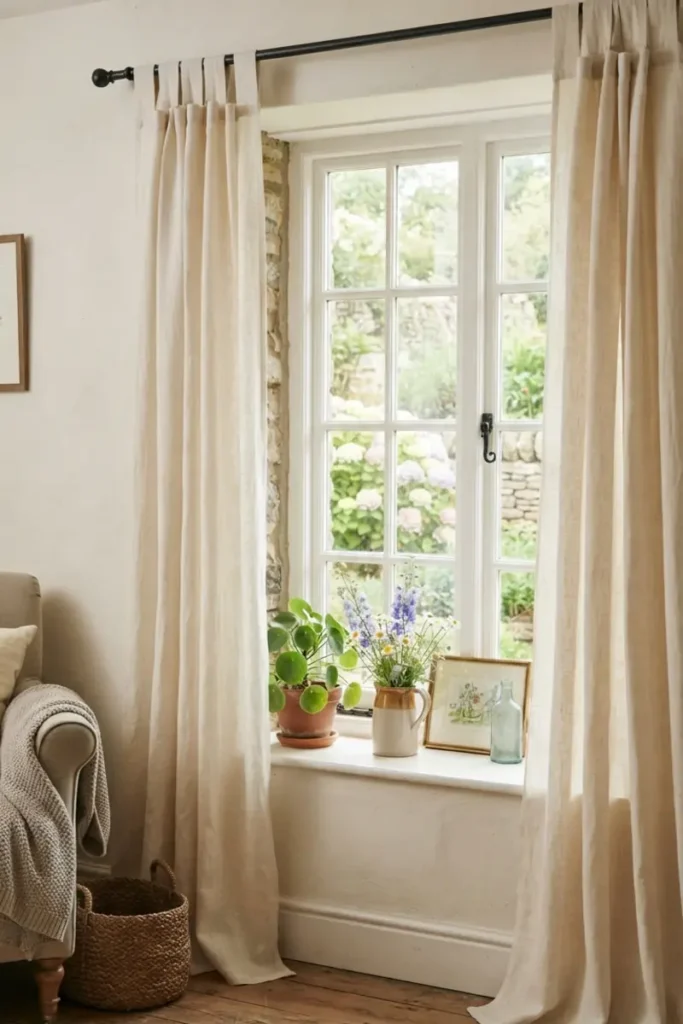
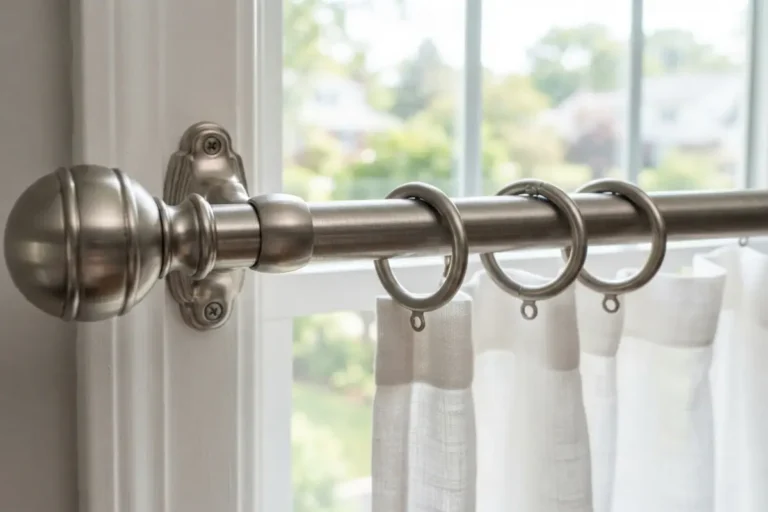
Tab-top curtains have fabric loops sewn along the top that slide directly onto the curtain rod, giving a clean, casual look with soft, even folds. Because the rod stays partially visible between each loop, this style works especially well with decorative wood or wrought-iron rods that are meant to be seen. The trade-off is that tab-tops don’t glide as smoothly as rings or grommets, so they’re better suited to curtains that stay mostly open or closed rather than ones you adjust throughout the day.
Best for: Living rooms and bedrooms with a relaxed, cottage-style or farmhouse feel.
2. Rod Pocket Curtains
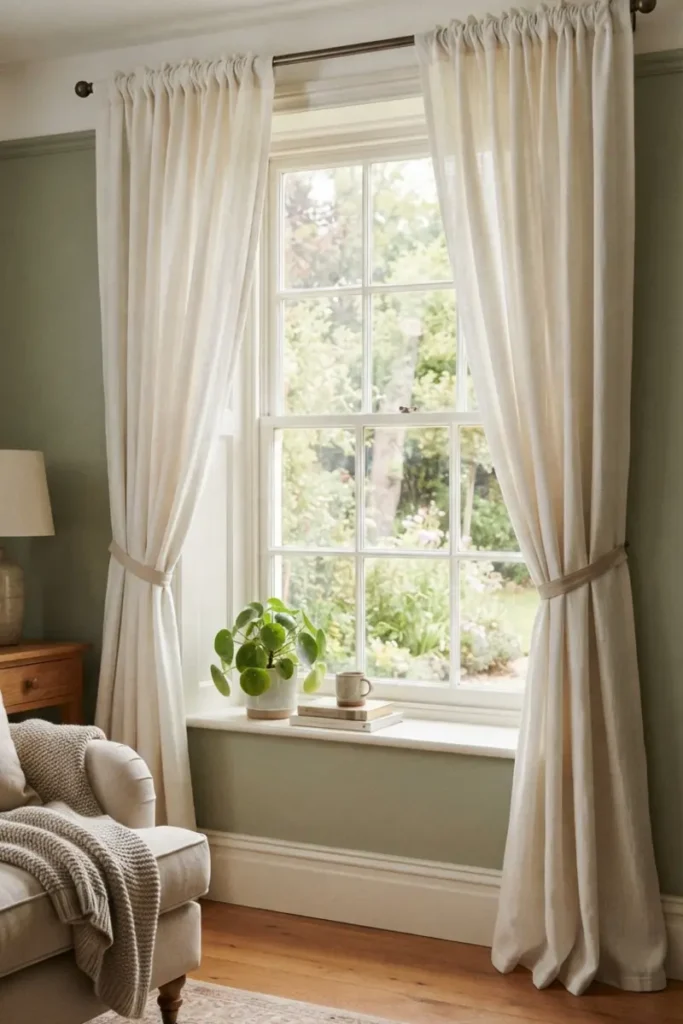
A classic style where the fabric is sewn into a pocket at the top and gathered directly onto the rod, creating a gently ruffled, traditional look. This is one of the simplest and most affordable curtain styles to hang, since it requires no rings, hooks, or clips — just slide the rod through the pocket. Like tab-tops, rod pocket curtains can bunch up when opening and closing, so they work best in windows that don’t need frequent adjusting.
Best for: Kitchens and cafe-style windows, or anywhere you want a soft, homey touch.
3. Grommet (Eyelet) Curtains
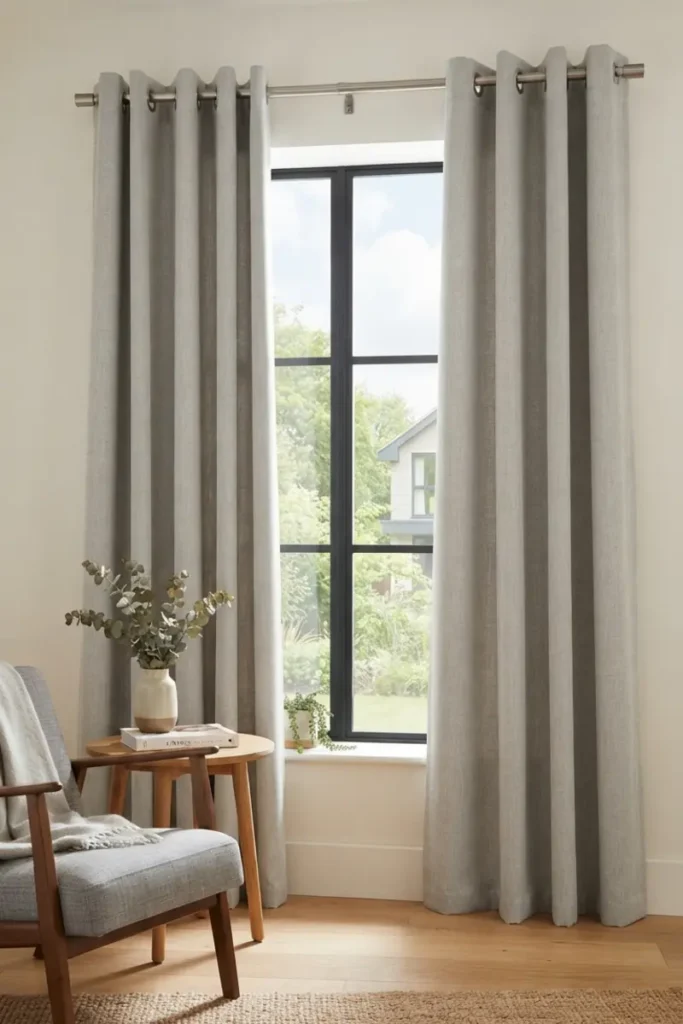
These curtains have metal rings punched along the top edge, so the rod threads straight through, creating a modern look with structured, uniform folds. Because the metal grommets reduce friction against the rod, they slide open and closed more smoothly than almost any other curtain style, making them a practical choice for windows used daily. The consistent, wave-like folds also give grommet curtains a clean, tailored appearance even without pressing or steaming.
Best for: Living rooms and home offices where you want a sleek, contemporary feel.
4. Pinch Pleat Curtains
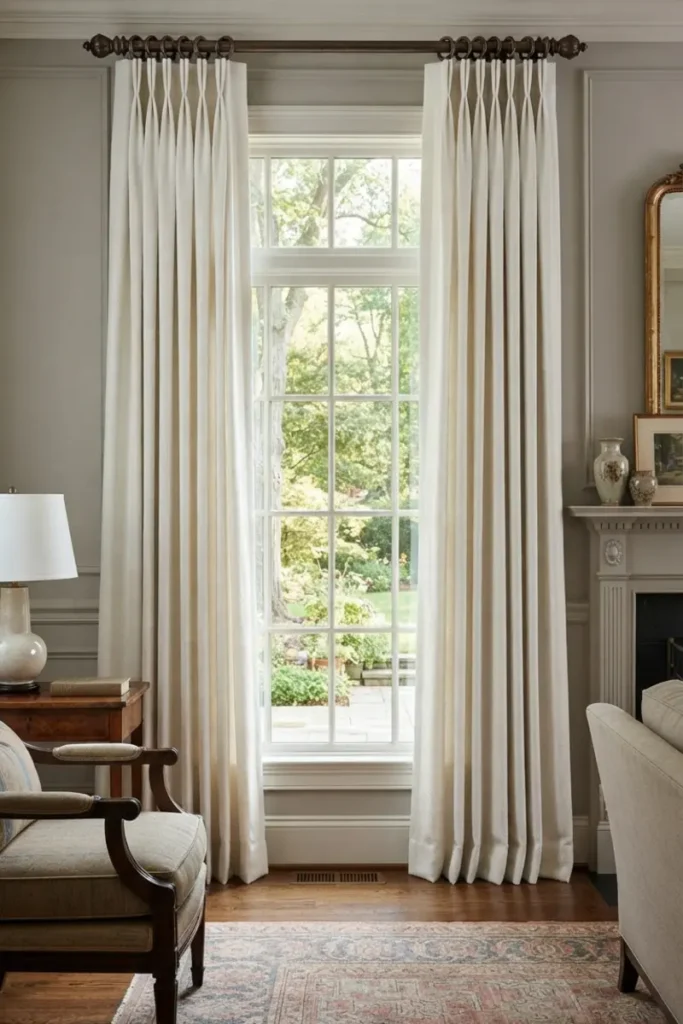
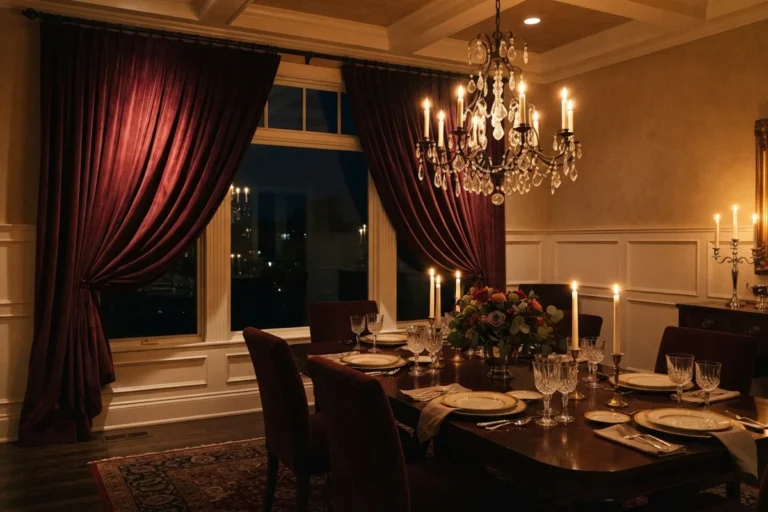
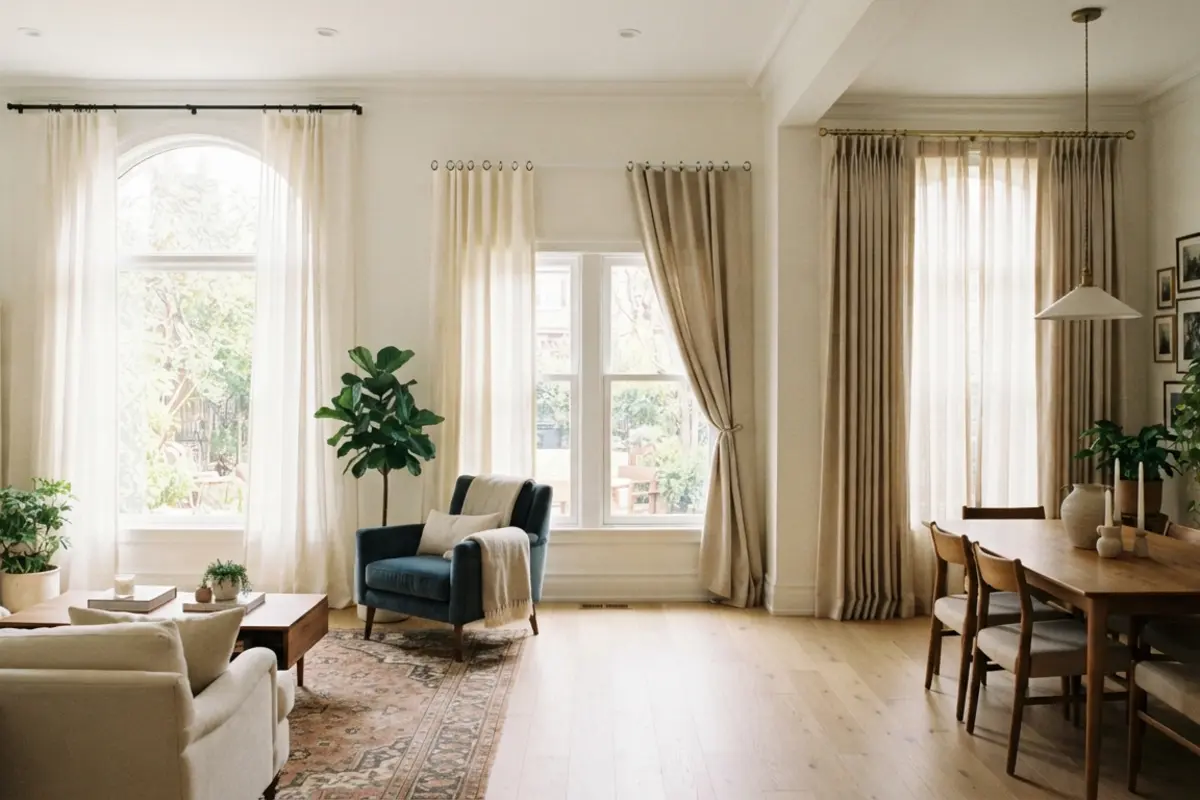
Pinch pleat curtains are gathered into small, tailored pleats at the top, usually with a hook-and-track system, falling in elegant, structured folds. The precise stitching required for the pleats gives this style a distinctly custom, tailored look that’s harder to achieve with simpler headings. Because the pleats hold their shape well over time, pinch pleats tend to look neat and pressed with far less regular adjustment than looser styles.
Best for: Formal living rooms, dining rooms, or anywhere you want a polished, high-end look.
5. Sheer Curtains
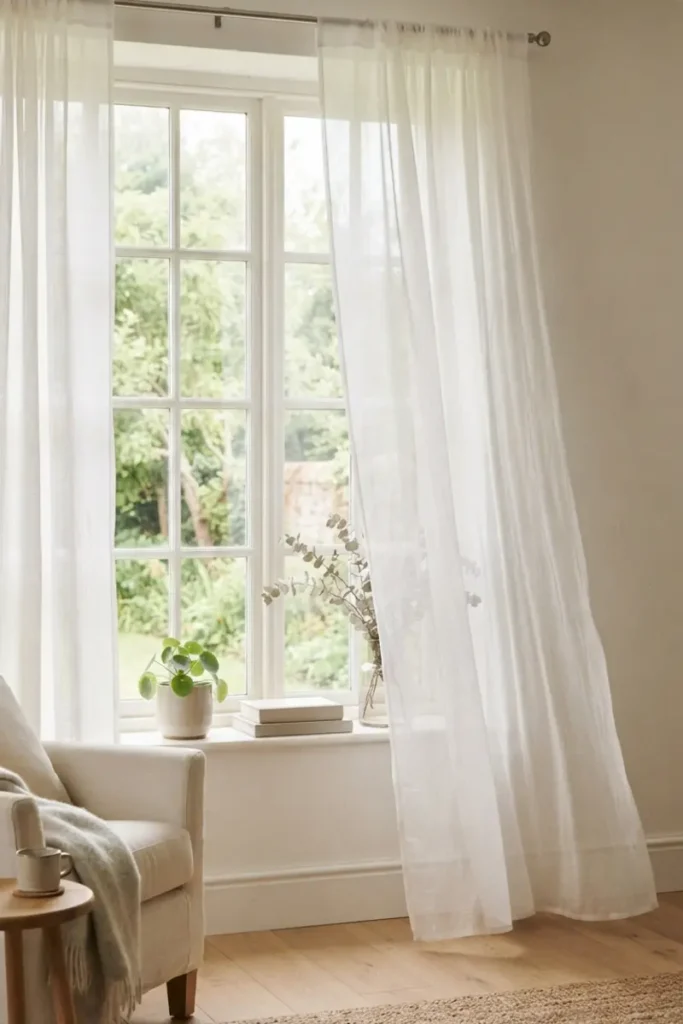
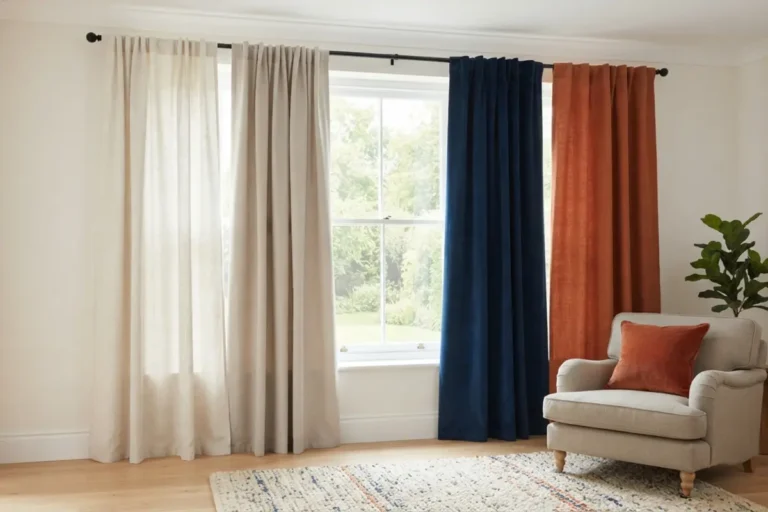
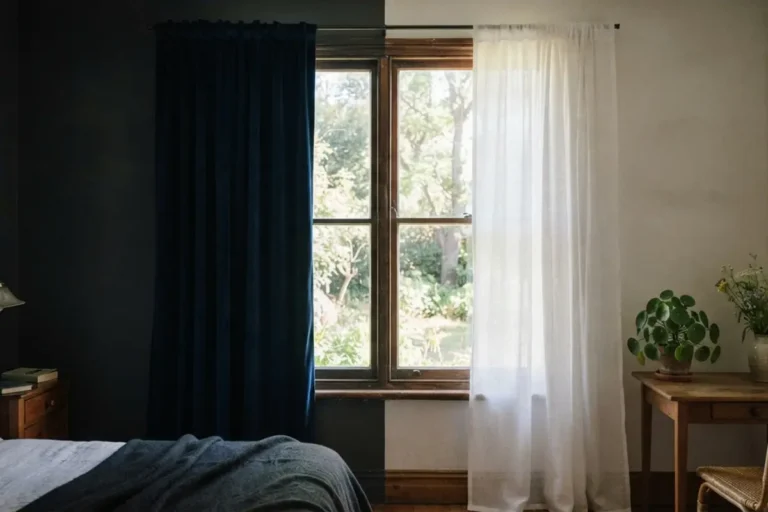
Made from lightweight, semi-transparent fabric, sheers let in soft natural light while still offering a bit of privacy, and are often layered with heavier drapes. During the day, sheers blur the outline of the room from outside without blocking the view entirely, though they offer little privacy once the lights are on at night. Because the fabric is so lightweight, sheers typically need extra fullness — often 2.5 to 3 times the window width — to avoid looking thin or sparse once hung.
Best for: Any room where you want brightness without losing privacy — especially bedrooms and living rooms.
6. Blackout Curtains
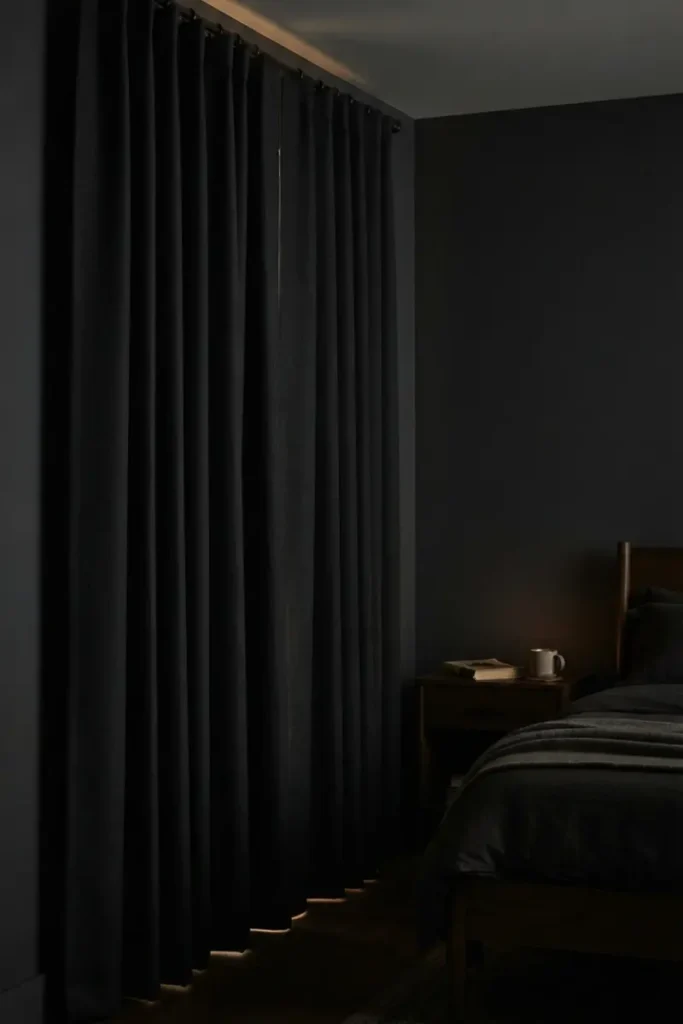
Made from thick, tightly woven fabric (sometimes with a special lining), blackout curtains block outside light almost entirely. Beyond just darkening a room, the dense fabric also helps dampen outside noise and adds a layer of insulation against drafts, which many people notice within the first night of using them. The heavier weight does mean blackout curtains require sturdier hardware than lighter fabrics, so it’s worth confirming the rod and brackets can support the extra load.
Best for: Bedrooms, nurseries, and home theaters where light control and better sleep matter most.
7. Café Curtains
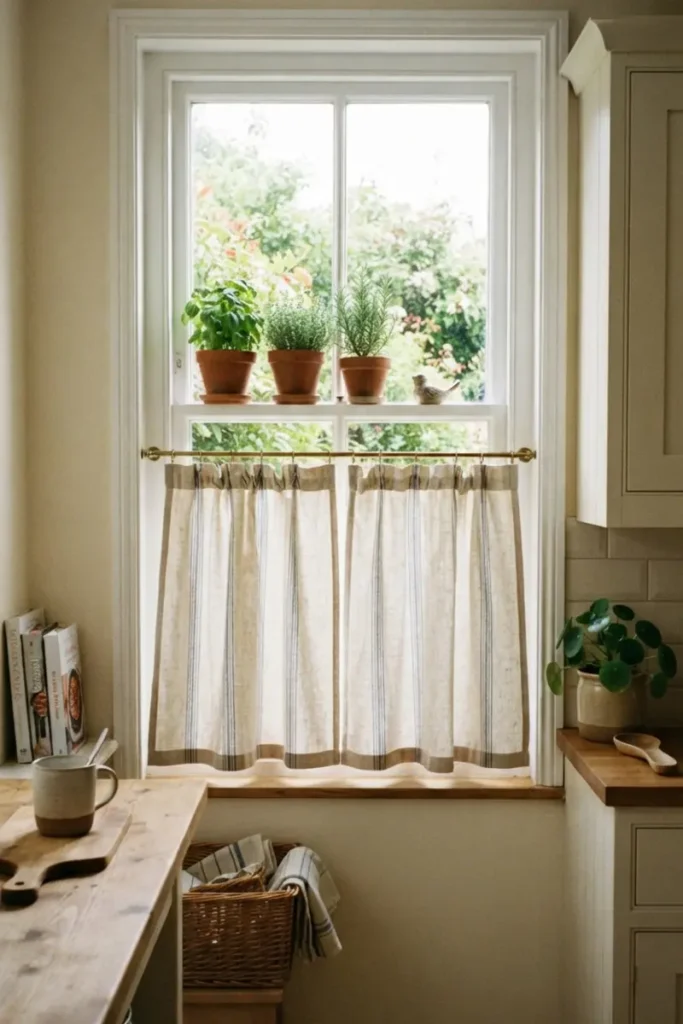
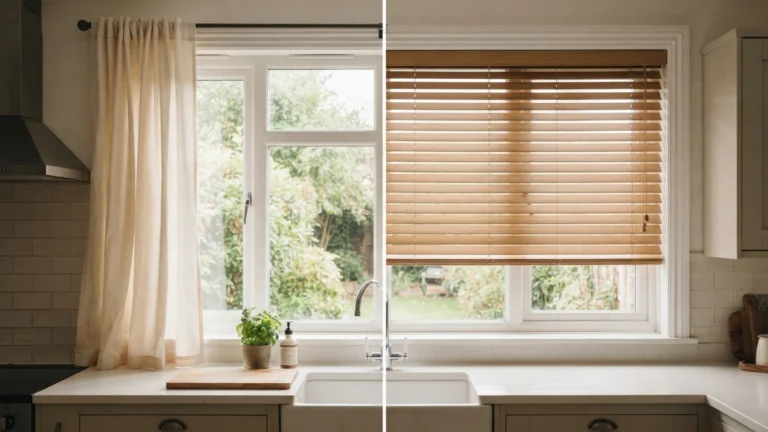
Short curtains that cover only the lower half of a window, café curtains let in plenty of natural light from the top while keeping the lower half private. This makes them especially practical for windows positioned right above a sink, counter, or other fixture, since the curtain never interferes with what’s below it. Café curtains also tend to feel proportionally right on smaller windows, where a full-length curtain might otherwise look oversized for the space.
Best for: Kitchens and bathrooms, especially windows facing the street or a neighbor’s yard.
8. Tie-Top Curtains
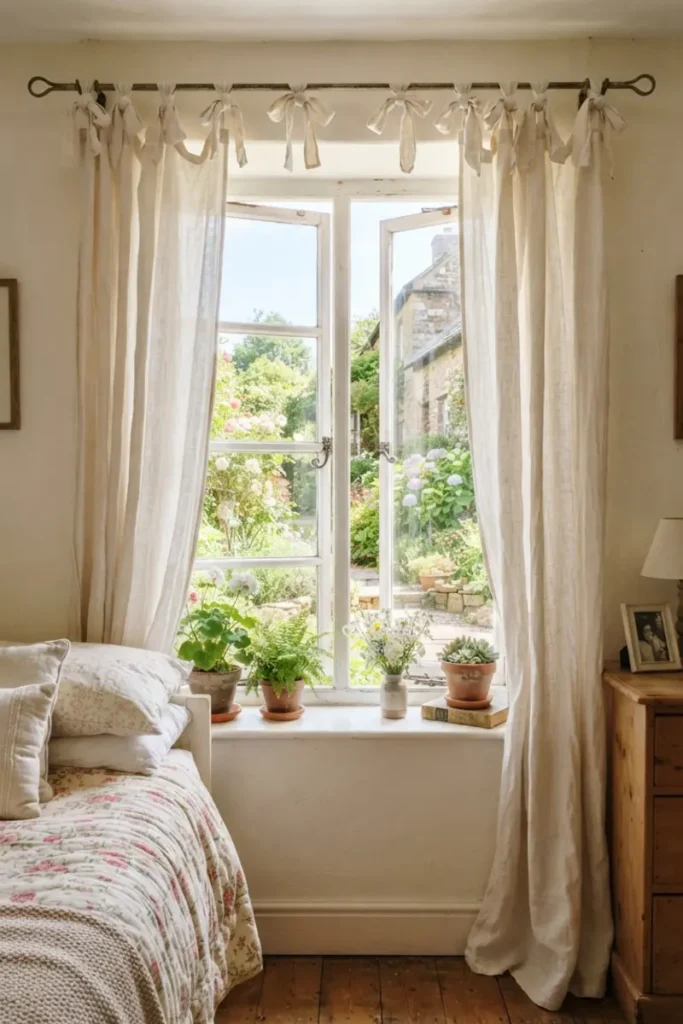
Similar to tab-tops but with fabric ties instead of sewn loops, tie-top curtains have a relaxed, handmade feel and can be easily removed for washing. The knotted ties add a bit of visual texture at the top of the window that reads as casual and a little bohemian compared to more structured headings. Because they untie completely rather than sliding off a track, this style is also one of the easiest to swap out seasonally or for a quick refresh.
Best for: Kids’ rooms, laundry rooms, or casual spaces where practicality matters.
9. Layered (Double) Curtains
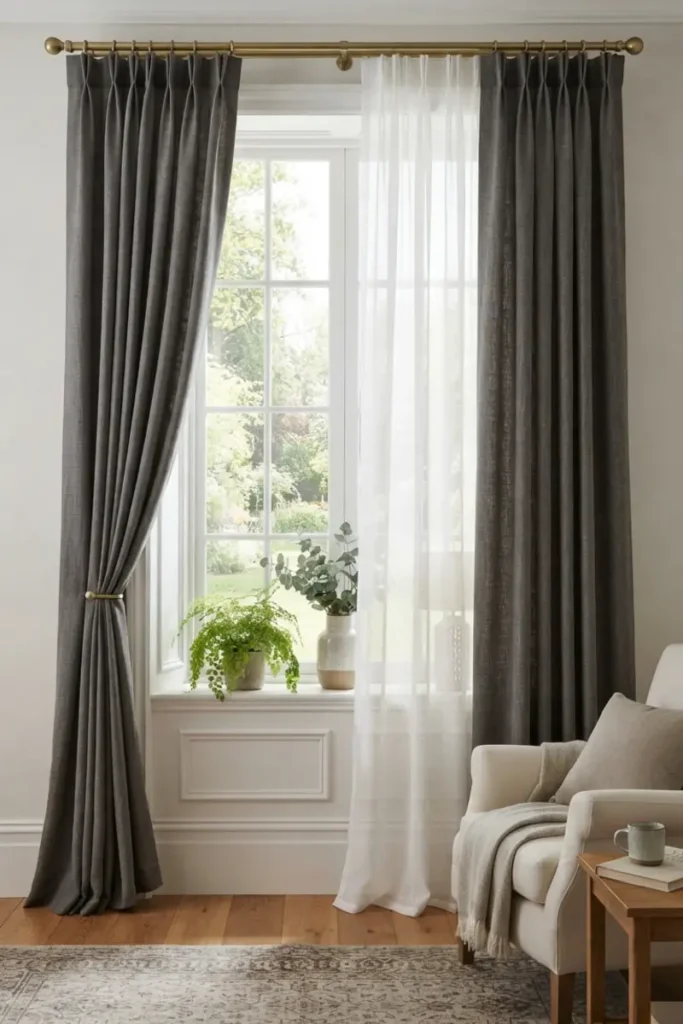
This style combines two curtain types — usually a sheer panel with a heavier drape — hung on the same window using a double rod, giving you flexibility: light and airy during the day, private and cozy at night. Layering requires a bit more hardware and installation effort than a single curtain, since the double rod needs enough wall clearance to hold both layers without looking crowded. The payoff is a level of day-to-night adaptability that no single fabric can match on its own.
Best for: Living rooms and bedrooms where you want both style options depending on the time of day.
10. Valances and Cornices
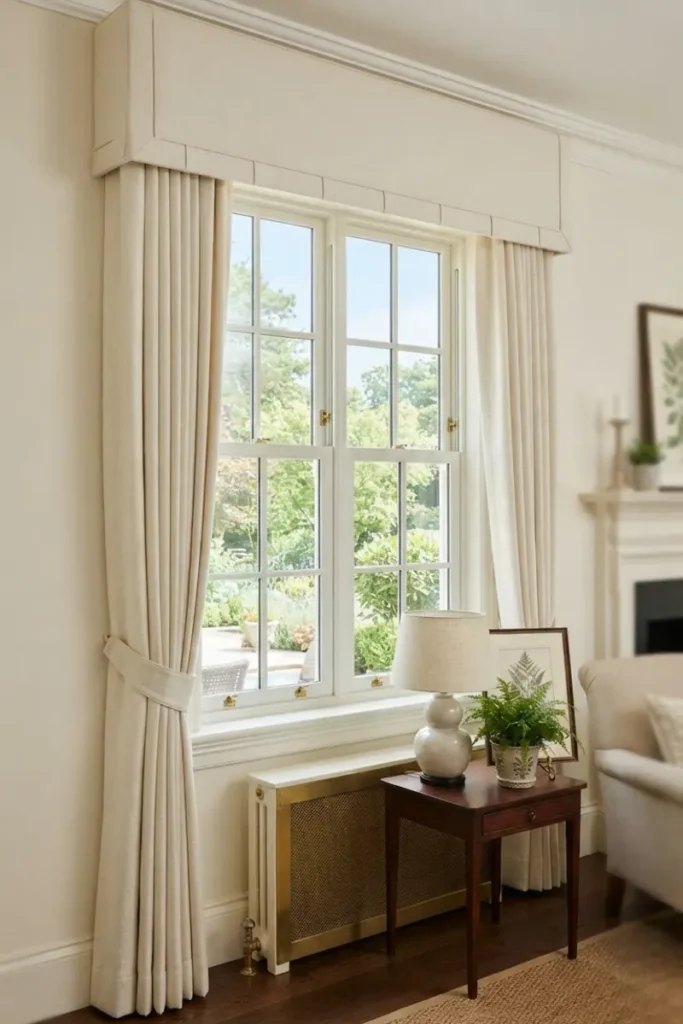
Rather than covering the whole window, valances are short decorative panels hung across the top, often paired with blinds or another curtain style underneath. Cornices serve a similar purpose but use a rigid, upholstered frame instead of soft fabric, giving a more tailored, architectural finish. Both styles are especially useful for hiding curtain hardware or blind mechanisms that might otherwise look unfinished at the top of the window.
Best for: Kitchens, bathrooms, and small windows where you want a decorative finish without heavy fabric.
How to Choose Curtain Styles for Every Room
Start by thinking about function first — a bedroom or nursery that needs real light control and privacy points toward blackout curtains, while a bright living room or dining space usually calls for something lighter like sheers or a mid-weight fabric. From there, let the room’s overall formality guide the heading style: pinch pleats and grommets tend to feel more polished and tailored, while tab-top and tie-top curtains lean relaxed and casual. If you can’t decide between two directions, layering a sheer with a heavier drape often solves the problem without forcing a single fabric to do everything.
Whatever style you choose, the right curtains do more than cover a window — they set the tone for the whole room, so it’s worth taking the time to match the style to how the space actually gets used.
Final Thoughts on Choosing Curtain Styles
Once you’ve settled on a style, understanding how to layer color, fabric, and mood matters just as much. Our curtain color guide breaks down how to choose the right shade for any room in your home.