Bedroom Curtain Ideas: How to Choose Curtains for Better Sleep and Style
Your bedroom curtains do more work than almost any other window treatment in your home — they control how much light wakes you up, how private the room feels, and how the whole space comes together visually. This guide breaks down 10 bedroom curtain ideas, from blackout velvet to soft layered sheers, and helps you figure out which one actually fits how you sleep and live.
Before You Start: 2 Decisions to Make First
1. How much light control do you actually need?
Before diving into these bedroom curtain ideas, it helps to answer two quick questions about how you actually sleep and live. If you’re sensitive to early morning sun, work night shifts, or just sleep better in a fully dark room, blackout fabric isn’t optional — it’s the foundation of your choice. If you like waking up with natural light, a lighter or layered option will serve you better.
2. Do you want your curtains to blend in or stand out?
Bedrooms are one of the few rooms where curtains can become the star of the room — a bold color or rich texture on a large window can anchor the whole space. Or, if your bedroom is meant to feel calm and neutral, choosing curtains that blend into the wall color keeps the visual noise low.
1. Blackout Velvet for Deep Sleep

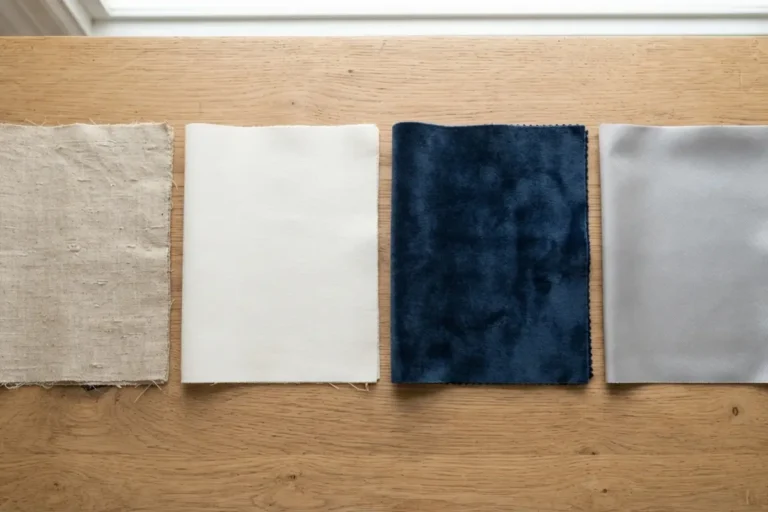
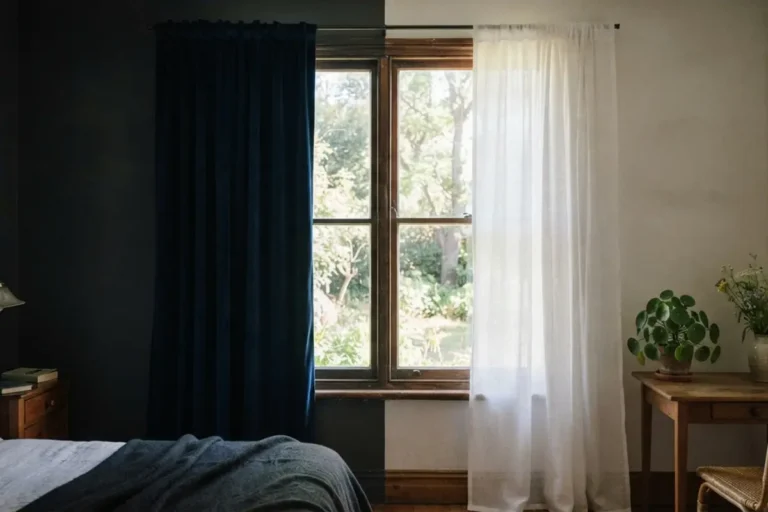
Thick, heavy velvet in blackout lining blocks nearly all outside light, creating the kind of total darkness that matters most for anyone whose sleep is easily disrupted by early morning sun or streetlights outside the window. The weight of the fabric also helps dampen outside noise, and the plush texture adds a rich, hotel-like feel to the room once the curtains are drawn. Keeping a bedroom properly dark supports healthier sleep overall, and getting the hardware right matters just as much — Home improvement guides recommend mounting rods high enough and wide enough to fully block light gaps around the window frame.
Best for: Light-sensitive sleepers, shift workers, and anyone wanting a moody, luxurious bedroom feel.
2. Layered Sheer + Blackout
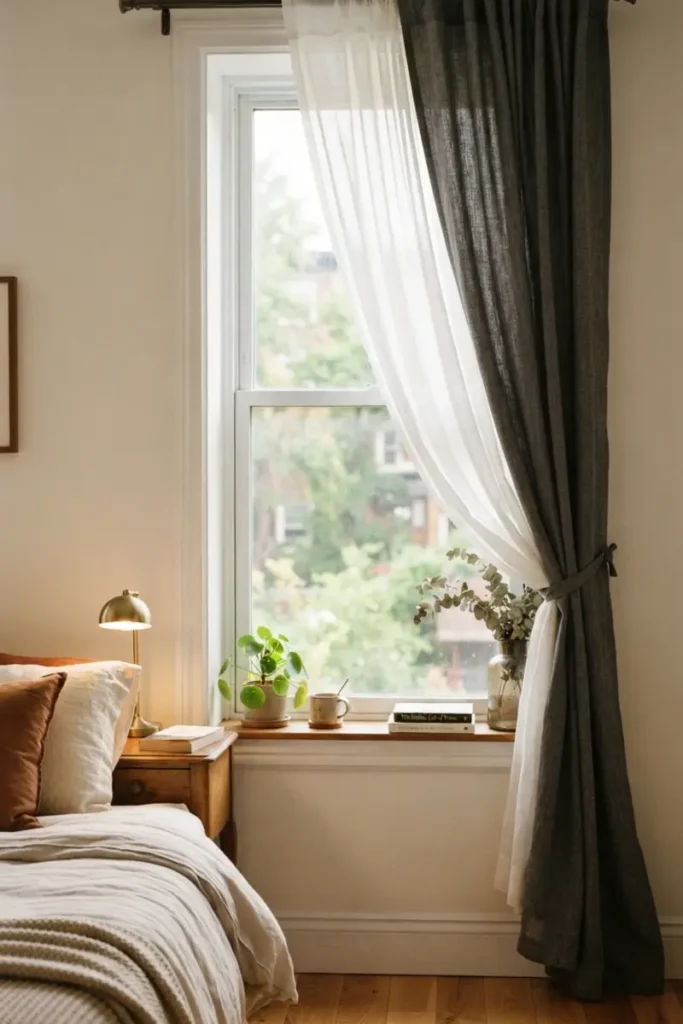
Pairing a sheer panel with a blackout drape on the same rod gives you flexibility — sheer for soft daytime light, blackout drawn fully closed at night. This setup is especially useful in bedrooms that double as a nap space or home office during the day, since you can adjust the light without committing to one fixed look. Installing both layers on a double rod also means you’re not locked into replacing curtains if your light needs change down the line.
Best for: People who want control over light throughout the day, not just at night.
3. Soft Neutral Linen for a Calm Room
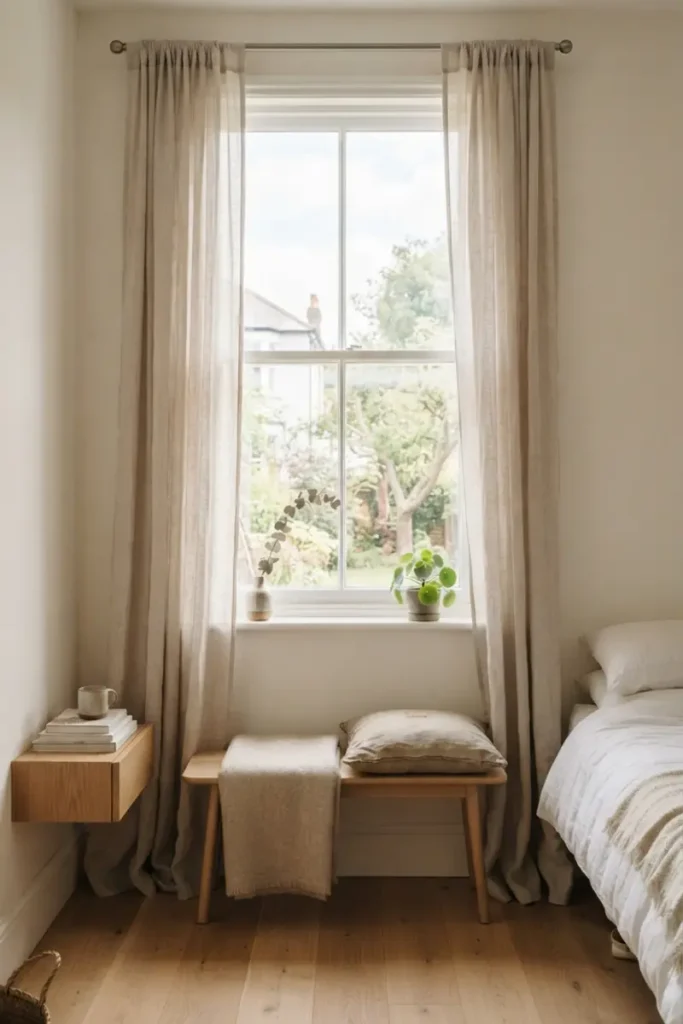
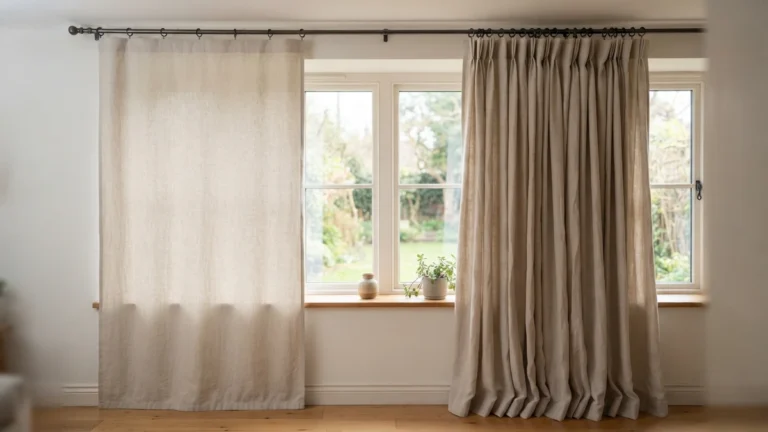
Lightweight linen in warm off-white or oatmeal tones keeps a bedroom feeling airy and calm without demanding attention. It filters light gently rather than blocking it, so mornings feel naturally bright rather than abrupt. Linen also has a slightly relaxed, textured quality that suits a room meant for winding down rather than making a bold style statement.
Best for: Minimalist or Scandinavian-style bedrooms where the goal is a peaceful, uncluttered feel.
4. Tie-Top Curtains for Cottage Charm
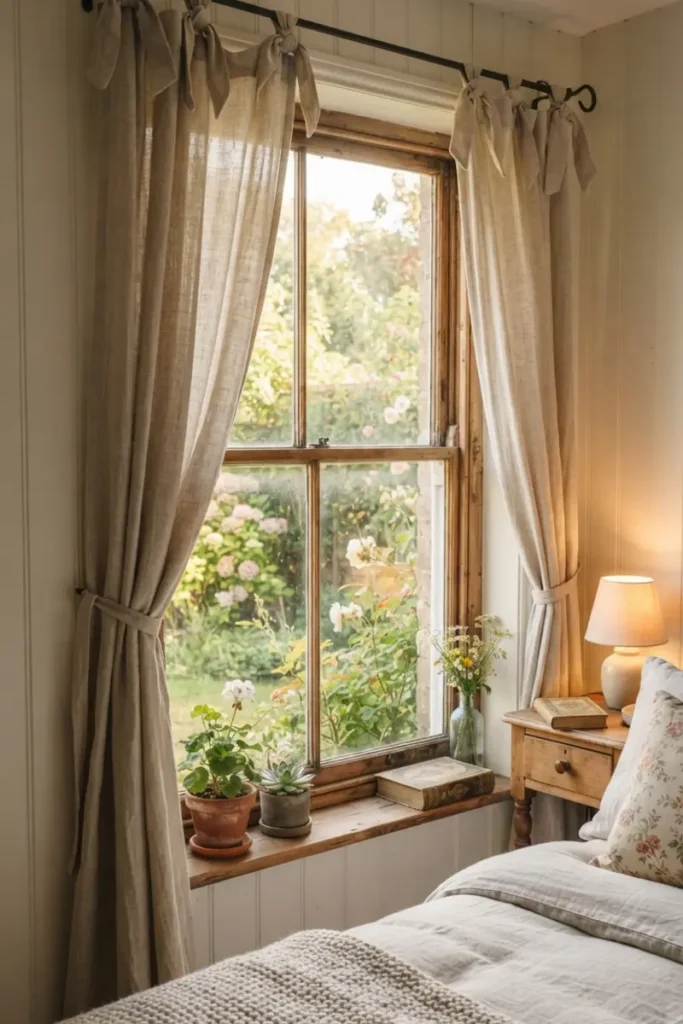
Fabric ties knotted directly around the rod give a relaxed, handmade look that suits cottage or farmhouse-style bedrooms. They’re easy to hang and easy to take down for washing, which matters in a room where bedding and curtains often get refreshed together. The slightly imperfect, hand-tied knots also add a warm, lived-in character that feels less formal than pleated or pinch-top styles.
Best for: Guest bedrooms or cottage-style homes where a casual, homey feel matters more than precision tailoring.
5. Motorized Curtains for Convenience

App-controlled or remote-operated curtain tracks let you open and close curtains without getting out of bed — genuinely useful for early risers or anyone with mobility concerns. Many systems can also be scheduled to open gradually each morning, functioning almost like a gentle wake-up light. The upfront cost is higher than manual hardware, but the daily convenience tends to make it worthwhile for primary bedrooms used every single day.
Best for: Primary bedrooms where convenience and a modern touch are priorities.
6. Canopy-Inspired Drapery
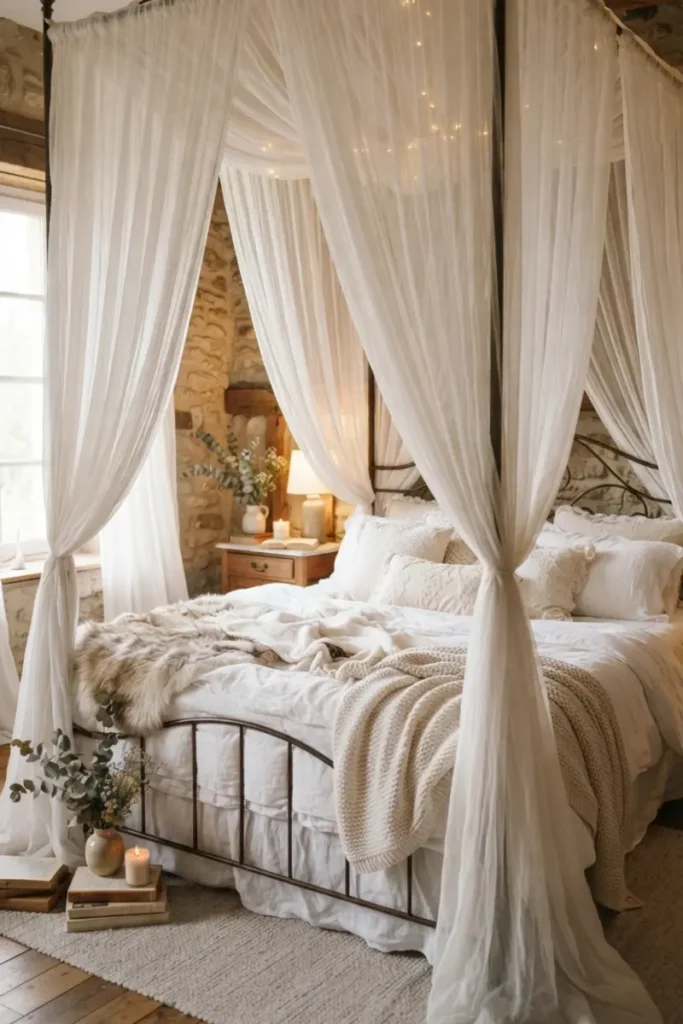
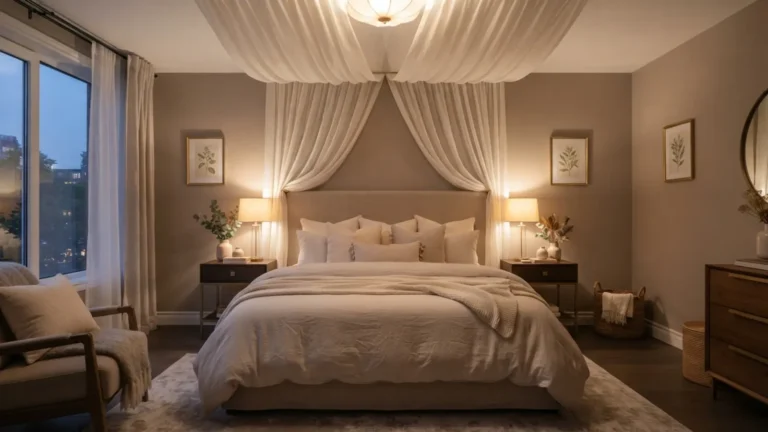
Sheer, flowing fabric mounted above or around the bed frame (rather than just the window) creates a soft, romantic focal point that extends beyond the window itself. This style works especially well with four-poster or canopy bed frames, where the drapery can attach directly to existing posts. Even without special hardware, a ceiling-mounted circular rod above the bed can recreate a similar dreamy effect in almost any bedroom.
Best for: Bedrooms where the bed is the visual centerpiece and you want a dreamy, elevated look.
7. Textured Bouclé for Cozy Warmth
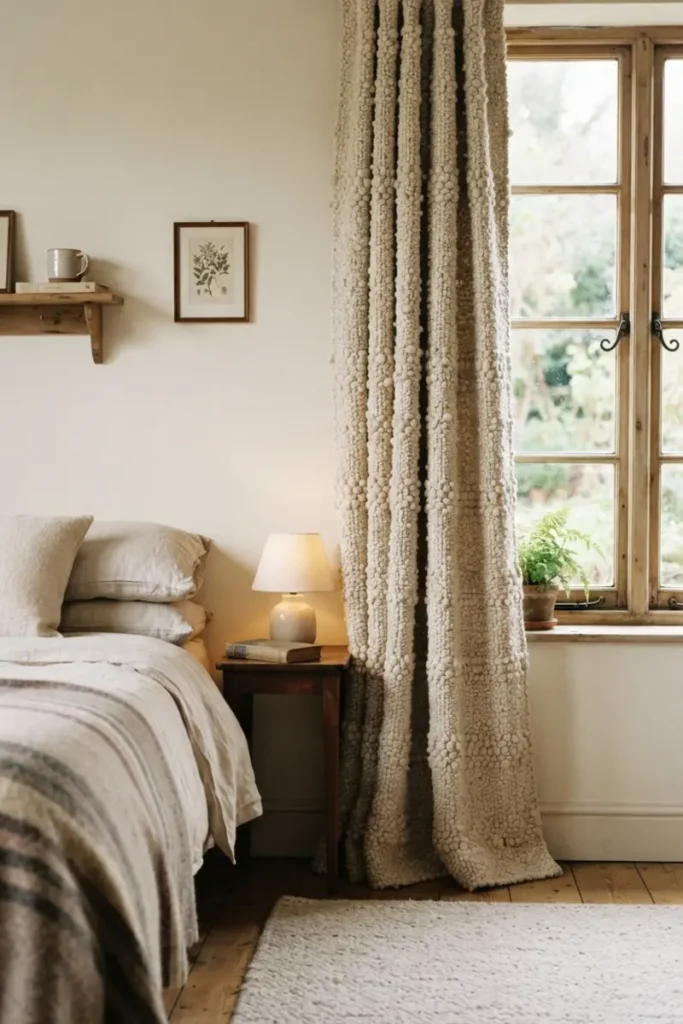
Nubby, textured fabrics like bouclé or chunky weave add tactile warmth to a bedroom, especially in cooler climates or rooms with hard flooring. The raised texture also does a nice job of softening a room’s acoustics, making the space feel quieter and more enclosed. It’s a subtle way to add visual interest without relying on bold color or pattern.
Best for: Bedrooms that feel a little cold or stark and need a soft, tactile layer.
8. Elegant Pinch Pleat for a Polished Look
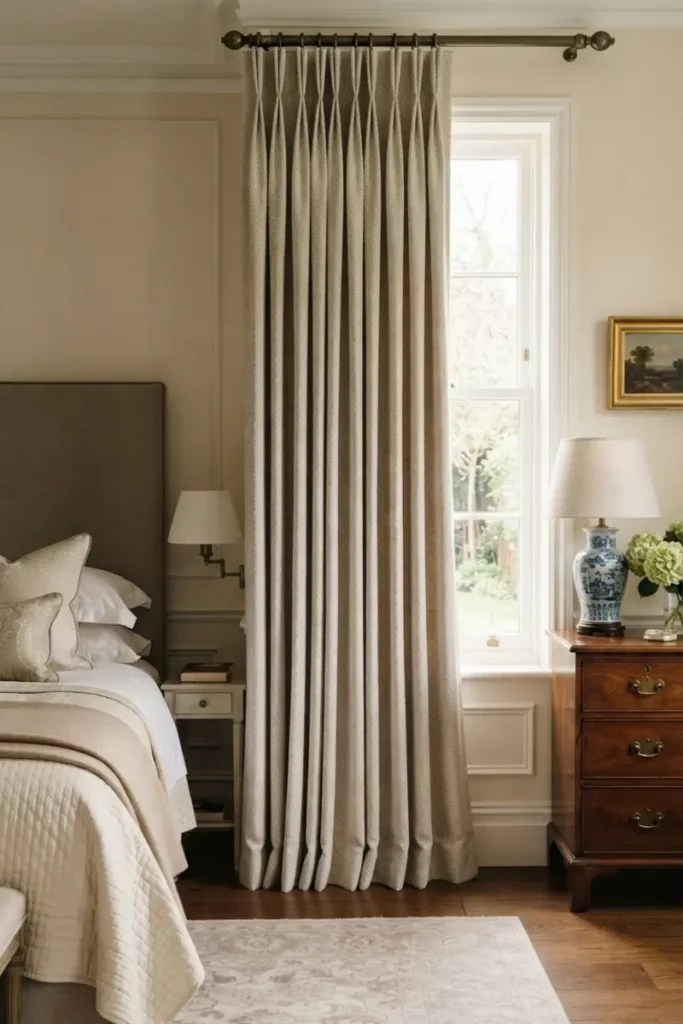
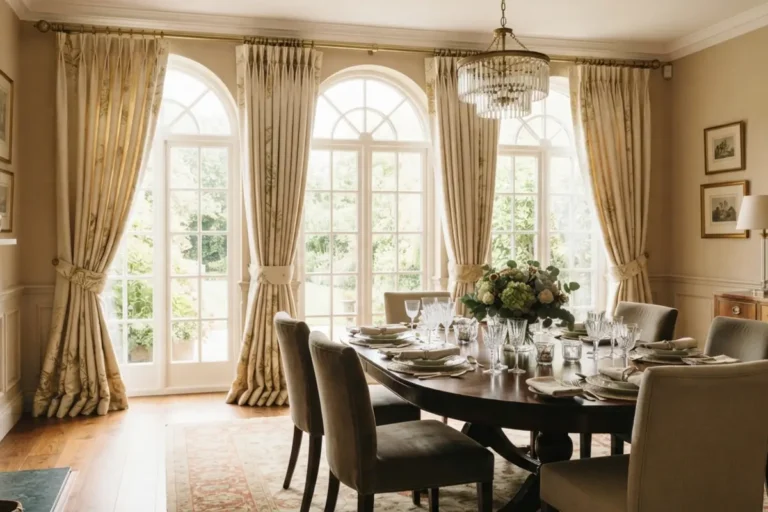
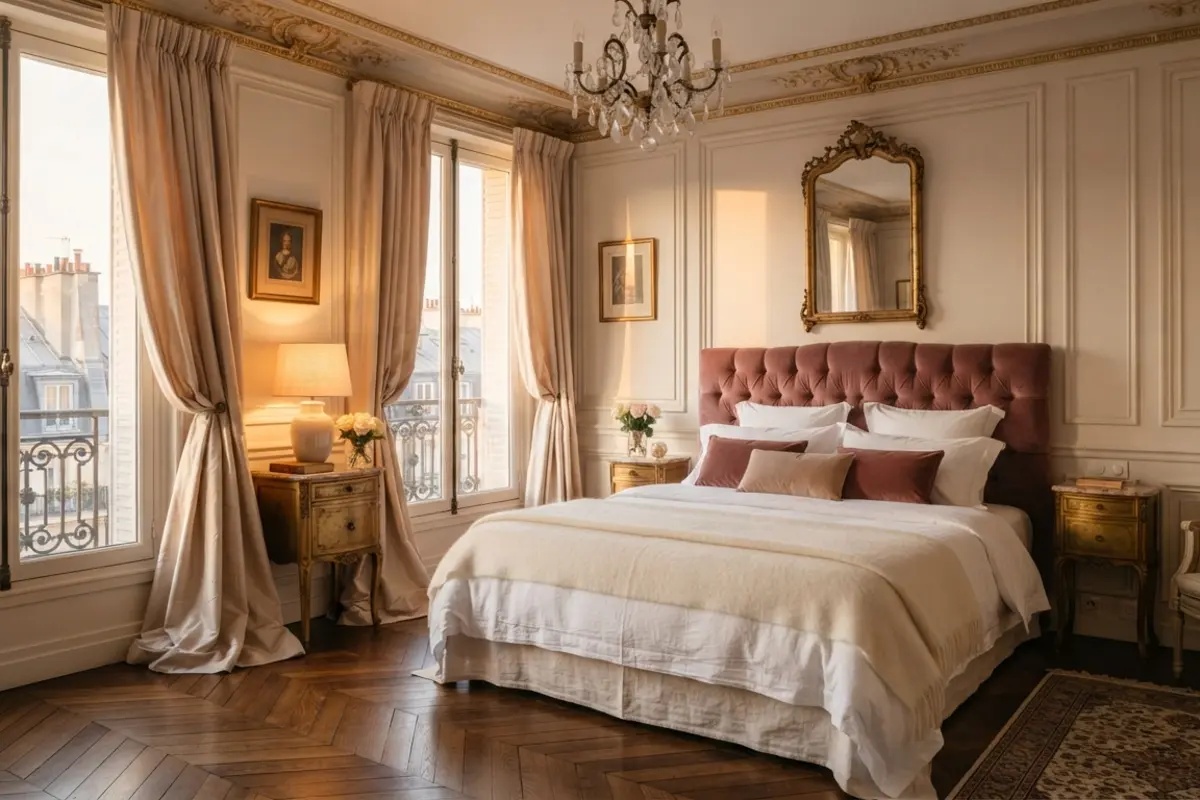
Crisp, tailored pleats give bedroom windows a more formal, put-together appearance — ideal if your bedroom doubles as a space you want to feel elevated, not just functional. The structured folds also tend to hold their shape better over time than a looser gathered heading, keeping the window looking neat with less regular adjustment. This style pairs particularly well with heavier fabrics like velvet or a substantial cotton blend.
Best for: Primary bedrooms in more traditional or formal homes.
9. Color-Block Statement Curtains
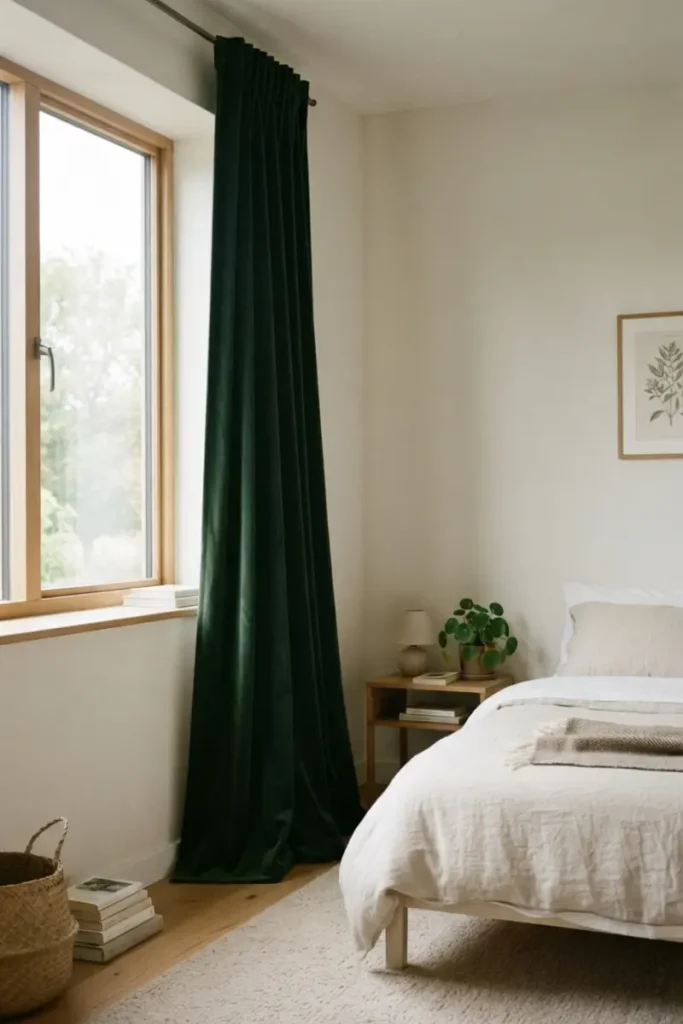
A bold, saturated color — deep green, rust, navy — on an otherwise neutral bedroom instantly becomes the room’s focal point without needing extra decor. Because bedrooms typically have fewer large fabric surfaces than a living room, a single bold curtain has more visual room to stand out uncontested. It’s one of the lower-commitment ways to add real personality to a bedroom, since swapping one curtain is far easier than repainting or replacing furniture.
Best for: Bedrooms with plain walls and minimal furniture that could use one strong design moment.
10. Cordless Panels for Kids’ and Shared Bedrooms
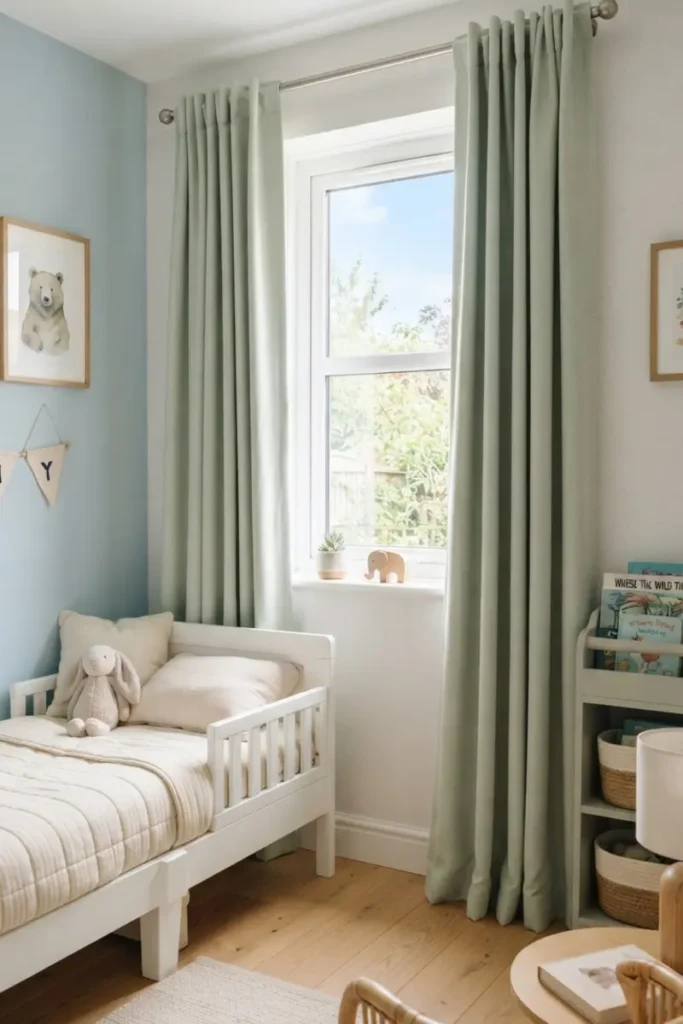
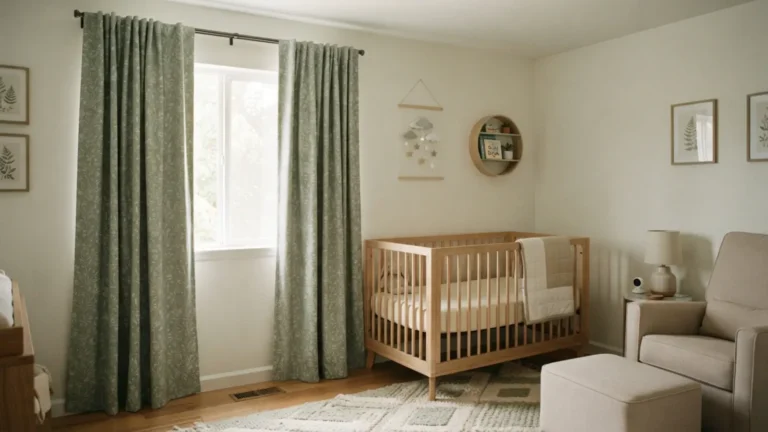
Cordless, easy-glide curtain designs remove dangling cords that can be a safety concern in children’s rooms, while still offering full light control. Most cordless systems are just as easy to open and close as traditional corded ones, so there’s no real trade-off in daily convenience. This style is increasingly the default recommendation for any bedroom shared with young kids, given ongoing safety guidance around window-covering cords.
Best for: Kids’ bedrooms, nurseries, or any shared family bedroom where safety is a priority.
How to Choose Bedroom Curtains for Better Sleep
Start with your light control needs — that decision alone rules out or rules in half the options above. From there, layer in how much visual statement you want the curtains to make, and match the fabric weight to your climate. A bedroom curtain that looks beautiful but doesn’t block the light you need will always feel like the wrong choice — that’s the whole point of picking the right bedroom curtain ideas for your specific room, not just the trendiest one.
FAQ
What color curtains are best for a bedroom?
Neutral tones (cream, taupe, soft grey) create a calm, restful feel, while deeper colors (forest green, navy, burgundy) add drama and coziness. There’s no universally “best” color — it depends on the mood you want.
Do I need blackout curtains in every bedroom?
Not necessarily. Blackout matters most for light-sensitive sleepers, shift workers, and kids’ rooms. If natural morning light doesn’t bother you, a lighter fabric works fine.
How long should bedroom curtains be?
Floor-length or slightly puddling curtains generally look more elevated in a bedroom than curtains that stop short above the floor or windowsill.
Final Thoughts on Bedroom Curtain Ideas
Not sure which style fits your bedroom best? Our guide to curtain styles for every room breaks down each style in more depth — a good next stop before you decide.