Best Curtain Fabrics Explained: Cotton, Linen, Velvet & Polyester
The fabric you choose does more to shape how a curtain looks, feels, and performs than almost any other decision — more than color, more than length, sometimes even more than style. This guide breaks down the four most common curtain fabrics, what each one actually does well, and where each one tends to fall short, so you can match the right material to the right room.
Before You Start: 2 Questions to Ask Yourself
1. Does this room need light control, or just softness?
Some rooms need a fabric that blocks glare and adds privacy — bedrooms and media rooms, for instance. Others just need texture and softness without much functional demand, like a sunroom or a formal dining room.
2. Will this fabric face moisture, sun, or heavy daily wear?
Kitchens, bathrooms, and south-facing windows put more stress on fabric than a quiet guest bedroom does. Some materials hold up to that stress far better than others, and picking the wrong one means replacing curtains sooner than you’d like.
Cotton
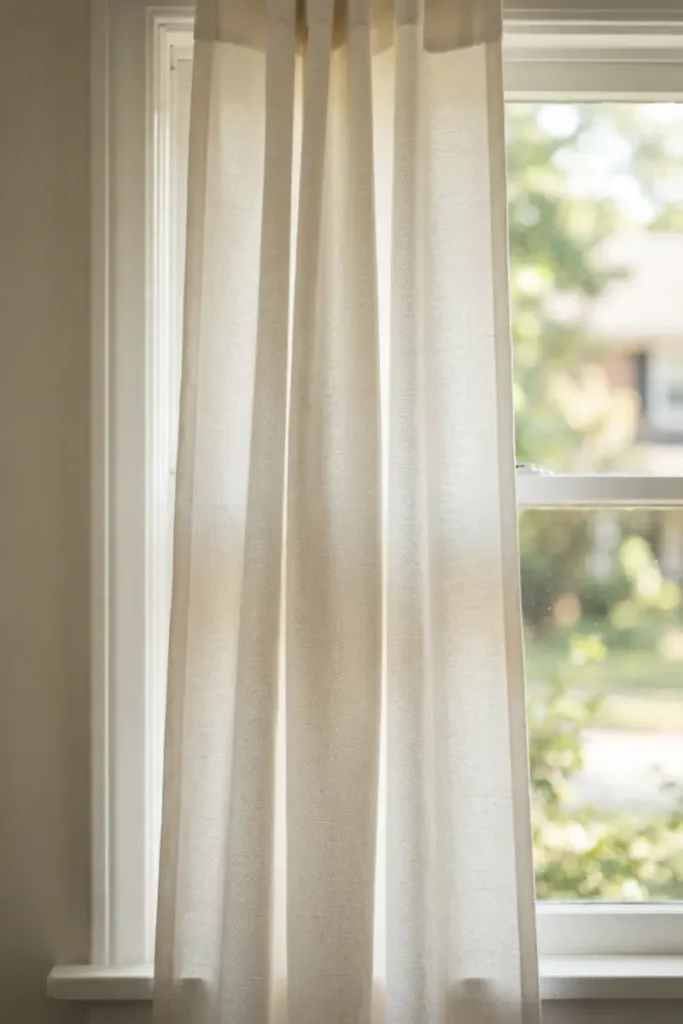
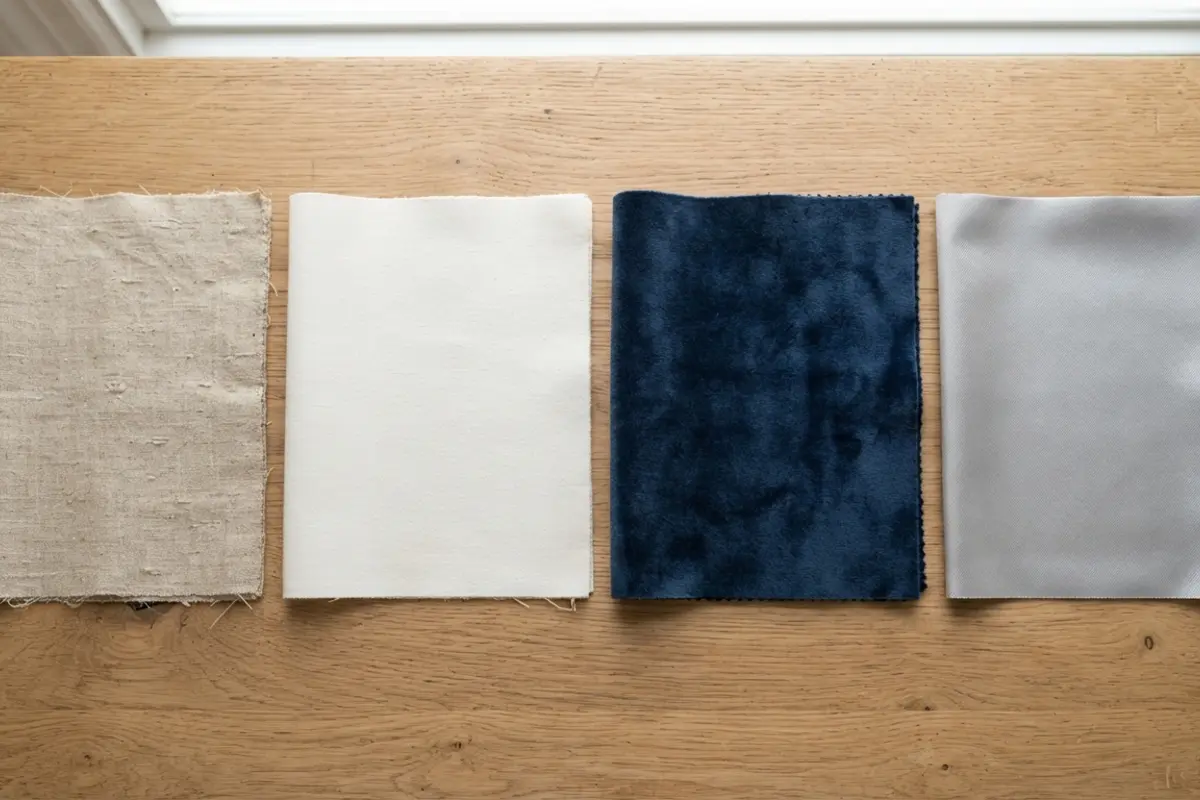
Cotton is one of the most versatile curtain fabrics available, striking a reasonable middle ground between softness, durability, and price that makes it a safe default for almost any room. It breathes well, holds dye nicely for both solid colors and prints, and is easy to wash and iron compared to more delicate fabrics. The trade-off is that plain cotton offers very little light-blocking or insulation on its own — it’s a fabric that does many things reasonably well rather than one thing exceptionally well.
Best for: General-purpose curtains in living rooms, kitchens, and kids’ rooms where easy care matters more than dramatic light control.
Linen
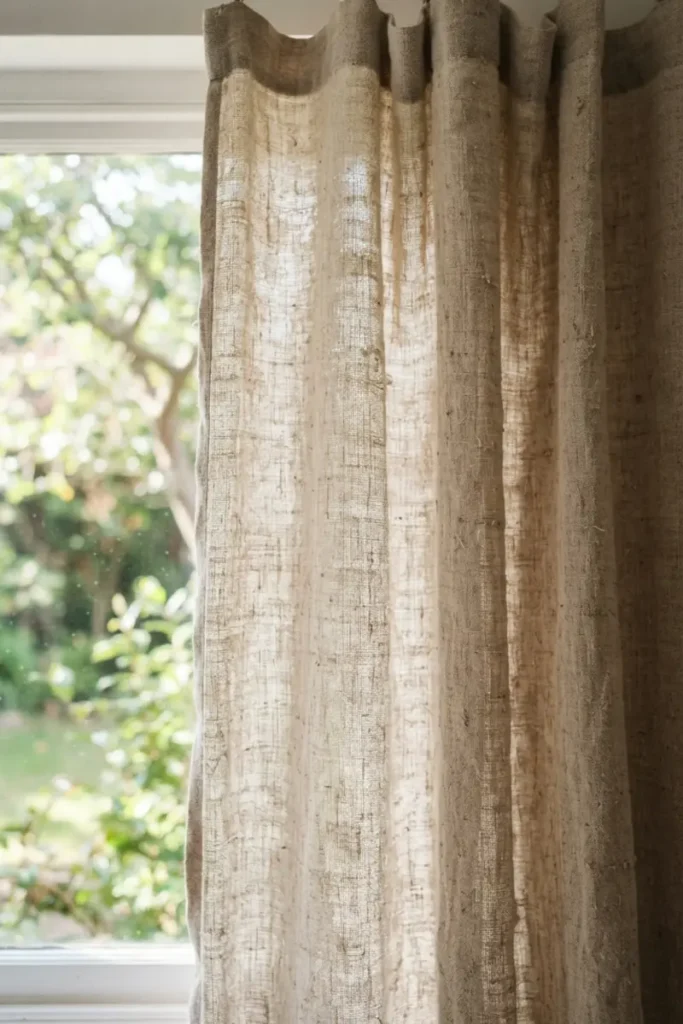
Linen has a relaxed, slightly textured look that reads as effortlessly elegant, with a natural drape that neither cotton nor polyester quite replicates. It’s breathable and has a timeless quality that tends to age well stylistically, rarely looking dated the way trendier fabrics can. The downside is that linen wrinkles easily, can be more expensive than cotton or polyester, and isn’t the most durable option in high-traffic or high-moisture areas without a protective lining.
Best for: Living rooms, dining rooms, and bedrooms where a relaxed, elevated look matters more than heavy-duty performance.
Velvet

Velvet is the heaviest and most luxurious of the common curtain fabrics, with a dense pile that blocks light, dampens sound, and adds real insulation against drafts — all while looking and feeling noticeably more formal than the alternatives. It’s a fabric that visually anchors a room, often becoming the most eye-catching element in whatever space it’s used. The trade-off is weight and cost: velvet curtains are heavier to hang, need sturdier hardware, and are usually the most expensive option per yard.
Best for: Bedrooms, media rooms, and formal living or dining rooms where warmth, drama, and light-blocking all matter.
Polyester
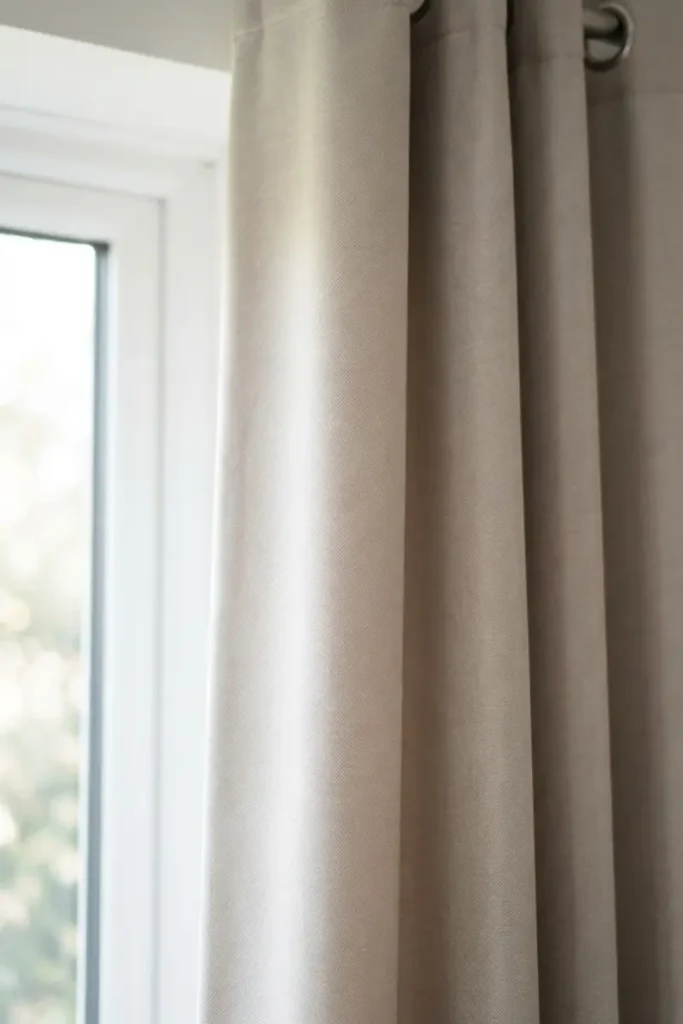
Polyester is the most practical and budget-friendly of the common curtain fabrics, resisting wrinkles, moisture, and fading far better than natural fibers while holding up well to frequent washing. It can be woven to mimic the look of linen, cotton, or even silk at a fraction of the cost and maintenance, which is why it shows up so often in kitchens and bathrooms. The trade-off is that polyester generally lacks the natural drape and texture of cotton or linen, and cheaper versions can look noticeably synthetic up close.
Best for: Kitchens, bathrooms, and any room where moisture resistance and low maintenance matter more than a natural-fiber look.
Fabric Comparison at a Glance
| Feature | Cotton | Linen | Velvet | Polyester |
|---|---|---|---|---|
| Light control | Low | Low | High | Medium |
| Durability | Good | Moderate | Good | Excellent |
| Moisture resistance | Low | Low | Low | High |
| Cost | Moderate | Higher | Highest | Lowest |
| Best rooms | Living room, kitchen | Living/dining room, bedroom | Bedroom, media room | Kitchen, bathroom |
How to Choose the Right Fabric for Your Room
Start with function — a bedroom that needs real light control points toward velvet or a lined fabric, while a kitchen that deals with steam and splashes points toward polyester. From there, weigh look against upkeep: linen and cotton offer a more natural, elevated feel but ask a little more in care, while polyester trades some of that natural texture for convenience and resilience. If you’re still unsure, a mid-weight cotton or cotton-blend is usually the safest starting point for any room without unusual moisture, light, or durability demands. Interior design guides often note that almost any fabric can work as a curtain as long as it has a beautiful drape, which is worth keeping in mind alongside these more practical considerations.
FAQ
Which curtain fabric lasts the longest?
Polyester generally holds up the longest with the least maintenance, since it resists fading, wrinkling, and moisture damage better than natural fibers. Velvet is also durable but requires more careful cleaning.
Is linen or cotton better for curtains?
Linen has a more relaxed, elevated look and better natural drape, while cotton is easier to care for and typically more budget-friendly. Neither is objectively better — it depends on whether look or convenience matters more for the room.
Can velvet curtains be used in a small room?
Yes, though the fabric’s weight and richness can make a small room feel more enclosed. A lighter color or a slightly thinner velvet weave can help keep a small space from feeling too heavy.
Final Thoughts on Curtain Fabrics
Still deciding between blackout and sheer options? Our guide to blackout vs sheer curtains breaks down how each affects light, privacy, and mood in more detail.