
Curtain Hardware Guide: Rods, Rings, and Tracks Explained
This curtain hardware guide covers everything holding your curtains up — because hardware does more than just function in the background, it affects how smoothly curtains open and close, how the fabric hangs, and even the overall style of the window. Here we break down the most common types of curtain hardware, what each one does best, and how to choose the right setup for your window and curtain style.
Before You Start: 2 Questions to Ask Yourself
1. Do you want the hardware to be seen, or hidden?
Some hardware, like a decorative rod with finials, is meant to be a visible design element in its own right. Other systems, like a track, are designed to disappear entirely once curtains are hung, letting the fabric do all the visual work.
2. How often will you actually open and close these curtains?
Curtains that get opened and closed daily need smooth-gliding hardware that won’t wear out or stick over time. Curtains that stay mostly closed or mostly open, like formal dining room drapery, can get away with simpler, less mechanically demanding hardware.
Curtain Rods
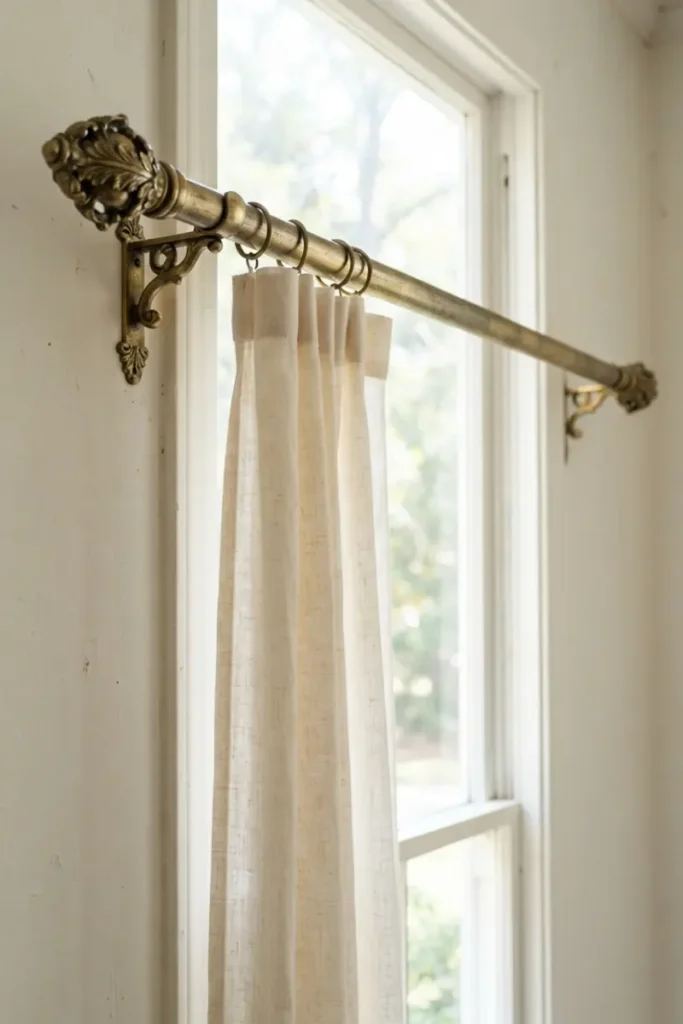
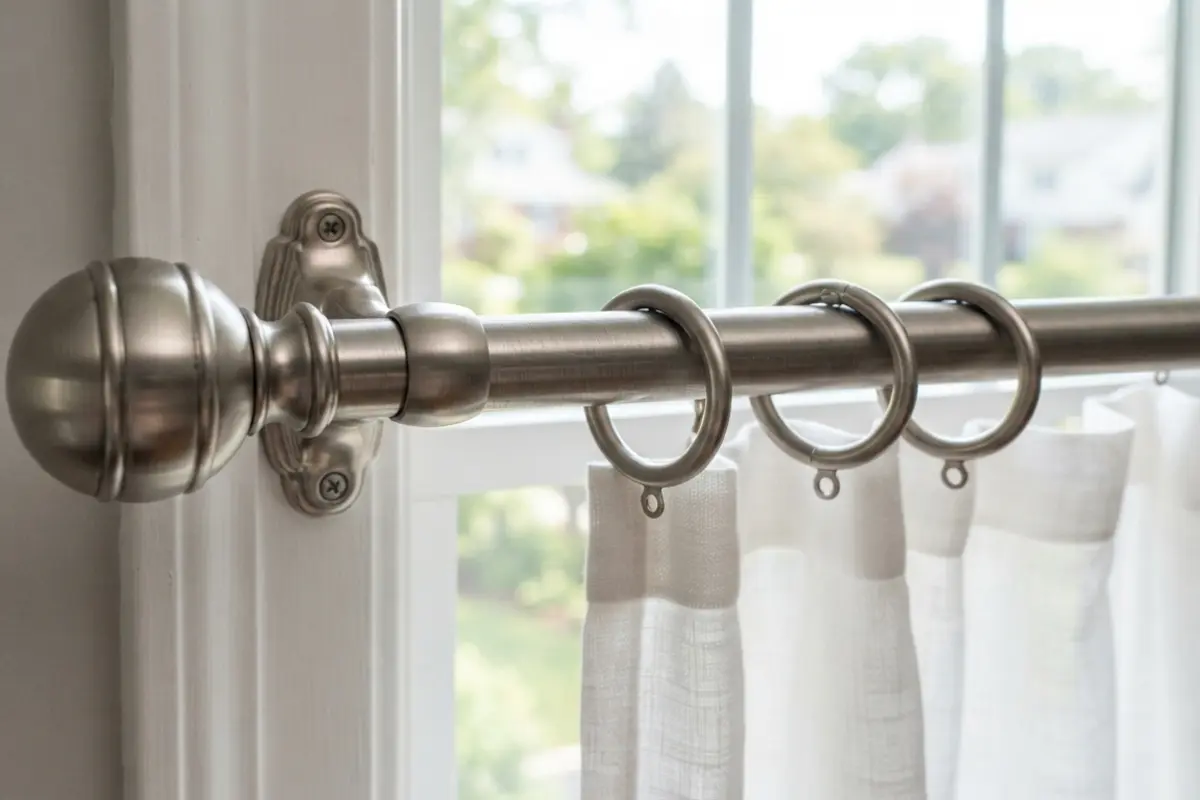
Curtain rods are the most common and widely available hardware option, typically consisting of a pole, brackets to mount it to the wall, and decorative end caps called finials that add a finishing touch. They’re straightforward to install, come in a huge range of finishes and diameters, and work with nearly every curtain heading style, from rod-pocket to pinch-pleat. The trade-off is that curtains sliding directly on a rod — without rings — can create more friction and wear on the fabric over time compared to smoother systems.
Best for: Most standard windows in living rooms, bedrooms, and dining rooms where a visible, decorative rod is part of the look.
Curtain Rings
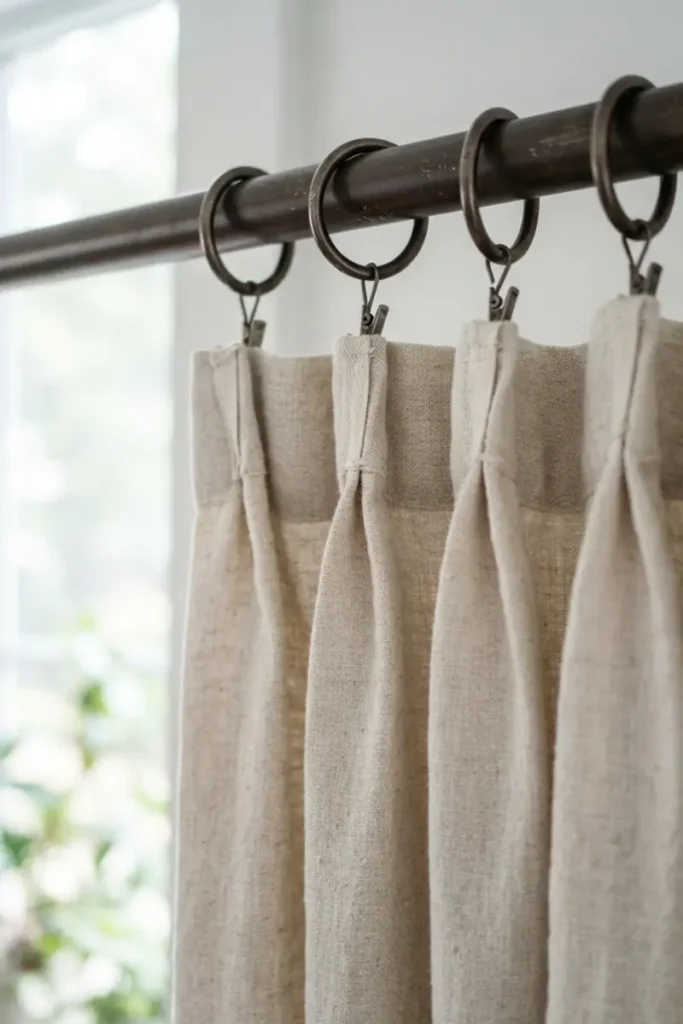
Curtain rings clip or sew onto the top of curtain fabric and then slide along a rod, reducing friction significantly compared to fabric sliding directly on the pole itself. This makes opening and closing curtains noticeably smoother, and rings also add a bit of visual detail at the top of the curtain — visible metal or wood rings between each fold. Rings do require a compatible rod (usually one without a fully enclosed track) and add a small amount of extra cost and installation time compared to a rod alone.
Best for: Curtains that get opened and closed often, where smooth gliding matters more than a completely minimal look.
Curtain Tracks
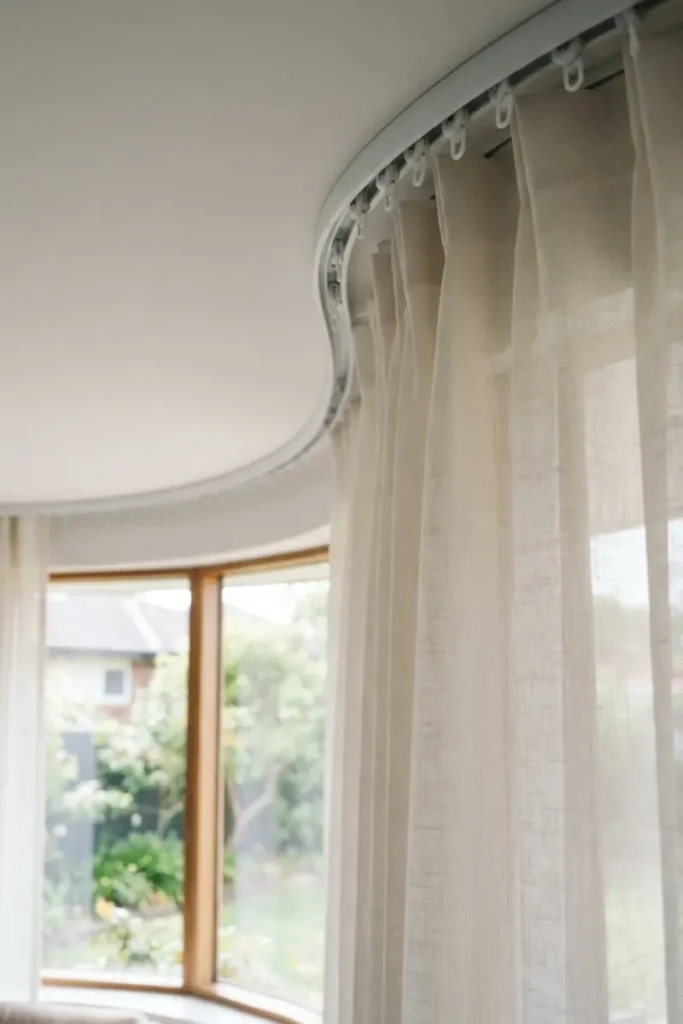
Curtain tracks are enclosed channels, usually mounted to the ceiling or wall, that hide all the hardware from view while gliders inside the track carry the curtain fabric smoothly along its length. Tracks are especially useful for bay windows, curved windows, or ceiling-mounted setups where a straight rod simply wouldn’t work, and they tend to offer the smoothest possible glide of any hardware option. The trade-off is that tracks are purely functional — since they’re hidden, they add no decorative value on their own, and the look relies entirely on the curtain fabric itself.
Best for: Bay windows, curved windows, and ceiling-mounted curtains where flexibility and a hidden, seamless look matter more than decorative hardware.
Curtain Hardware Guide: Comparison at a Glance
| Feature | Curtain Rods | Curtain Rings | Curtain Tracks |
|---|---|---|---|
| Visibility | Decorative, visible | Visible, adds detail | Hidden |
| Glide smoothness | Moderate | Good | Excellent |
| Best window shapes | Standard, flat windows | Standard, flat windows | Bay, curved, or ceiling-mounted |
| Installation complexity | Easy | Easy-moderate | Moderate |
How to Choose the Right Hardware for Your Window
Start with your window’s shape — a standard rectangular window works well with a rod, while a bay or curved window usually needs a track to follow the angle properly. From there, think about how often the curtains will actually move: daily use points toward rings for smoother gliding, while curtains that stay mostly still can work fine on a simple rod alone. Finally, decide how much you want the hardware itself to contribute visually — a decorative rod becomes part of the room’s style, while a track disappears entirely and lets the fabric take center stage. For more general background on curtain hardware types, see Curtain styling guides.
FAQ
Do I need curtain rings if I already have a rod?
Not necessarily — many curtain heading styles, like rod-pocket or tab-top, are designed to slide directly onto a rod without rings. Rings are most useful when you want smoother operation or a pinch-pleat style heading.
Can curtain tracks be used for decorative curtains too?
Yes, tracks work with any curtain style since the track itself stays hidden behind the fabric. The curtain’s own heading style and fabric provide all the visual interest.
What’s the standard diameter for a curtain rod?
Most curtain rods range from about 3/4 inch to 1.5 inches in diameter, with lighter fabrics working fine on thinner rods and heavier fabrics like velvet benefiting from a sturdier, thicker rod to support the weight.
Final Thoughts on Curtain Hardware
This curtain hardware guide should make your hardware decision straightforward — but getting the actual measurements right is just as important. Our guide to measuring windows for curtains walks through exactly how to measure width, height, and rod placement step by step.