Bathroom Blinds Guide: Moisture-Resistant Options That Actually Hold Up
A bathroom blinds guide has to start from a different place than almost any other room — hot showers send steam straight to the nearest surface, and a bathroom window usually takes the brunt of it. This guide breaks down the materials, styles, and safety features that actually hold up in a humid, high-traffic space.
Why Bathroom Windows Need Special Blind Materials
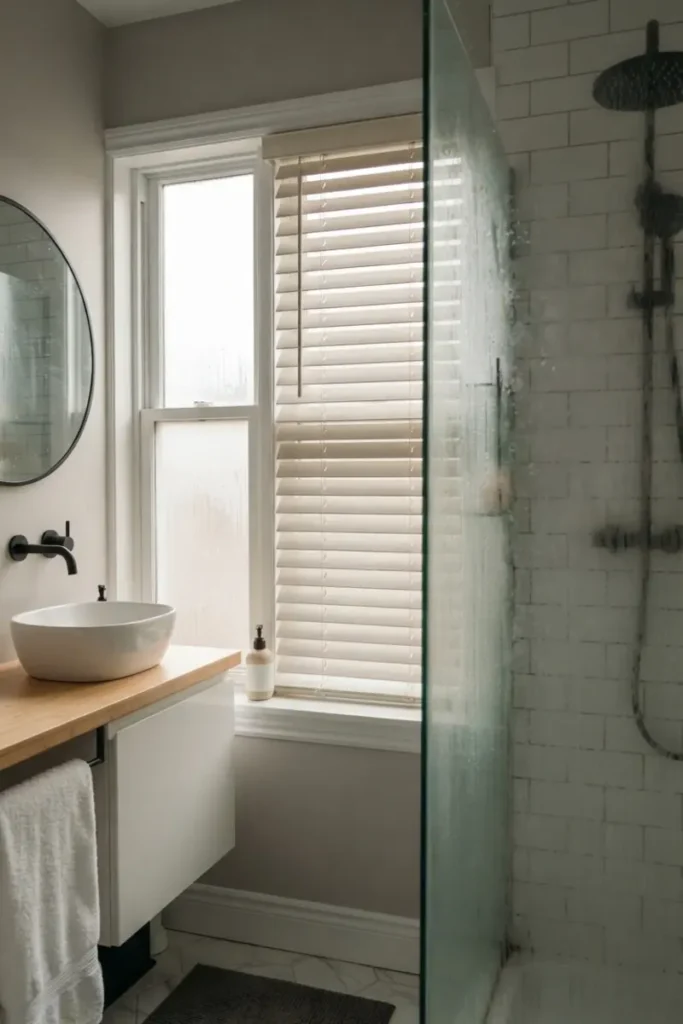
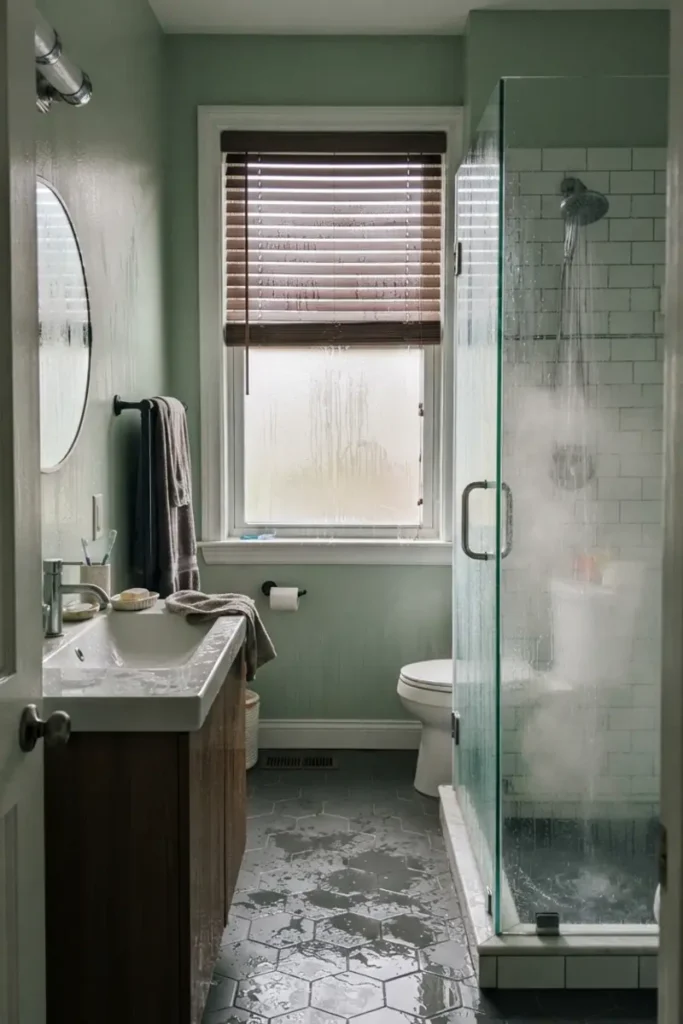
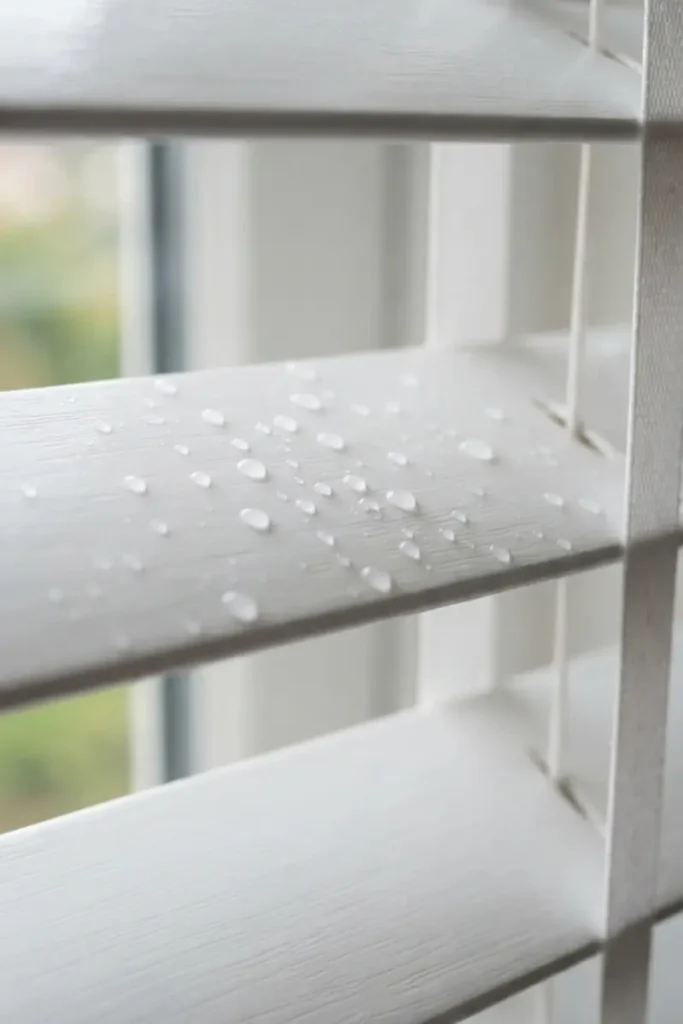
Bathrooms deal with more moisture, steam, and daily use than almost any other room, which means standard blind materials often warp, stain, or grow mildew within months.
Choosing the right bathroom blinds means considering:
- Moisture and humidity resistance
- Privacy at eye level, especially for street-facing windows
- Heat tolerance near hot showers
- Cordless, child-safe operation
- Easy wipe-clean maintenance
- A finish that still looks intentional, not purely utilitarian
Getting these factors right from the start avoids a costly, frustrating replacement a year or two down the line.
Faux Wood and Vinyl Blinds
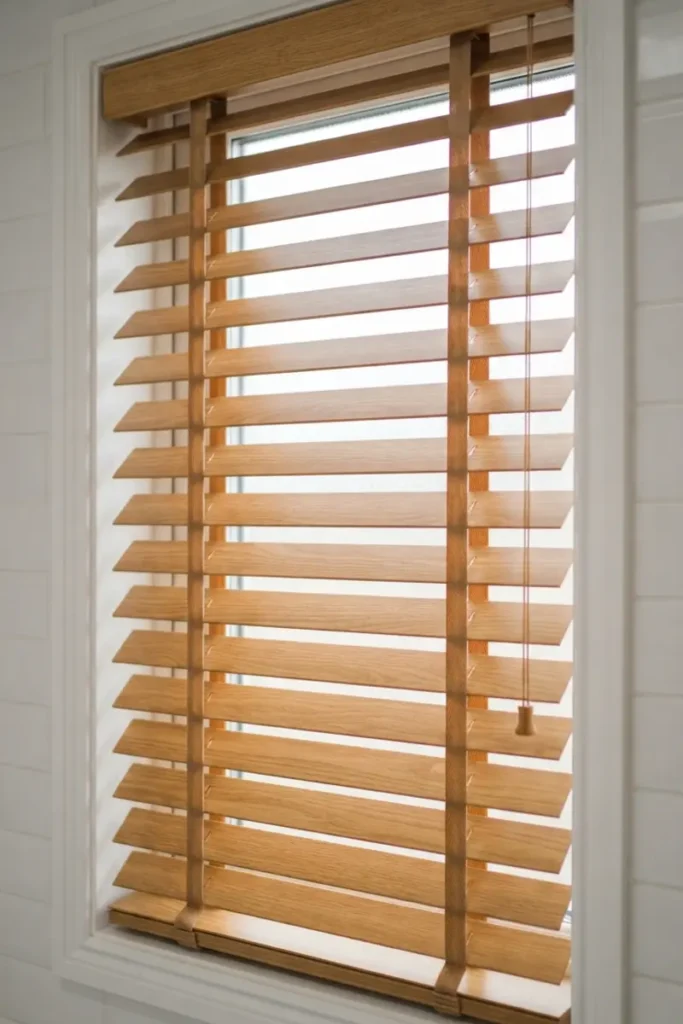
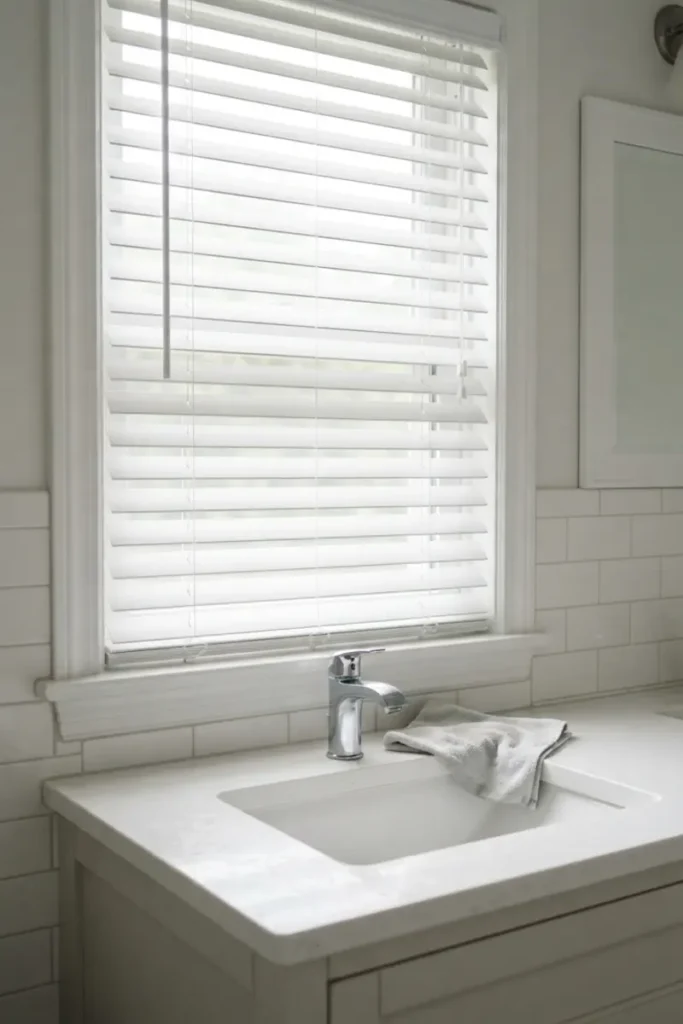
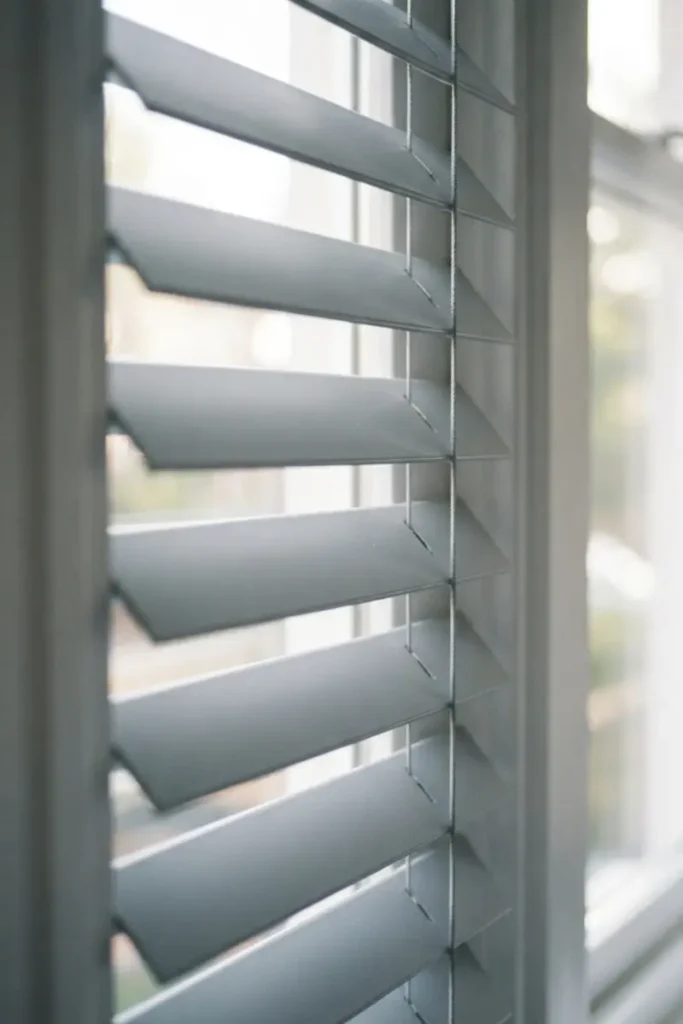
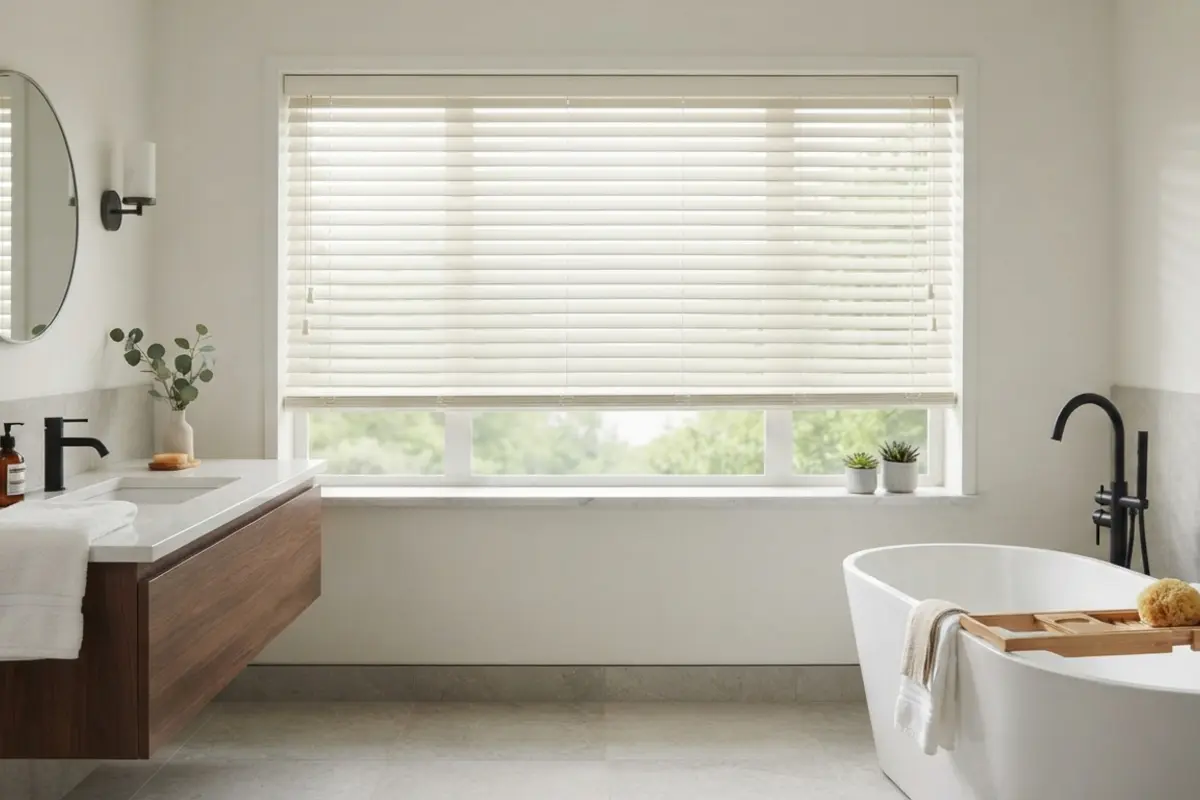
Faux wood and vinyl blinds are the most commonly recommended bathroom blind material, and for good reason — they resist warping, cracking, and mildew in a way real wood and untreated fabric simply can’t.
Why faux wood and vinyl work so well in bathrooms:
- Non-porous surface resists moisture absorption
- Wipes clean with a damp cloth in seconds
- Wide range of finishes, from bright white to warm woodgrain
- Tilting slats give precise light and privacy control
- Budget-friendly compared to real wood or custom shutters
They remain one of the safest starting points for almost any bathroom window.
Aluminum and Venetian Blinds
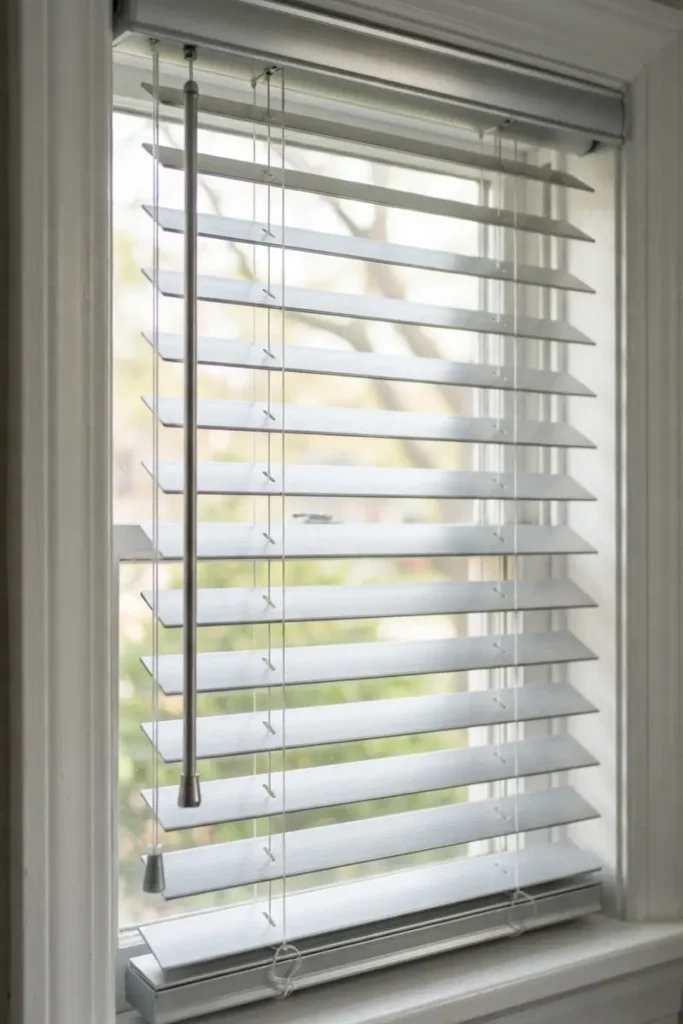
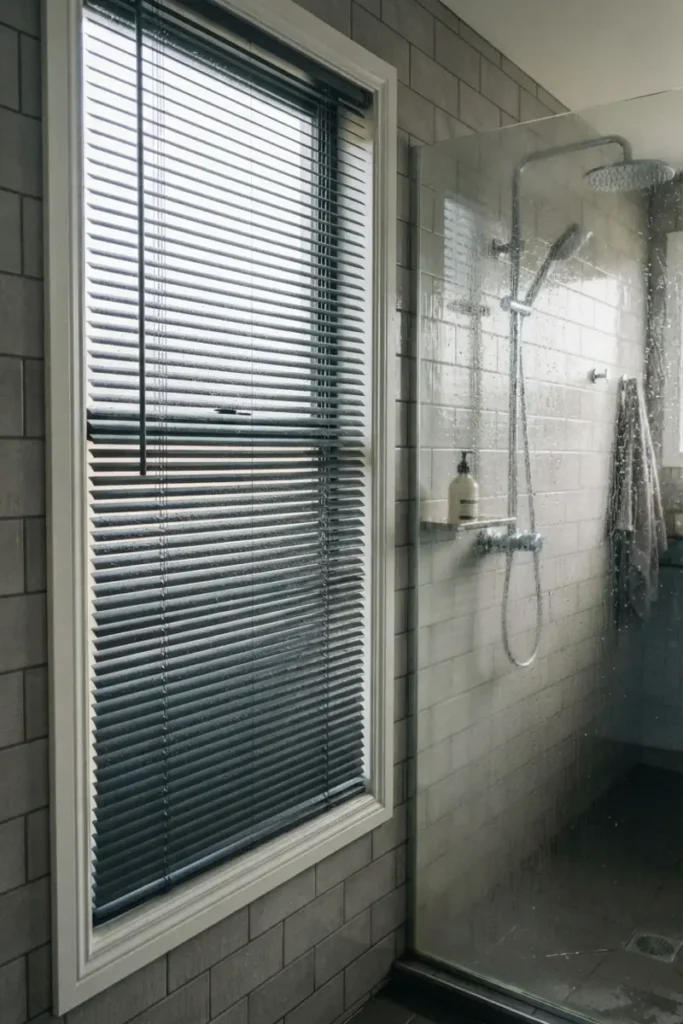
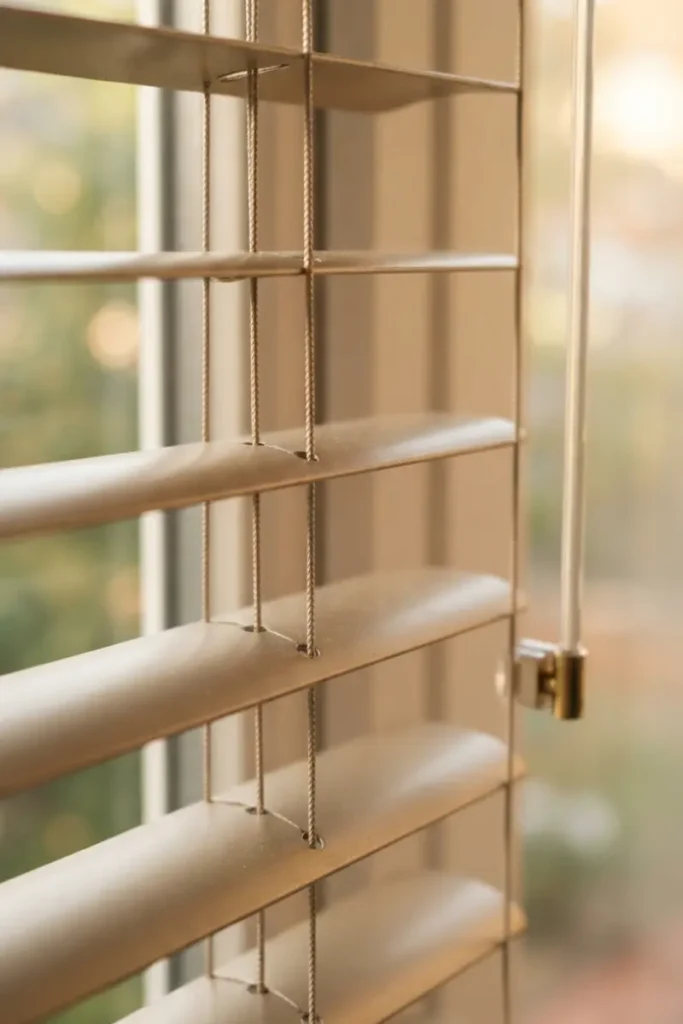
Aluminum blinds take moisture and heat resistance a step further than faux wood, making them a strong choice for a wet room or a bathroom with a shower that runs consistently hot.
What makes aluminum blinds a strong bathroom pick:
- Handles heat and steam better than almost any other material
- Completely non-porous, so mildew has nothing to grip
- Slim slat profile suits modern, minimalist bathrooms
- Lightweight and easy to operate daily
- Typically the most budget-friendly hard blind option
The trade-off is a cooler, more utilitarian look than faux wood’s warmer finish.
Top-Down/Bottom-Up Shades
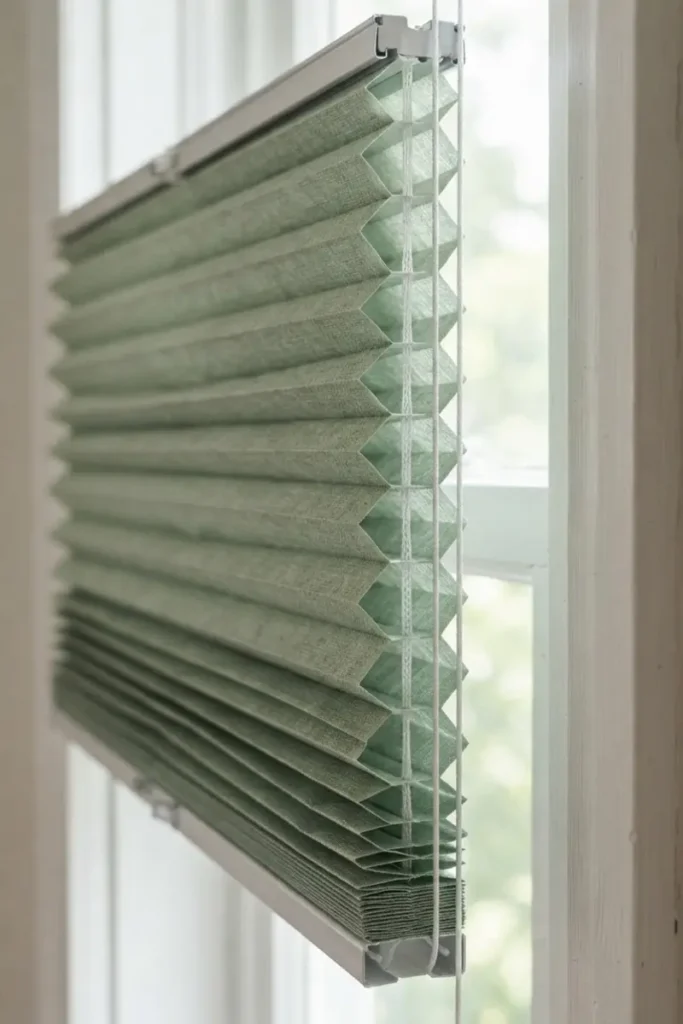
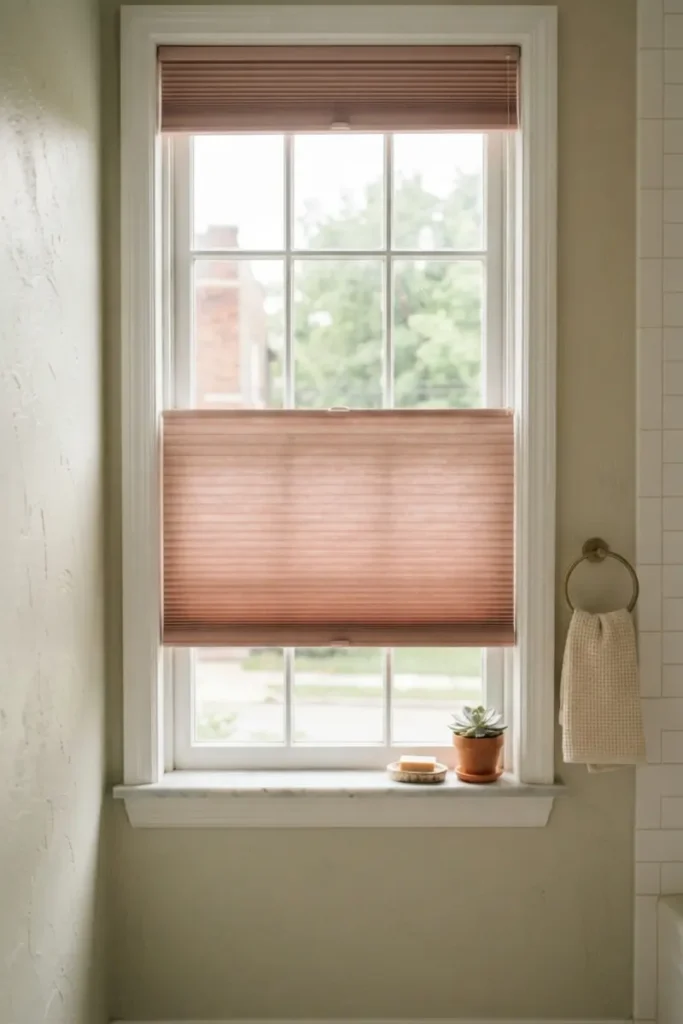
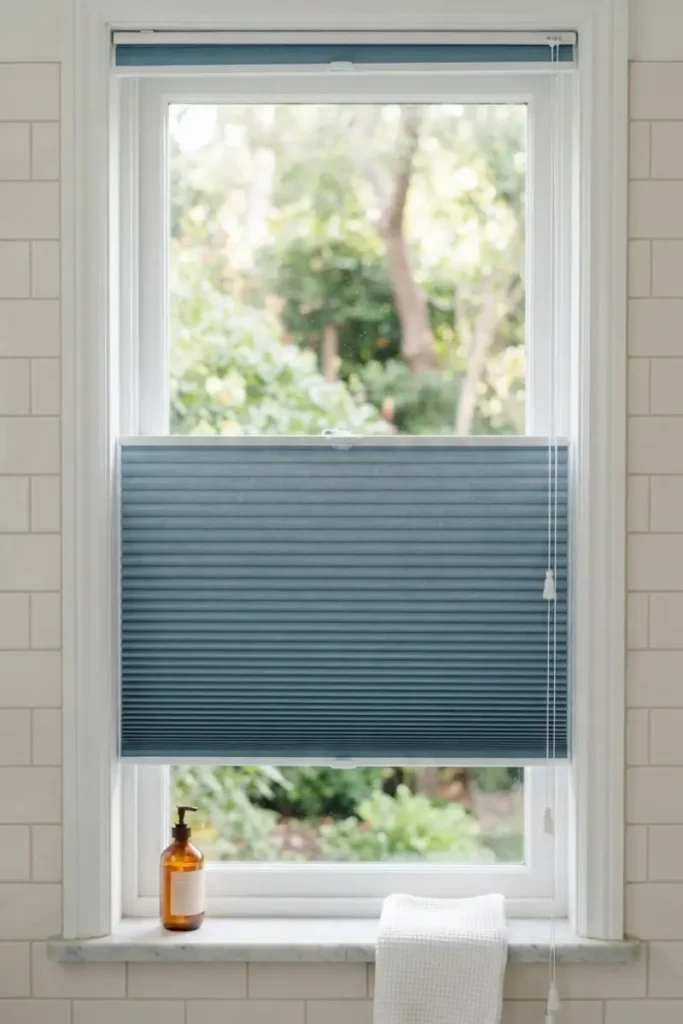
This style solves a specifically bathroom problem better than almost any other window treatment — the ability to lower the shade from the top for daylight while keeping the bottom fully closed for privacy.
Why top-down/bottom-up shades suit bathrooms so well:
- Privacy at eye level without sacrificing natural light
- Ideal for street-facing or ground-floor windows
- Often available in moisture-resistant honeycomb fabric
- Flexible positioning throughout the day
- Adds a softer, more designed look than flat blinds
Many homeowners find this the single most practical bathroom-specific upgrade on this list.
Roller Shades and Roman Shades
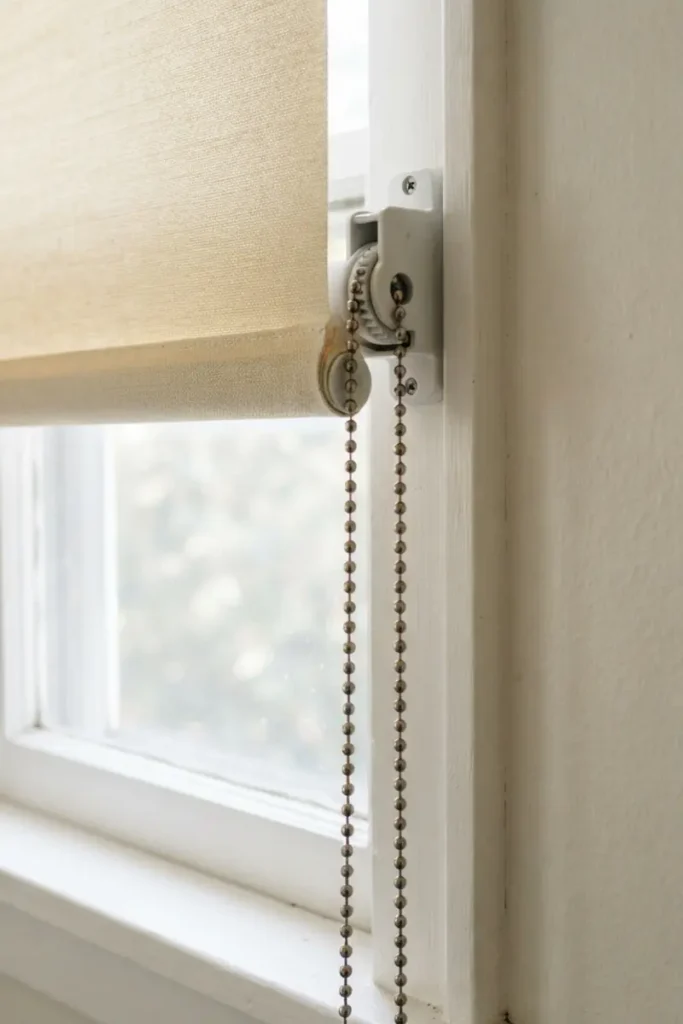
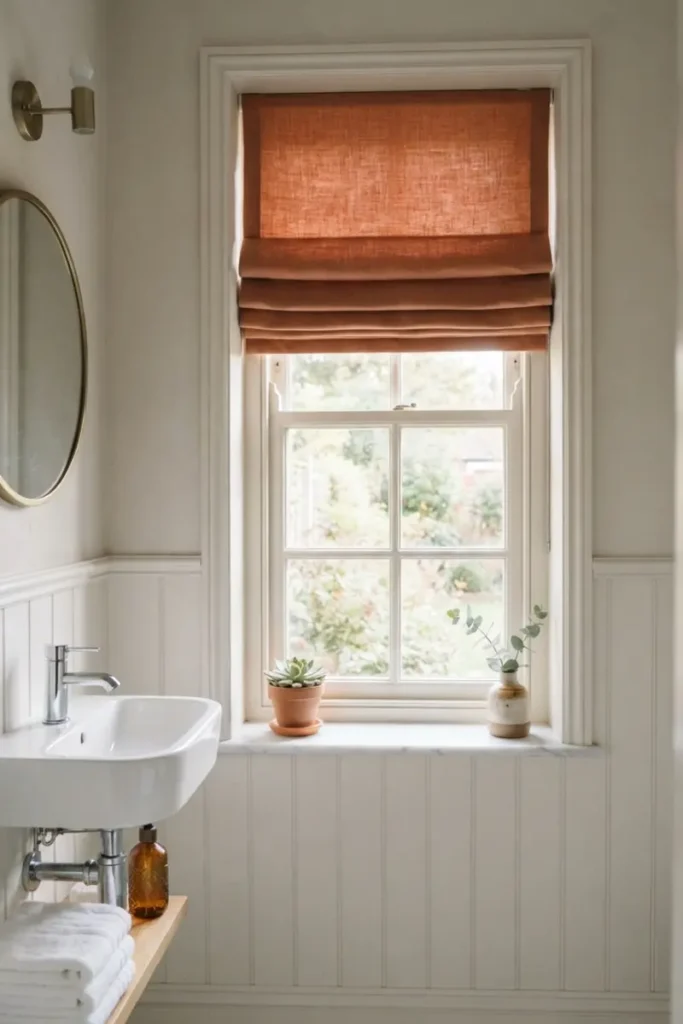
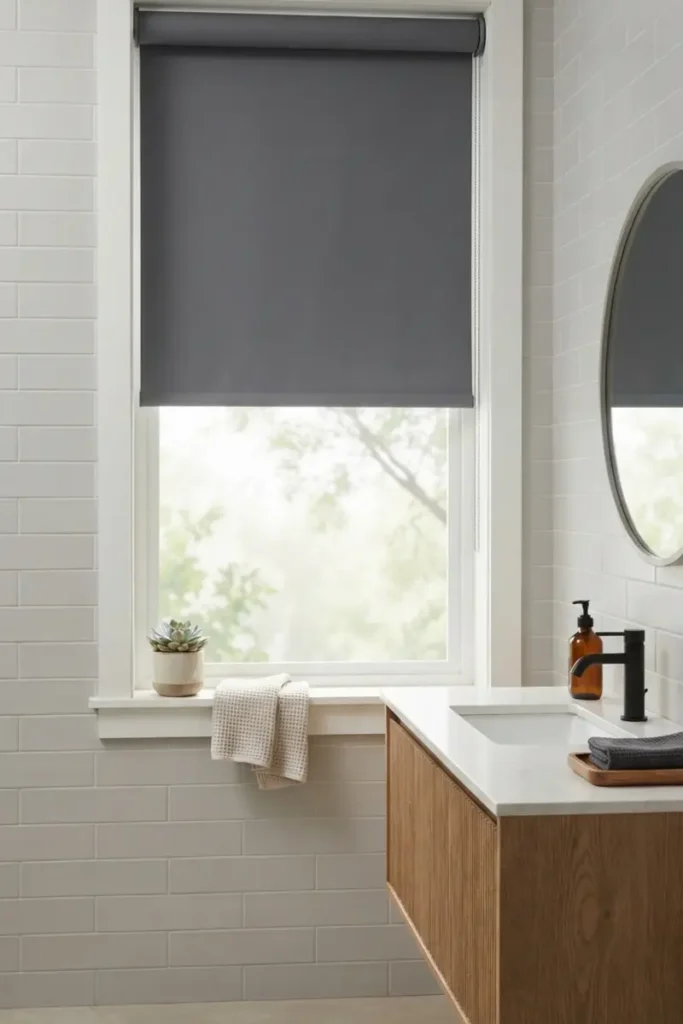
Roller shades roll completely out of view for a clean, minimal look, while Roman shades bring soft fabric and a tailored structure for a more elevated feel — though the two suit very different bathroom situations.
Where each style works best:
- Roller shades: moisture-resistant fabrics wipe clean easily
- Roller shades: continuous loop clutch stops the shade at any position
- Roman shades: better suited to powder rooms or half-baths
- Roman shades: avoid using near a frequently used shower or tub
- Both: available in styles that coordinate with bathroom hardware finishes
Matching the style to your bathroom’s actual humidity level matters more than personal preference alone.
Cordless and Motorized Safety Features
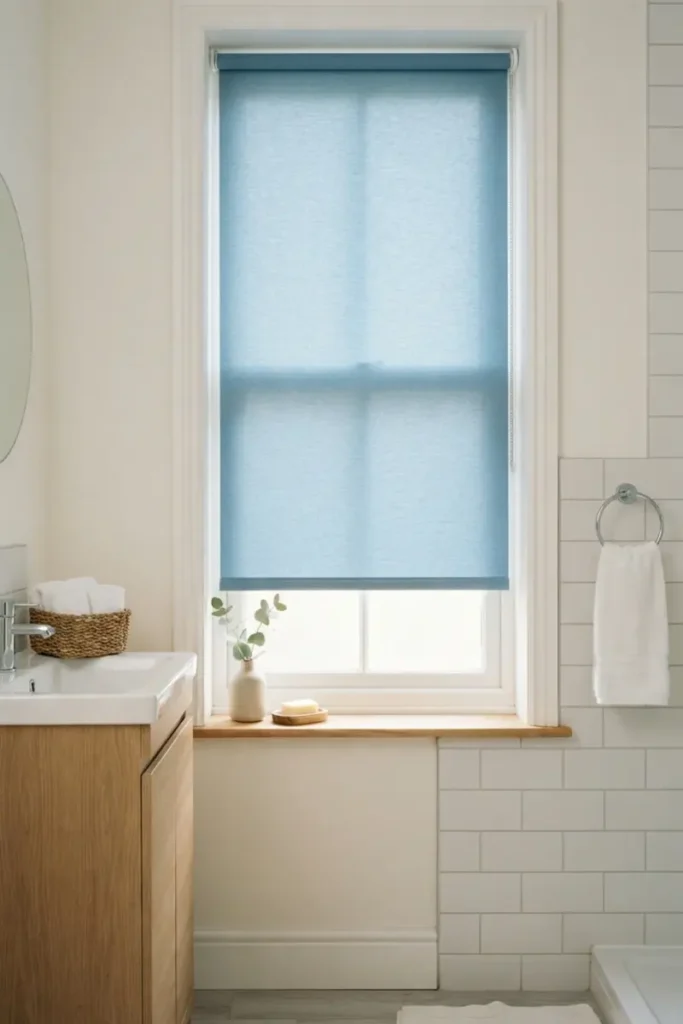
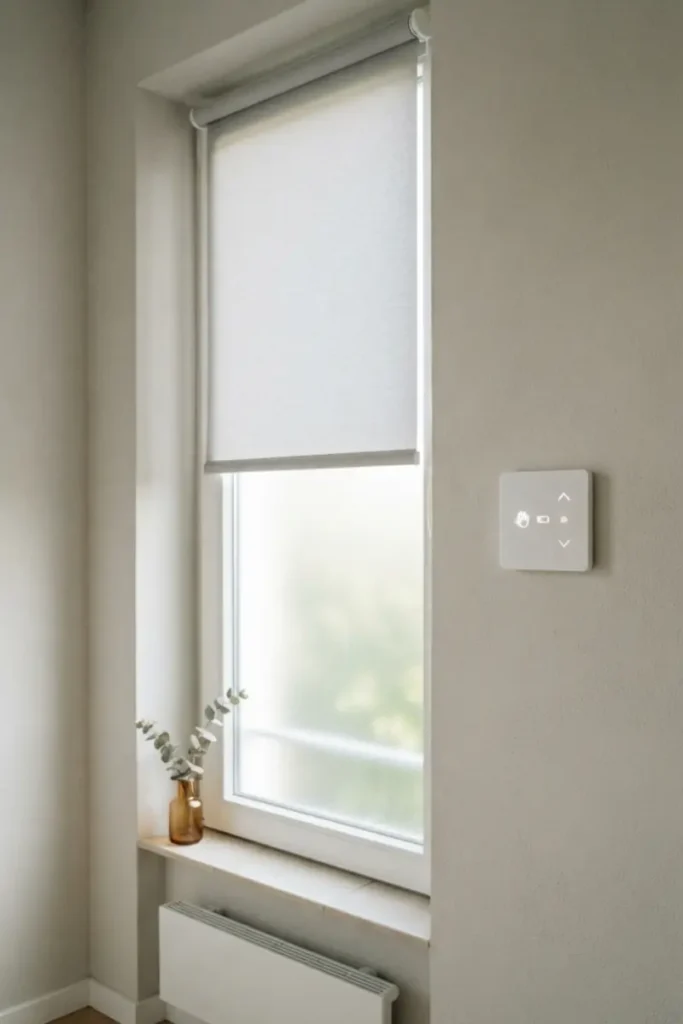
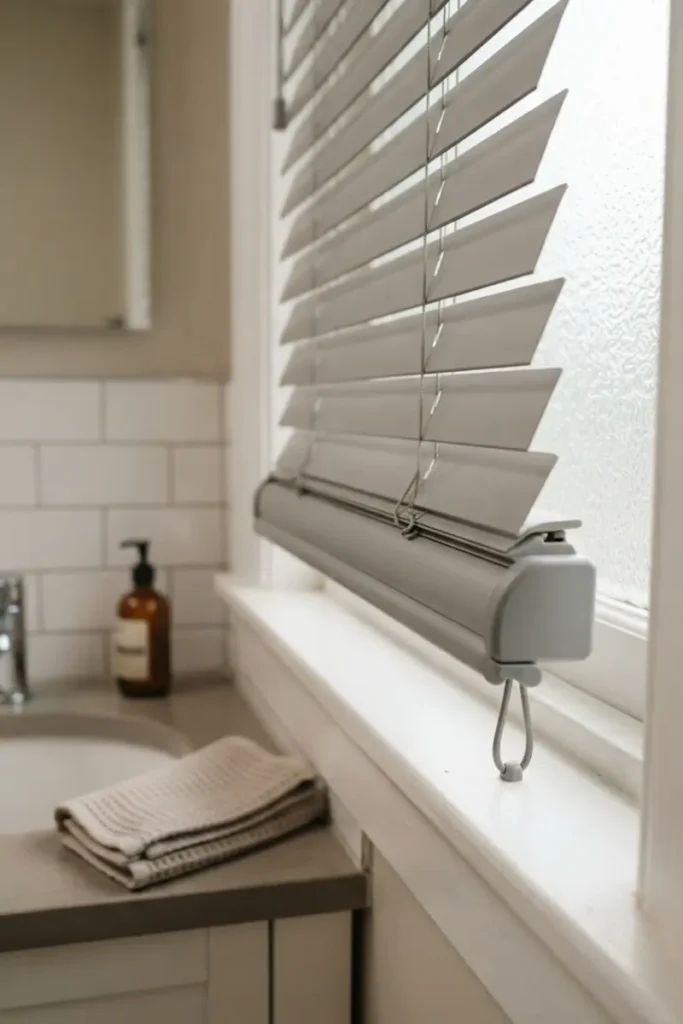
Regardless of material or style, cordless operation should be treated as a non-negotiable safety standard in any bathroom used by children.
Why cordless and motorized options are worth prioritizing:
- Removes the strangulation risk that corded blinds carry
- Motorized versions operate without touching the blind with wet hands
- Battery-powered, low-voltage motors are safe near water
- No exposed wiring or plugs close to a sink or tub
- Comes with essentially no style trade-off compared to corded versions
This is one of the easiest, lowest-risk upgrades on this entire list.
Common Mistakes to Avoid
- Choosing real wood blinds for a full bathroom with a shower or tub
- Ignoring cord safety in a bathroom used by kids
- Picking fabric Roman shades for a high-moisture spot
- Mounting blinds too low, cutting off natural light
- Overlooking motorized options that solve the wet-hands problem
- Assuming all “moisture-resistant” labels perform equally
Careful material and hardware choices upfront save a full re-installation later.
FAQ
Are real wood blinds ever okay in a bathroom?
Generally not recommended for a full bathroom with a shower or tub, since real wood warps and discolors with regular humidity exposure — faux wood is the safer alternative for the same look.
What’s the benefit of top-down/bottom-up shades specifically for bathrooms?
They let you keep the bottom half closed for privacy at eye level while lowering the top for natural light, solving a bathroom-specific privacy need that standard blinds can’t match as precisely.
Can I use fabric Roman shades near a shower?
It’s not recommended — fabric shades are better kept in powder rooms or half-baths with minimal direct moisture exposure, since they don’t hold up to steam and splashes the way vinyl or faux wood do.
External Resources
For more bathroom window treatment inspiration:
Final Thoughts on Bathroom Blinds
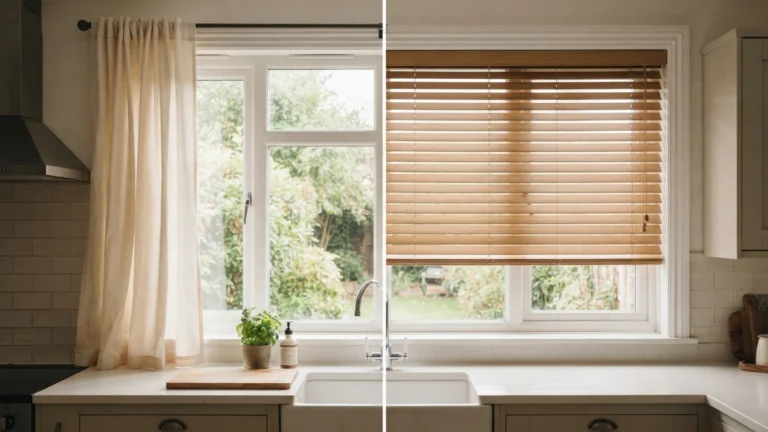
If you’re still deciding between blinds and fabric curtains, our guide to bathroom curtain ideas covers waterproof fabric options worth comparing too.
💡 Found this helpful? Save this guide on Pinterest so you can find it again when you’re ready to shop!