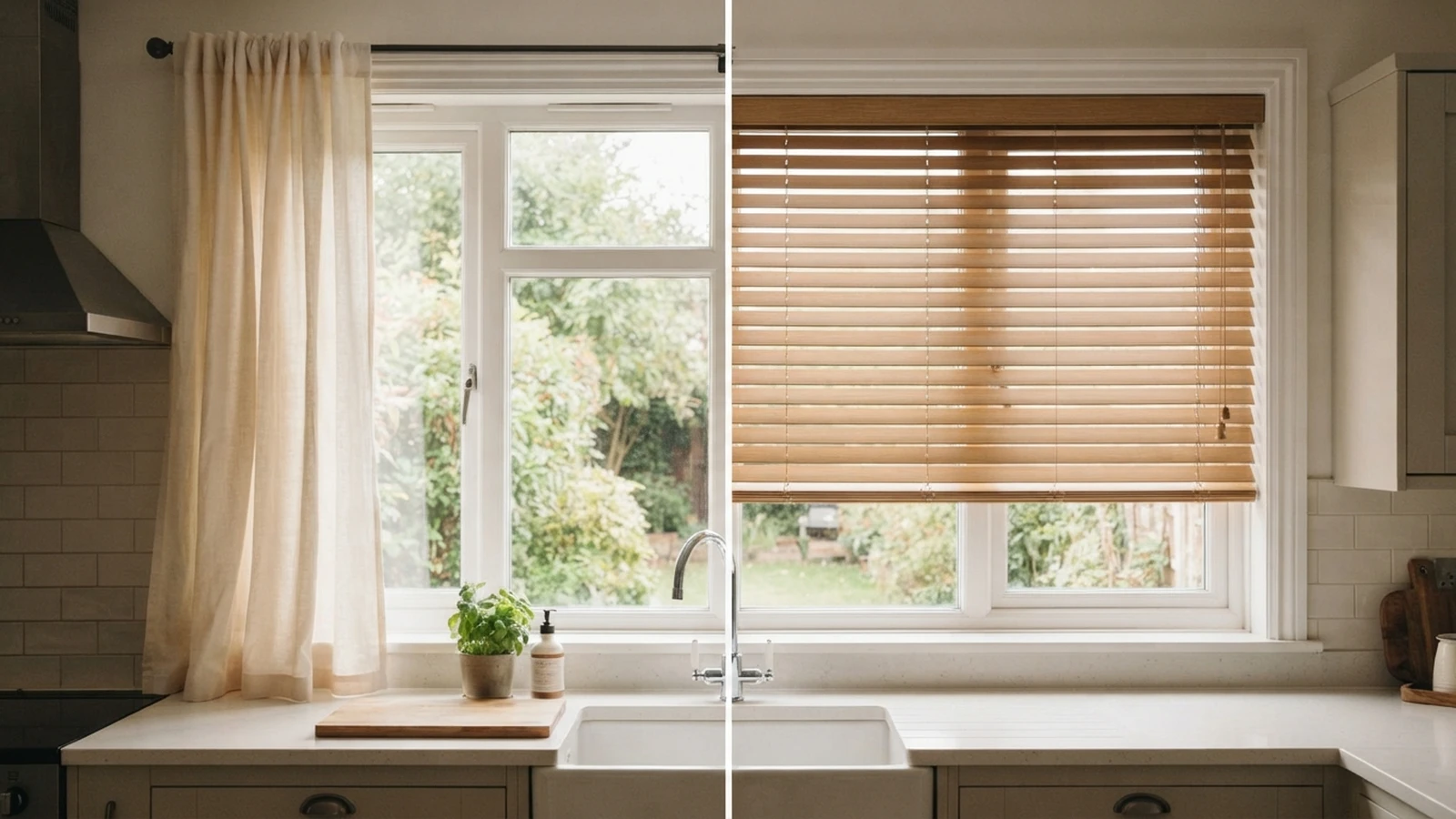
Kitchen Curtains vs Blinds: Which Is Right for Your Window?
Kitchen curtains vs blinds is one of the most common window-treatment decisions homeowners face, and there’s no single right answer — it depends on your window’s location, your kitchen’s style, and how much cleaning you’re willing to do. This guide breaks down where each option genuinely excels, so you can pick the one that actually fits your space instead of just the one that looks nicest in photos.
Before You Decide, Consider This
Is your window directly above a sink or stove?
Windows in direct contact with steam, splashes, or grease benefit far more from wipeable blinds than from fabric that needs regular washing. Windows away from these zones have more flexibility either way.
Do you want precise light control throughout the day?
Blinds let you angle slats for fine-tuned light and privacy without fully opening or closing. Curtains are typically more all-or-nothing, though sheers offer a middle ground.
Fabric Curtains: Warmth and Style
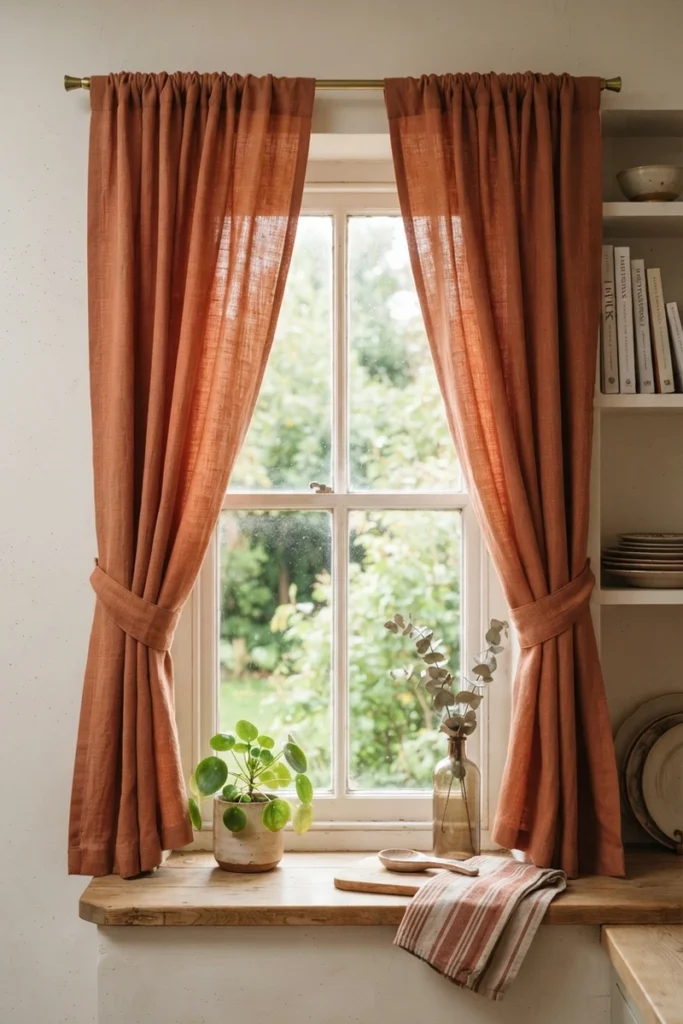
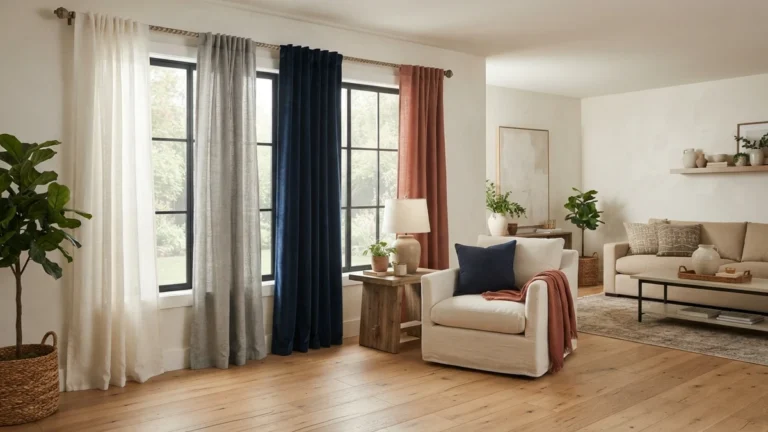
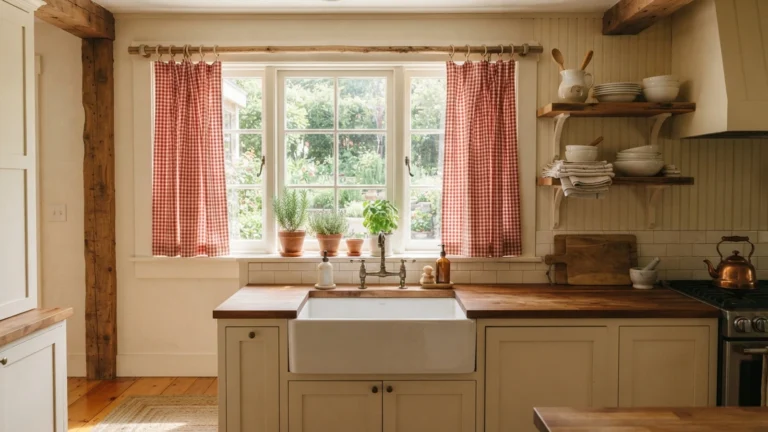
Fabric curtains bring softness, color, and pattern to a kitchen in a way that hard window treatments simply can’t replicate, instantly making the space feel warmer and more personal. They’re also one of the easiest ways to add a specific style — farmhouse, modern, coastal — since fabric comes in far more variety than blind slats ever could. The trade-off is maintenance: curtains near cooking areas need regular washing to stay fresh, and they don’t offer the same precise, adjustable light control that blinds do.
Best for: Kitchens where style and warmth matter more than maximum practicality, especially windows away from the sink or stove.
Faux Wood and Aluminum Blinds: Practical and Wipeable
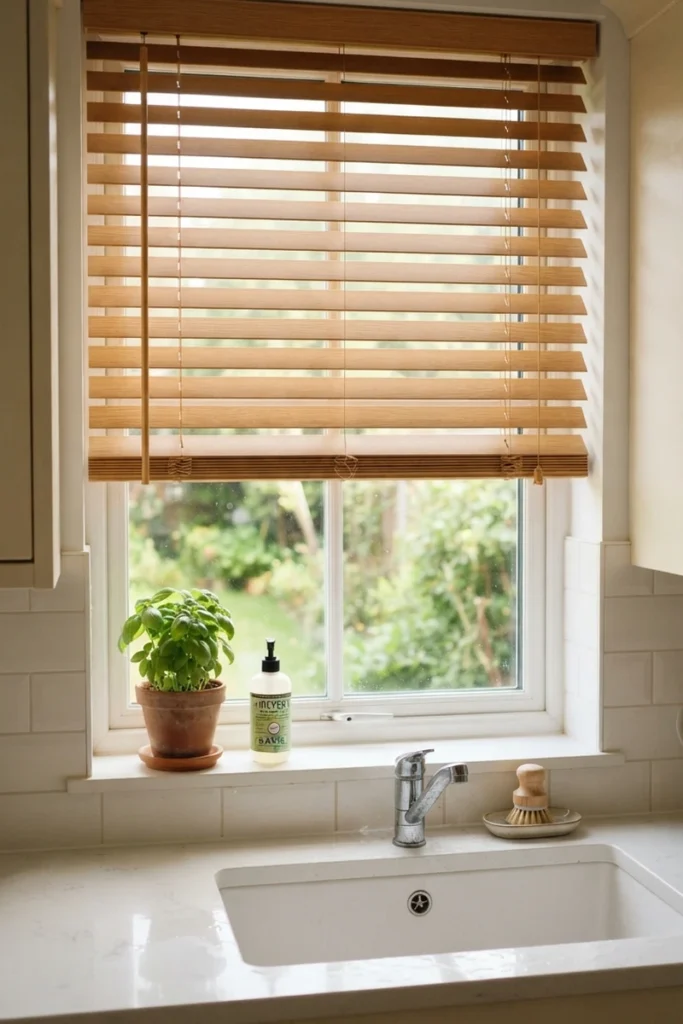
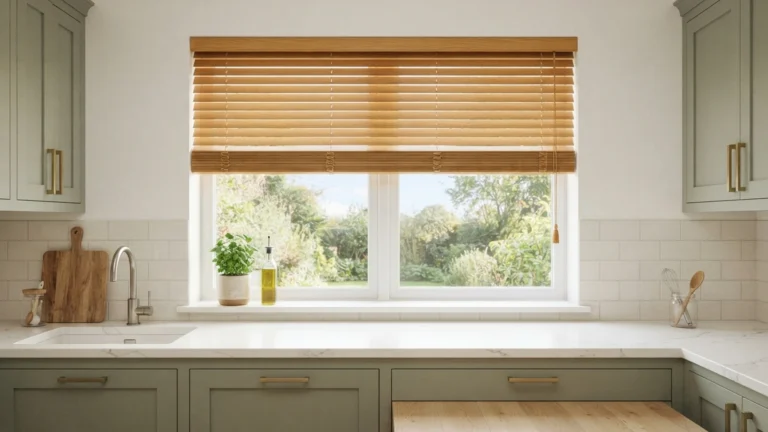
Faux wood and aluminum blinds are largely non-porous, meaning water and grease bead up rather than soaking in, making them the most practical option for windows directly above a sink or near a stove. A quick wipe with a damp cloth keeps them looking clean, without the washing or dry cleaning that fabric eventually needs. The trade-off is a more utilitarian look — blinds rarely add the same warmth or personality that fabric curtains bring to a room. Good Housekeeping’s kitchen curtain ideas note that even the most practical window treatments can still add personality to a kitchen, whether through fabric, finish, or color.
Best for: Windows in direct contact with steam, splashes, or grease, where easy cleaning outweighs decorative warmth.
Roller Shades: A Clean, Minimal Middle Ground
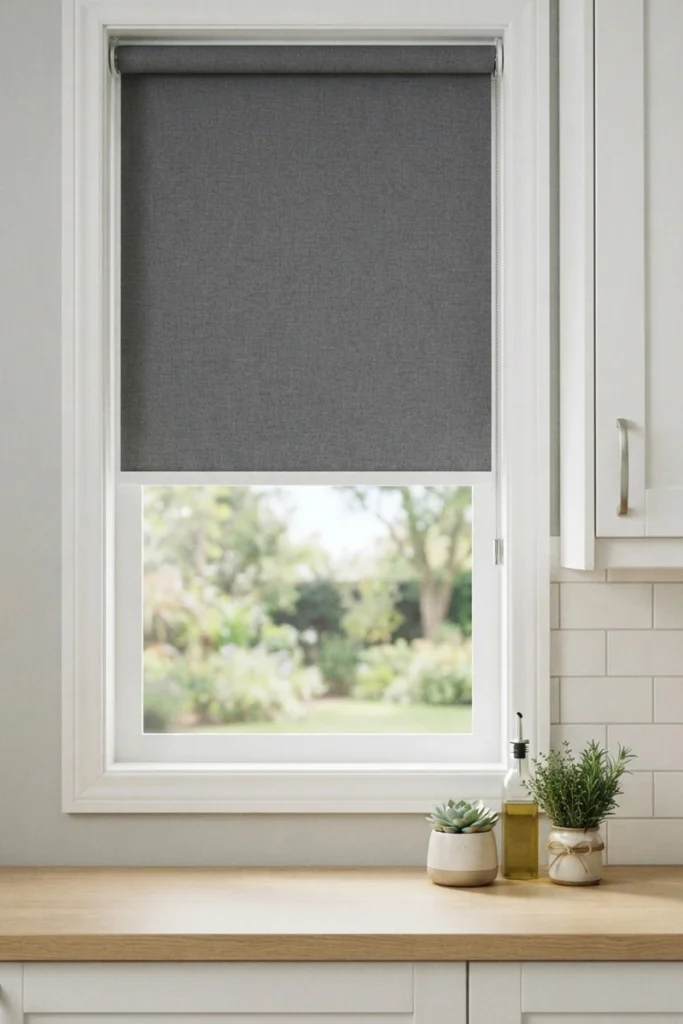
Roller shades roll up completely out of view when not needed, offering a clean, minimal look that suits modern kitchens without sacrificing full light when you want it. Many roller shade fabrics are also treated to be moisture- and stain-resistant, splitting the difference between a blind’s practicality and a curtain’s softer visual texture. They don’t offer the same adjustable light control as slatted blinds, since it’s generally an all-the-way-up or all-the-way-down operation.
Best for: Modern or minimalist kitchens that want a clean look without committing fully to hard blinds or soft curtains.
Layering Blinds with a Decorative Curtain
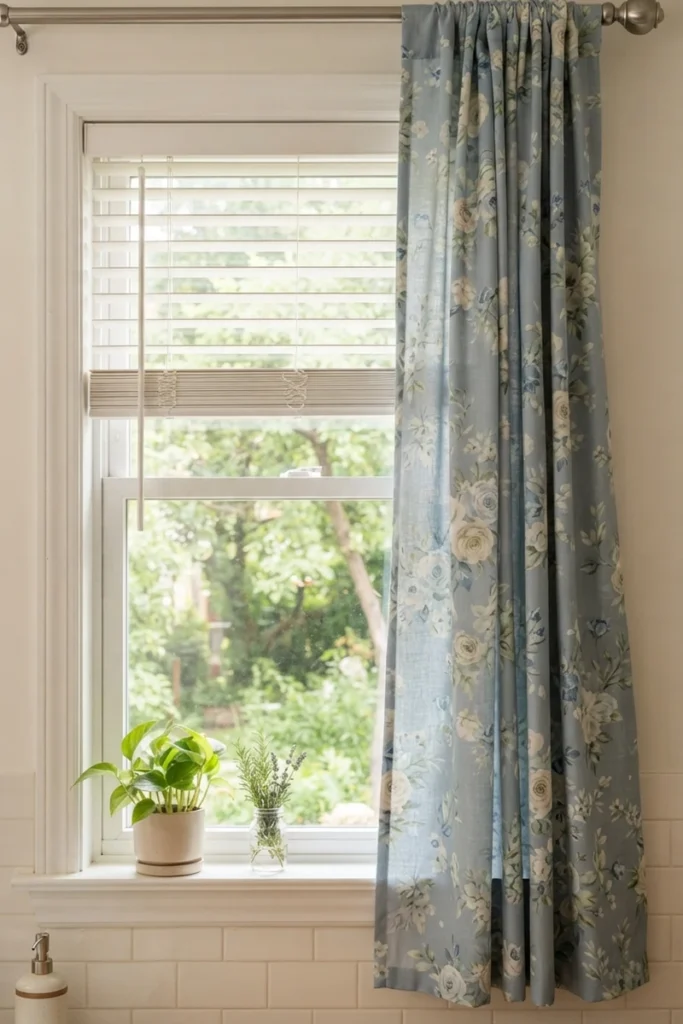
Combining functional blinds underneath with a decorative curtain panel alongside gives you the practical benefits of blinds — easy cleaning, precise light control — while still adding the softness and personality that fabric brings to the room. The curtain can stay mostly stationary, so it never has to deal with steam or splashes directly, while the blinds handle the actual daily use. This is a higher-cost, more involved setup, but it solves the practicality-versus-style tension better than either option alone.
Best for: Kitchens where you want both practical light control and decorative warmth without compromising on either.
Kitchen Curtains vs Blinds at a Glance
| Feature | Fabric Curtains | Faux Wood/Aluminum Blinds | Roller Shades | Blinds + Curtain |
|---|---|---|---|---|
| Moisture resistance | Low | High | Moderate-High | High |
| Light control precision | Low | High | Low-Moderate | High |
| Style/warmth | High | Low | Moderate | High |
| Maintenance | Regular washing | Wipe clean | Wipe clean | Mixed |
| Cost | Moderate | Low-Moderate | Moderate | Higher |
How to Choose Between Curtains and Blinds
Start with your window’s location — anything directly above a sink or near a stove leans heavily toward blinds or roller shades simply for cleaning reasons, regardless of style preference. If your window is away from cooking and splash zones, fabric curtains are fair game and bring a warmth that hard treatments can’t match. If you genuinely want both practicality and personality, layering blinds with a decorative curtain solves the trade-off, just at a higher cost and installation effort.
FAQ
Are blinds always more practical than curtains in a kitchen?
Generally yes for windows near water or heat sources, though curtains work perfectly well in kitchen areas away from direct splash or steam exposure, like a breakfast nook.
Can I use fabric curtains near my kitchen sink if I wash them often?
Yes, especially with washable fabrics like polyester, though most people find the regular washing more hassle than it’s worth compared to wipeable blinds in that specific spot.
Do blinds or curtains make a kitchen window look bigger?
Blinds, especially when mounted to fit the window frame precisely, tend to give a cleaner, more minimal look, while curtains extending beyond the frame can make a window look wider — the effect depends more on installation than the treatment type itself.
Final Thoughts on Kitchen Curtains vs Blinds
Whichever direction you lean, understanding fabric options still matters if curtains are part of the plan. Our guide to the best curtain fabrics breaks down cotton, linen, velvet, and polyester for any room, kitchens included.