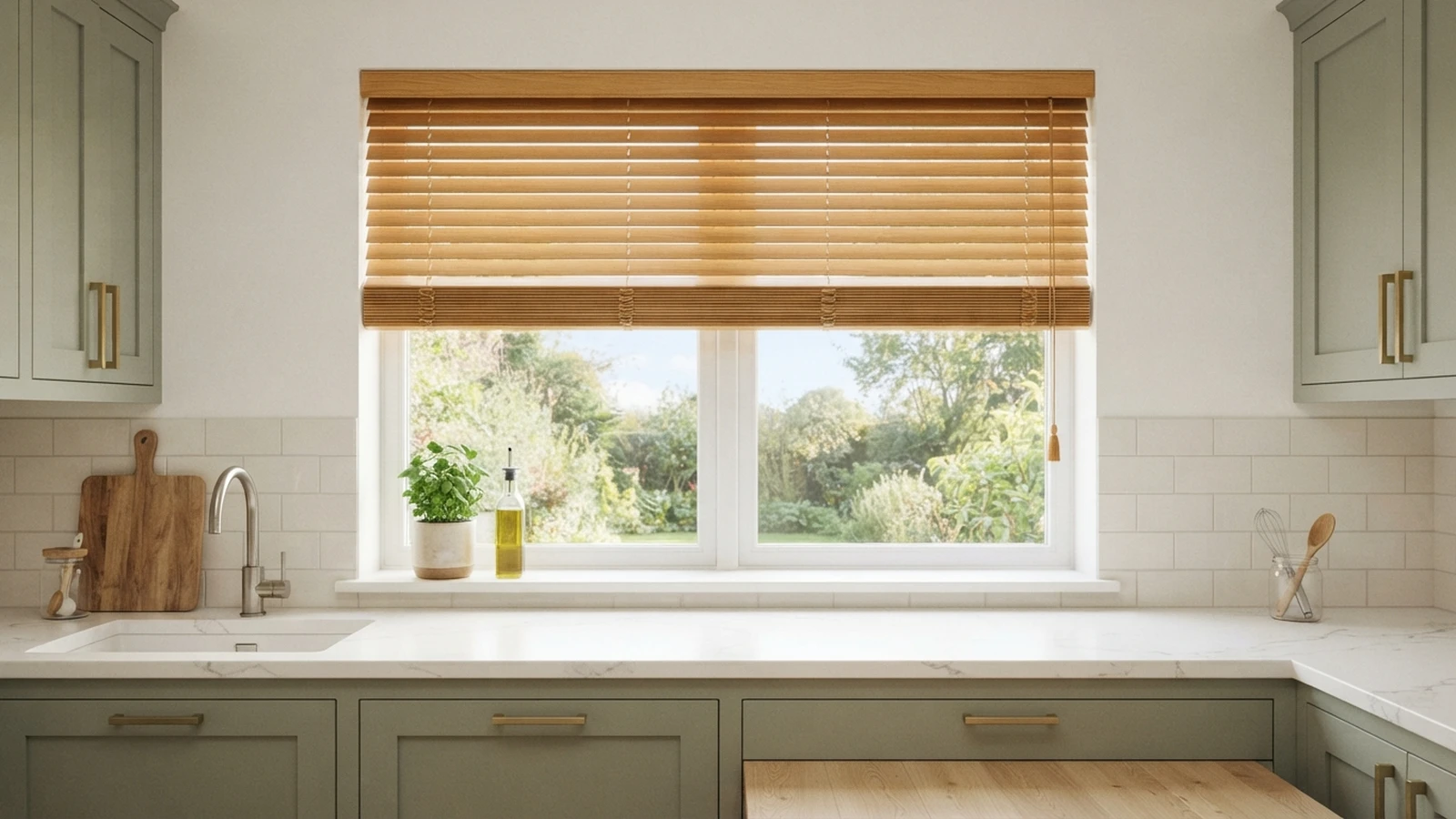
Kitchen Blinds Guide: Faux Wood, Aluminum, Roller & Cellular Shades
A kitchen blinds guide has to account for something most other rooms don’t deal with — steam, grease, and splashes that would ruin fabric curtains in a matter of months. Here are six things worth knowing about kitchen blinds, from the most common types to the safety feature that matters more than any style choice.
1. Faux Wood Blinds — The Warm, Versatile Default
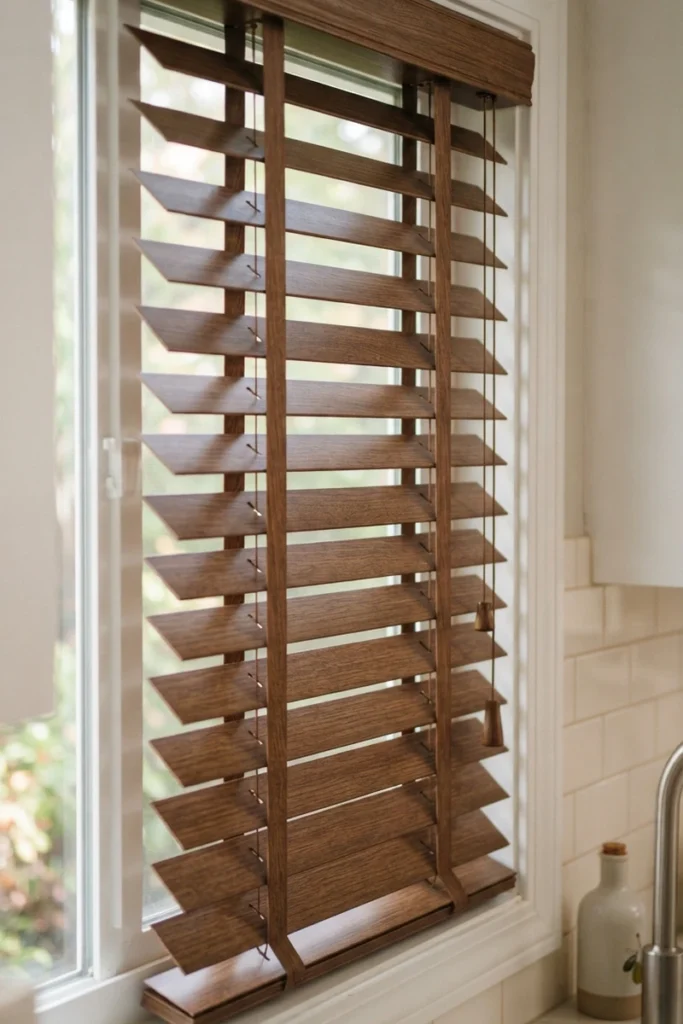
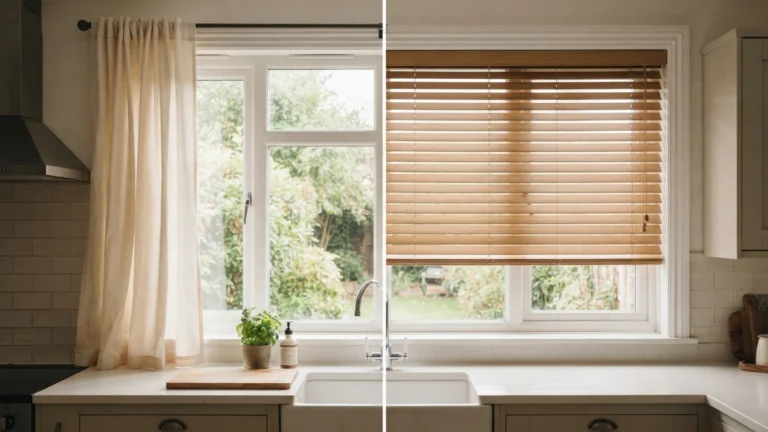
Faux wood blinds are moisture-resistant and won’t warp the way real wood can in a humid kitchen, while still giving the warm, natural look that many kitchens are going for. They’re also one of the easiest kitchen blinds to maintain — a quick dusting or a wipe with a damp cloth keeps them looking fresh even with daily kitchen mess. Their wide range of finishes makes them one of the more versatile choices, working with both traditional and modern kitchen styles. Good Housekeeping’s kitchen curtain ideas note that even practical, hard-surface treatments like blinds can be chosen with color and finish in mind to complement the room’s overall style.
2. Aluminum and Metal Blinds — Best Near the Stove
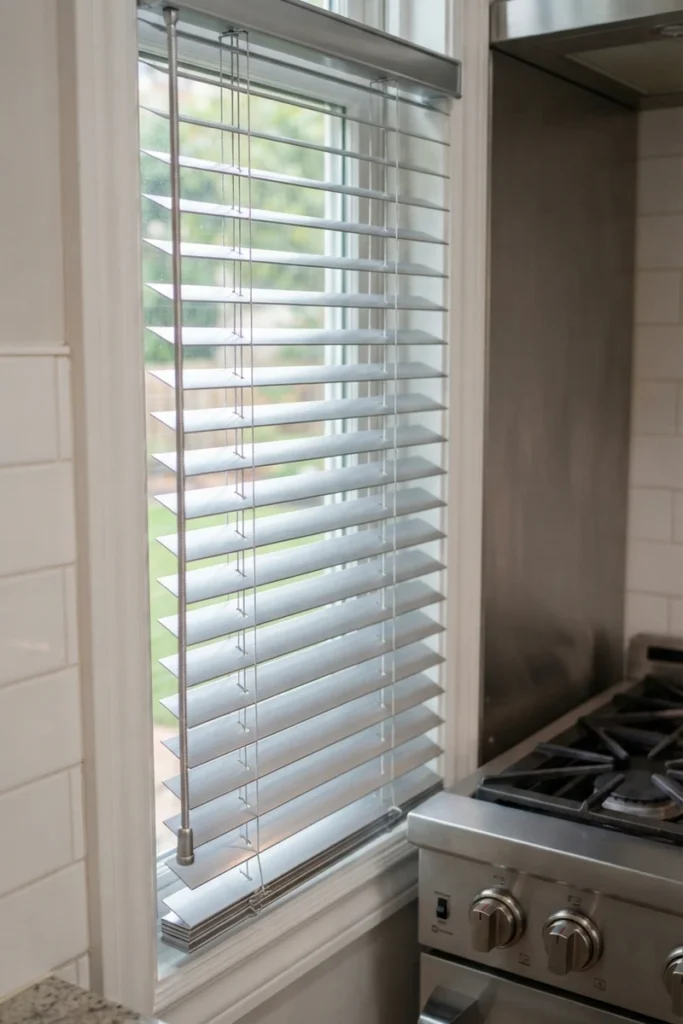
Aluminum blinds handle heat and humidity better than almost any other blind material, making them the strongest choice specifically for windows positioned close to a stove, where faux wood or fabric are more likely to warp or discolor over time. They’re also typically the most budget-friendly option among hard window treatments, without sacrificing much light control or durability. The trade-off is a more utilitarian, less warm appearance compared to faux wood.
3. Roller Shades — Clean and Minimal
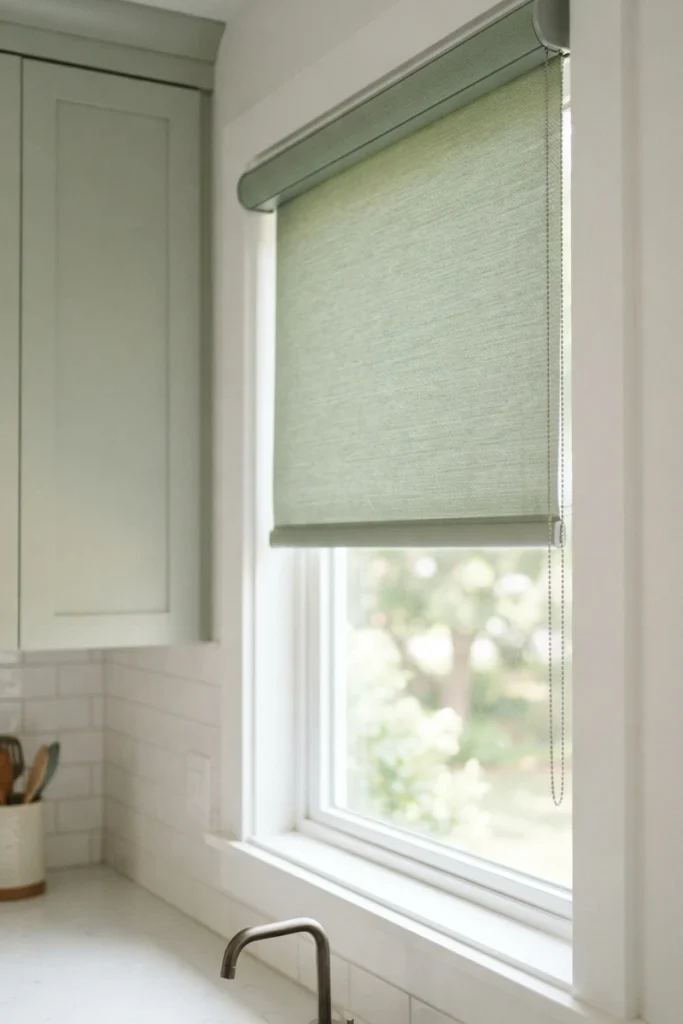
Roller shades roll up completely out of view when not in use, giving a clean, minimal look that many modern kitchens are built around, and many are now treated specifically to resist moisture and stains. This makes them a strong fit for kitchens that lean contemporary, where visible hardware or bulky slats would clash with the room’s simpler lines. They don’t offer the same adjustable, tilt-to-control light precision that slatted blinds do, since they’re generally an all-the-way-up or all-the-way-down operation.
4. Solar Shades — Glare Control Without Losing the View
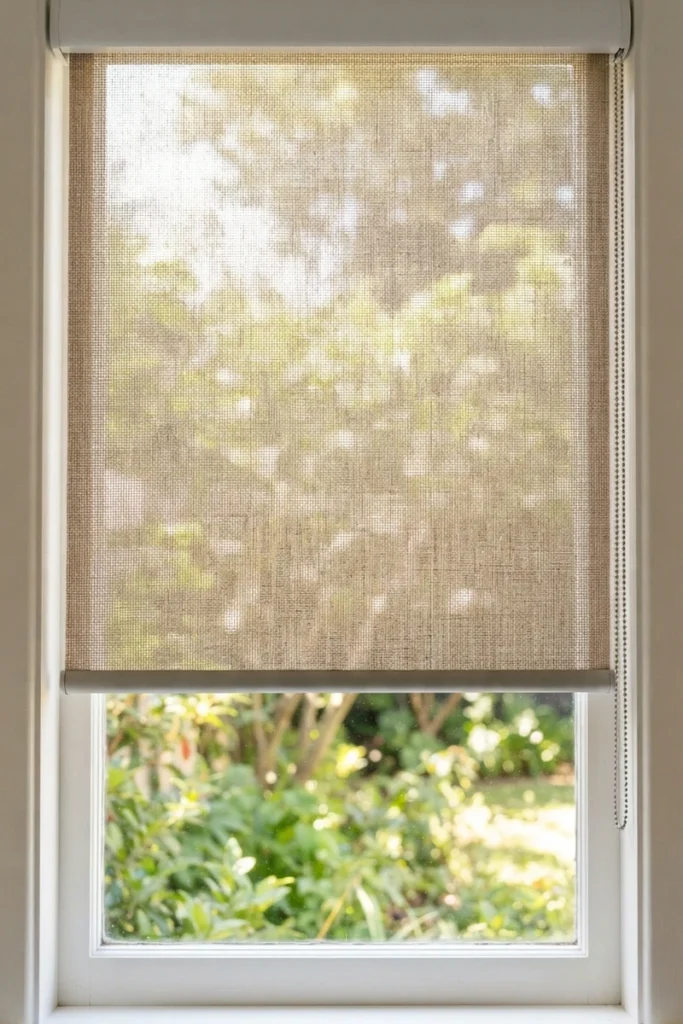
Solar shades are a specific type of roller shade woven from a mesh-like fabric that filters harsh glare and UV rays without fully blocking the outside view, which matters most on kitchen windows that get strong midday sun. Unlike a blackout roller shade, solar shades keep the room bright and the view intact, just with the harshness of direct sun softened. They’re an easy upgrade for any kitchen where glare on countertops or screens has become a daily annoyance.
5. Cellular (Honeycomb) Shades — Best for Insulation
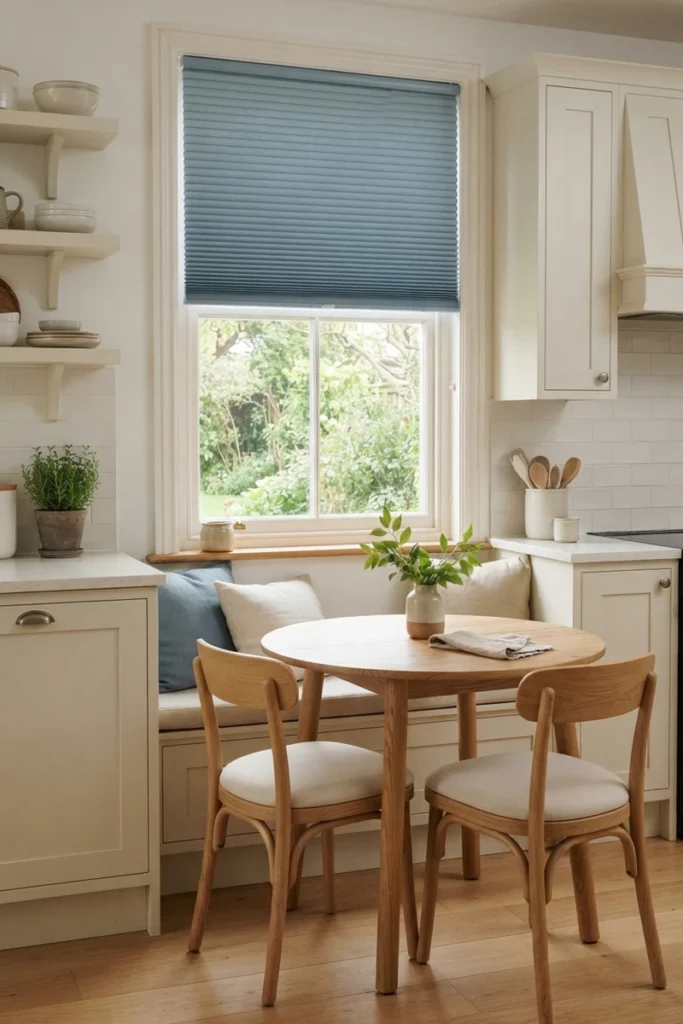
Cellular shades use a honeycomb-shaped cell structure that traps air, giving them genuine insulating properties that help regulate a kitchen’s temperature — a real functional benefit beyond light and privacy control. They work best kept away from direct water exposure, so they suit a breakfast nook window better than one directly above a sink. Their soft, layered look also brings more texture than a flat roller shade or slatted blind.
6. Cordless Operation — The Non-Negotiable Safety Standard
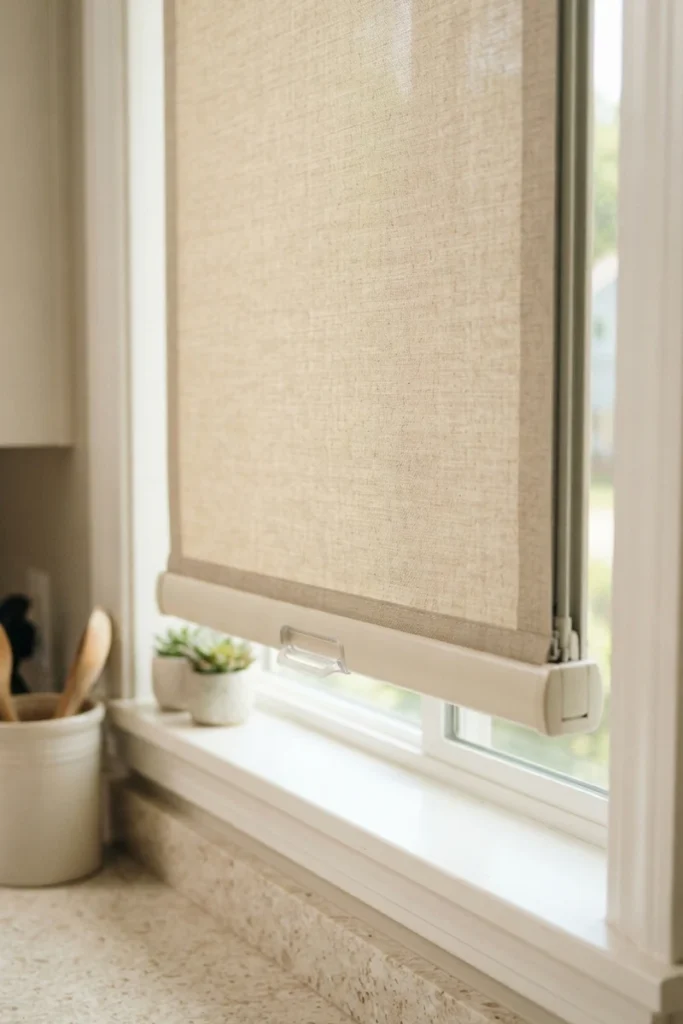
Regardless of which blind type you choose, cordless operation should be a baseline requirement in any kitchen used regularly by children, since dangling cords carry a real strangulation risk. Most manufacturers now offer cordless versions of every blind type covered here, often at little to no extra cost compared to corded models. This is one safety decision that comes with no real style trade-off, which makes it one of the easiest upgrades to prioritize.
Kitchen Blinds Priorities at a Glance
| Priority | Why It Matters |
|---|---|
| 1. Moisture resistance near sinks | Prevents warping, staining, and mildew |
| 2. Heat resistance near stoves | Aluminum handles this best |
| 3. Cordless operation | Non-negotiable safety standard with kids around |
| 4. Insulation for nooks and dining areas | Cellular shades excel here |
| 5. Glare control without losing light | Solar shades solve this specifically |
FAQ
Are cordless blinds more expensive than corded ones?
Sometimes slightly, though the price gap has narrowed significantly as cordless mechanisms have become standard rather than a premium feature.
Can I use cellular shades near a kitchen sink?
It’s not recommended — cellular shades’ honeycomb structure can trap moisture, making them better suited to windows away from direct splash zones.
What’s the difference between roller shades and solar shades?
Roller shades typically use a solid or lightly woven fabric for privacy and light-blocking, while solar shades use an open, mesh-like weave specifically designed to filter glare while preserving the outside view.
Final Thoughts on Kitchen Blinds
If you’re still weighing blinds against fabric curtains, our kitchen curtains vs blinds guide breaks down the full comparison to help you decide.