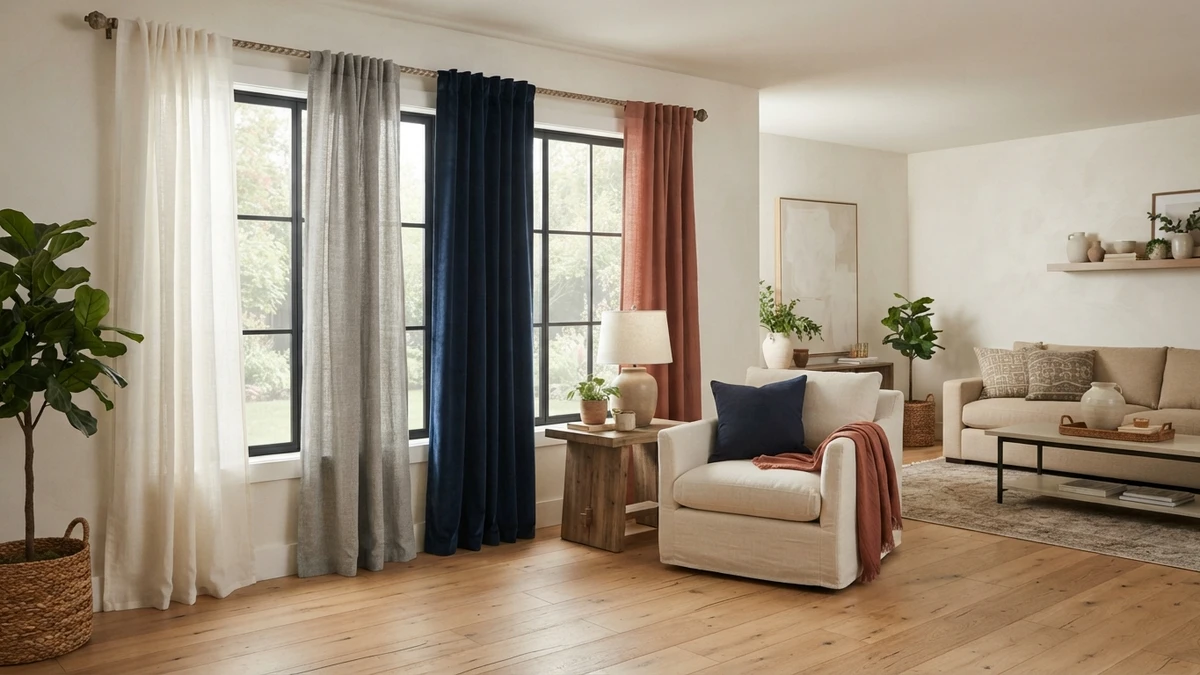
Best Curtain Colors for a Living Room
The living room usually sees more daylight, more foot traffic, and more different activities than almost any other room in the house — which makes curtain color one of the biggest decisions you’ll make for the space. The right shade can make a small living room feel larger, a dark one feel brighter, or a plain one feel intentional. This guide breaks down the best curtain colors for a living room based on light, size, and the mood you’re going for.
What to Consider Before Choosing
1. Is your living room north-facing or south-facing?
South-facing living rooms get more direct sun and can handle darker, richer curtain colors without feeling dim. North-facing rooms with softer, cooler light generally benefit from lighter, warmer curtain tones to avoid feeling flat.
2. Do your walls and furniture already have a strong color, or are they mostly neutral?
A living room with bold furniture or an accent wall usually needs neutral curtains to avoid visual competition. A neutral living room has more freedom to use curtain color as the main source of personality in the space.
Warm White and Cream for Maximum Light
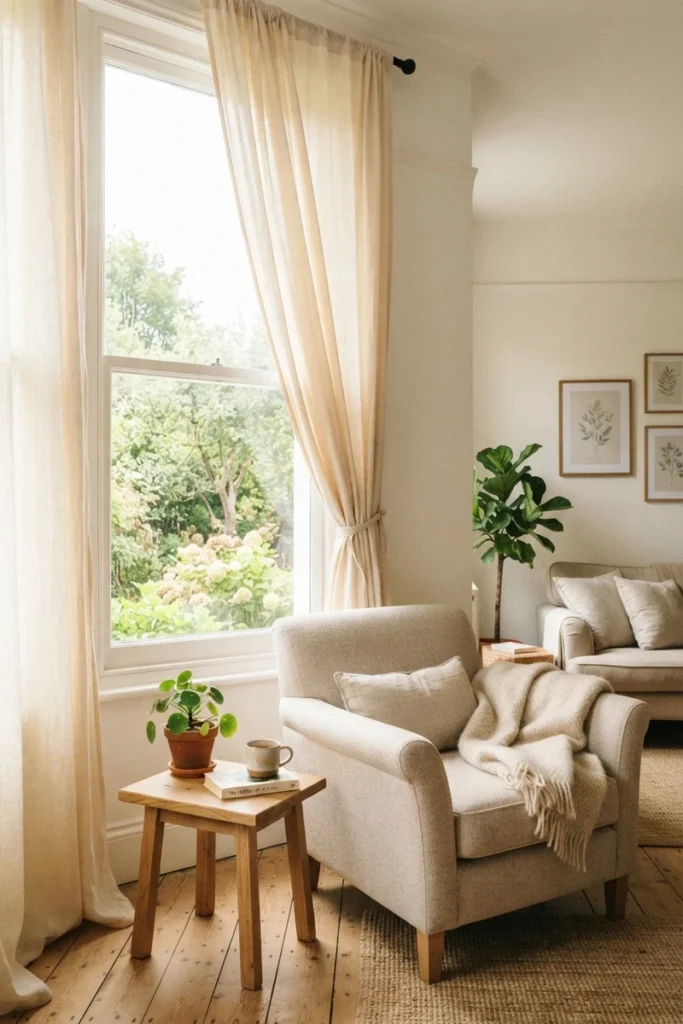
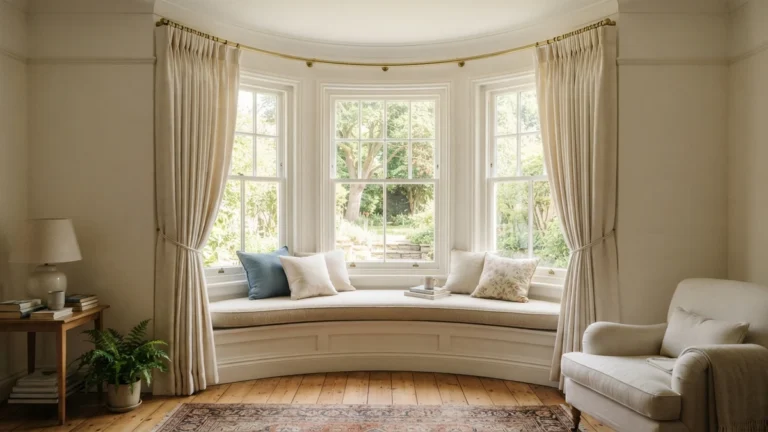
Warm white or cream curtains reflect the most available light back into the room, making them the go-to choice for living rooms that don’t get much natural sun or that face north. They also create a soft, versatile backdrop that works with virtually any furniture color or style, which matters in a living room that tends to accumulate different pieces over time. The trade-off is that warm white shows dust and wear more visibly than darker shades, so it works best in living rooms that get regular light cleaning.
Best for: North-facing or naturally dim living rooms where maximizing light matters most.
Soft Grey for a Calm, Contemporary Base
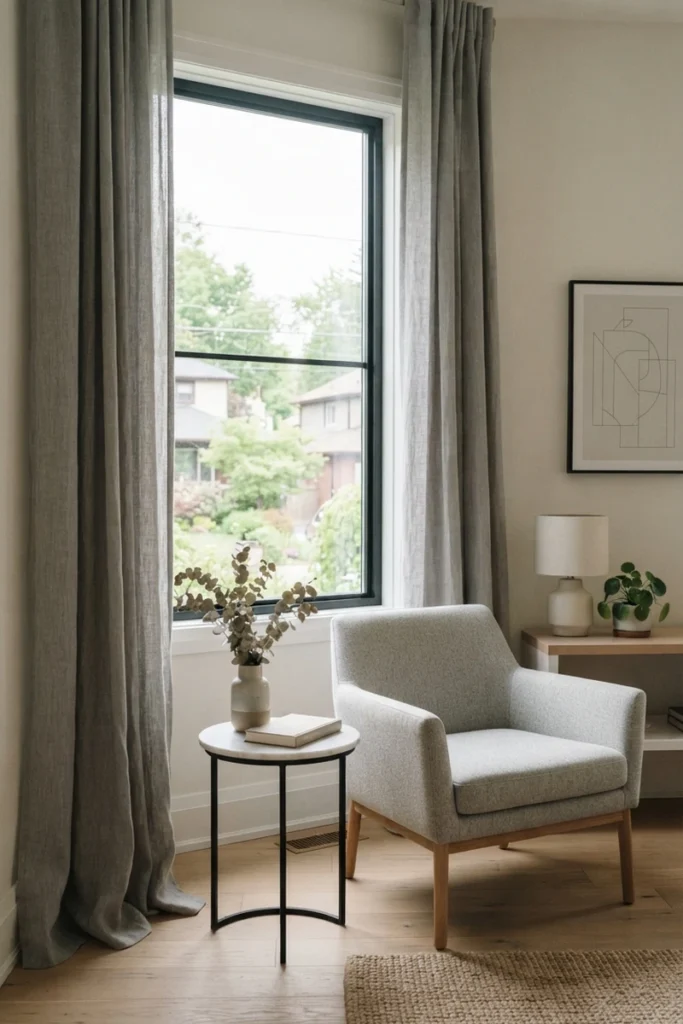
Soft grey curtains give a living room a calm, understated backdrop that pairs especially well with modern or minimalist furniture, without the stark brightness of pure white. Grey also tends to hide everyday wear better than lighter neutrals, which is useful in a living room used daily for lounging, entertaining, and everything in between. Because grey reads as neither warm nor cold, it’s an easy match for living rooms where the furniture colors haven’t been fully settled yet.
Best for: Contemporary or minimalist living rooms, or spaces where furniture colors are still evolving.
Deep Navy or Forest Green for a Cozy, Grounded Feel
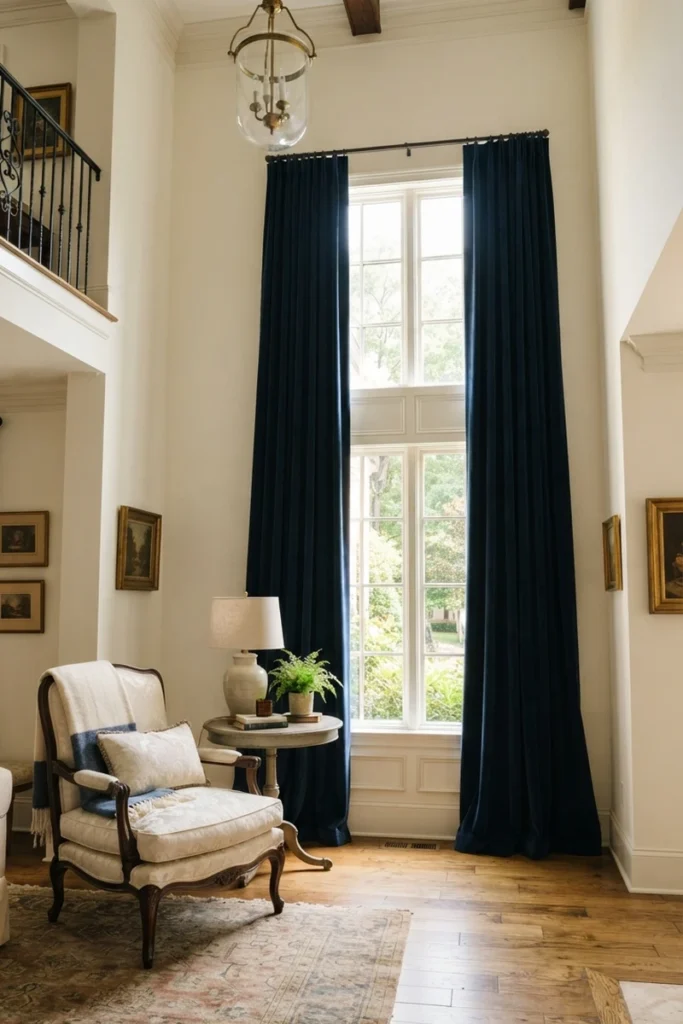
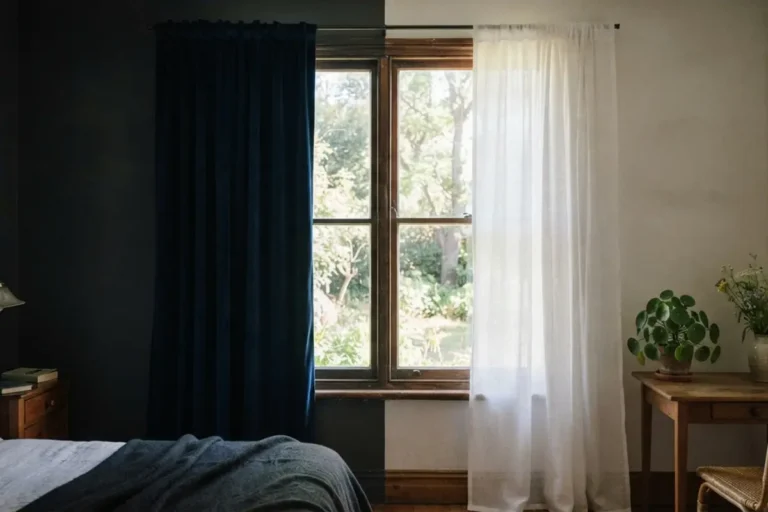
Rich, saturated colors like deep navy or forest green bring a sense of warmth and grounding to a living room, especially one with high ceilings or a lot of natural light that can otherwise feel too airy or unanchored. These colors work particularly well in south-facing rooms, where abundant sunlight keeps the space from feeling closed in despite the darker curtain tone. The main risk is choosing a shade so dark it makes a smaller or dimmer living room feel more cramped rather than cozy. Bob Vila’s guide to hanging curtains notes that darker curtain colors work best when a room already has strong natural light to balance the added visual weight.
Best for: South-facing or larger living rooms that could use some visual weight and warmth.
Muted Terracotta or Rust for Understated Warmth
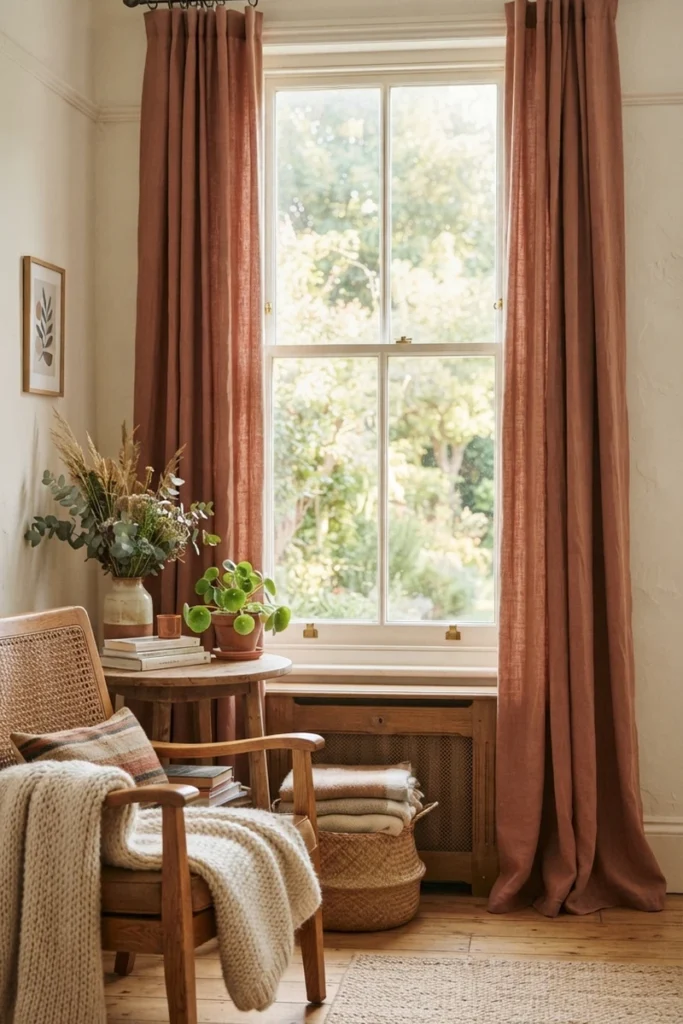
A muted, earthy warm tone like terracotta or rust adds personality without the intensity of a fully saturated bold color, striking a middle ground between a safe neutral and a dramatic statement shade. These tones tend to pair especially well with wood furniture and natural materials, since the warm undertone echoes rather than clashes with those finishes. It’s a color choice that reads as “designed” rather than either boring or overly bold.
Best for: Living rooms with wood furniture or natural materials that want a warm accent without full commitment to a bold color.
Curtain Color Guide for Living Rooms at a Glance
| Feature | Warm White/Cream | Soft Grey | Deep Navy/Green | Terracotta/Rust |
|---|---|---|---|---|
| Best light exposure | North-facing, dim rooms | Any | South-facing, bright rooms | Any |
| Visual impact | Low | Low-moderate | High | Moderate |
| Hides wear well? | No | Yes | Yes | Moderate |
| Pairs best with | Any furniture | Modern/minimalist | High ceilings, bright rooms | Wood, natural materials |
Matching Curtain Colors for a Living Room to Your Light and Style
Start with how much natural light the room actually gets — a dim, north-facing living room benefits most from light, reflective colors, while a bright, south-facing room has more freedom to go darker and richer. From there, look at what’s already fixed in the room, like flooring and large furniture, and decide whether curtains should blend into that palette or add a deliberate contrast. If you’re still unsure, a soft neutral like grey is the safest starting point that works in almost any living room regardless of light or furniture style.
FAQ
Will dark curtains make my living room feel smaller?
Only in a dim or already-small room — in a bright, spacious living room, dark curtains usually add coziness and warmth rather than making the space feel cramped.
Which curtain color is easiest to keep looking clean?
Mid-tone shades like grey, taupe, or muted green hide everyday dust and light marks better than very pale whites or very dark solids, both of which tend to show wear more visibly.
Do living room curtains have to match the sofa?
Not exactly — a close coordinating tone or an intentional contrast both work well. What actually matters is that the color feels like a deliberate choice relative to the rest of the room, not an afterthought.
Final Thoughts on Living Room Curtain Colors
Getting the color right is one of the highest-impact, lowest-cost changes you can make to a living room — it affects the mood of the space every single day, in a way that’s easy to underestimate until you see it done well. Whether you lean toward a soft neutral that recedes into the background or a bold, saturated color that becomes the room’s focal point, the right choice usually comes down to how much light the room gets and what feeling you’re trying to create.
Curious about other curtain color approaches beyond the living room? Our curtain color guide breaks down neutral, bold, and coordinating color strategies for any room in your home.