Dining Room Curtain Ideas: Elegant Styles for Every Gathering
The dining room is where a home does its best entertaining — family dinners, holiday gatherings, quiet weeknight meals — and the curtains in that room do a lot of quiet work to set the tone. This guide breaks down 10 dining room curtain ideas that balance elegance with everyday practicality, so your dining space feels put-together whether you’re hosting a dinner party or just having breakfast.
Before You Start: 2 Decisions to Make First
1. Does your dining room double as another space?
Many dining rooms are part of an open-plan kitchen or living area rather than a separate room. If that’s the case, your curtain choice should feel connected to the rest of that shared space, not like a completely different style dropped into the middle of it.
2. Do you entertain often, or is this mostly an everyday space?
A dining room used mainly for formal dinners and holidays can support a more elaborate, statement-making curtain. A dining room in daily use — where kids do homework or you eat breakfast — usually benefits from something a little more practical and easy to live with.
1. Floor-Length Drapery for Formal Elegance
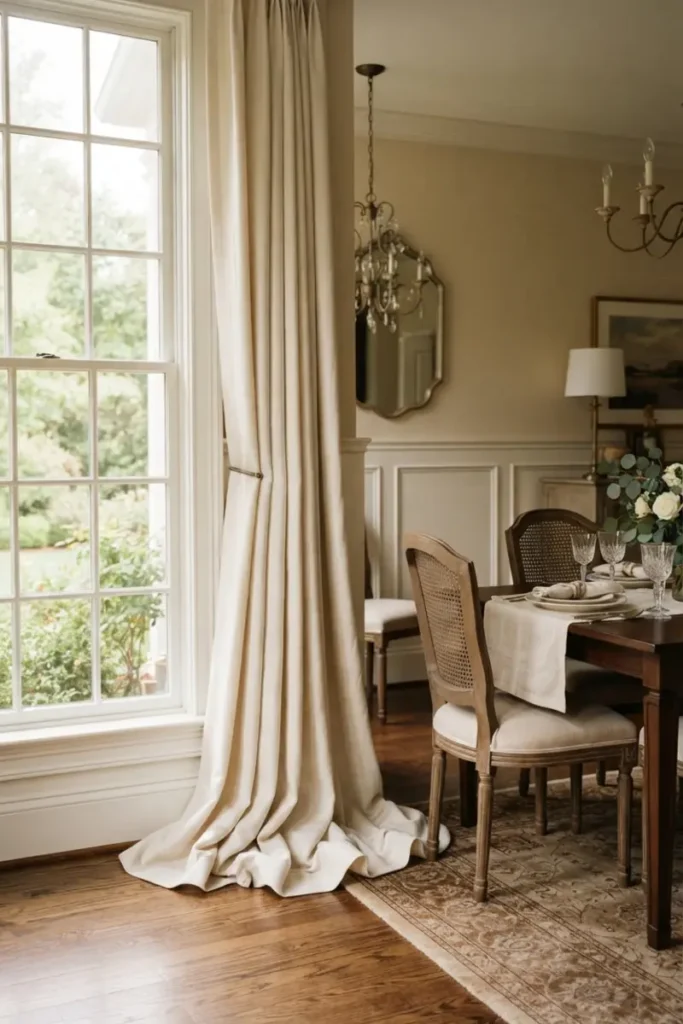
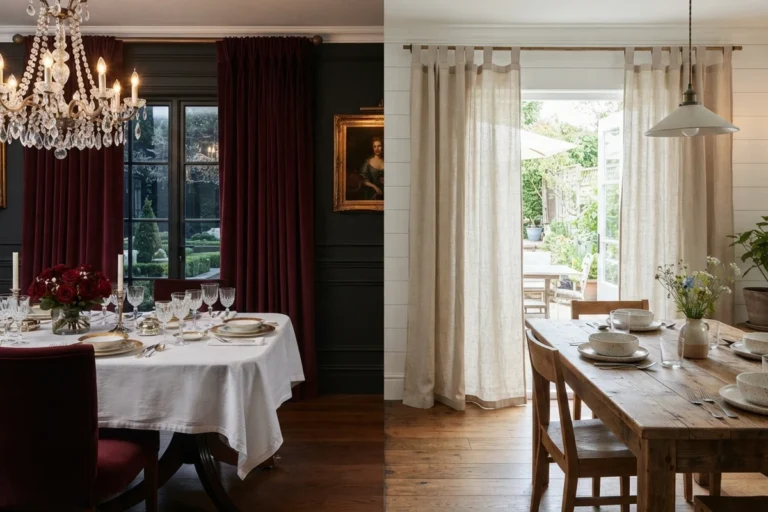
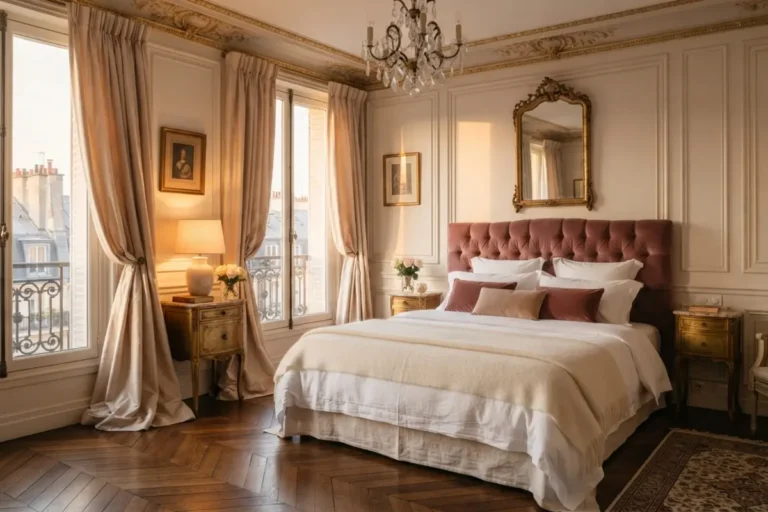
Long, floor-length curtains pooling slightly at the bottom instantly elevate a dining room, giving it the kind of polished, formal presence that suits special occasions and dinner parties. The extra length draws the eye upward, making windows — and often the whole room — feel taller and more grand. Because dining rooms are rarely exposed to the same daily wear as a kitchen or kids’ bedroom, floor-length fabric here can afford to be a little more delicate or luxurious without much practical downside.
Best for: Formal dining rooms used regularly for entertaining or hosting.
2. Sheer Curtains for a Soft, Airy Dinner Table
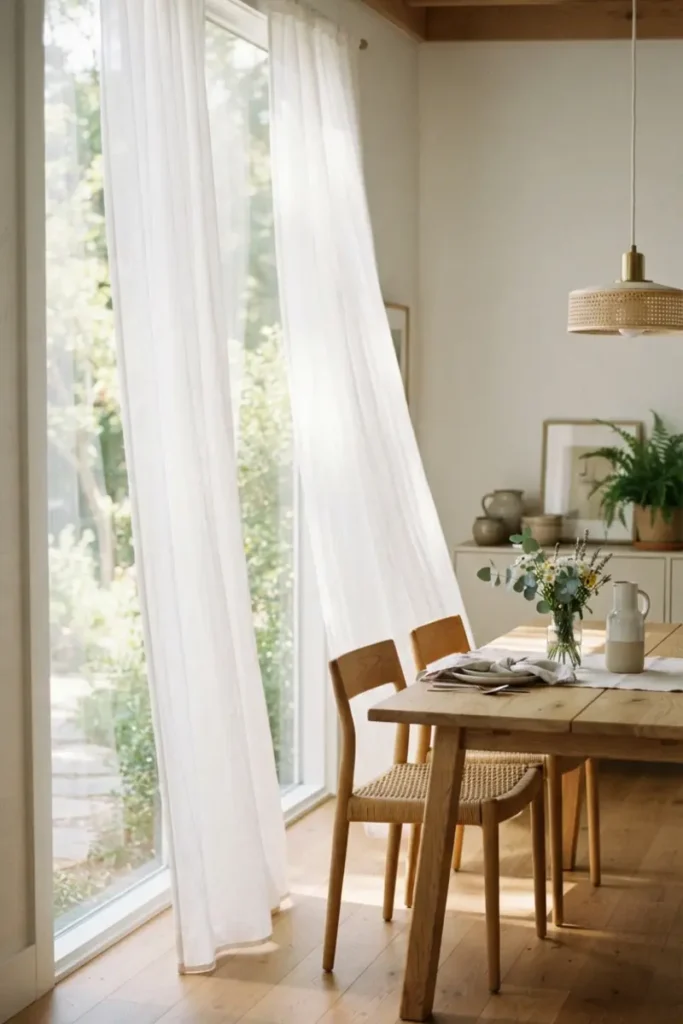
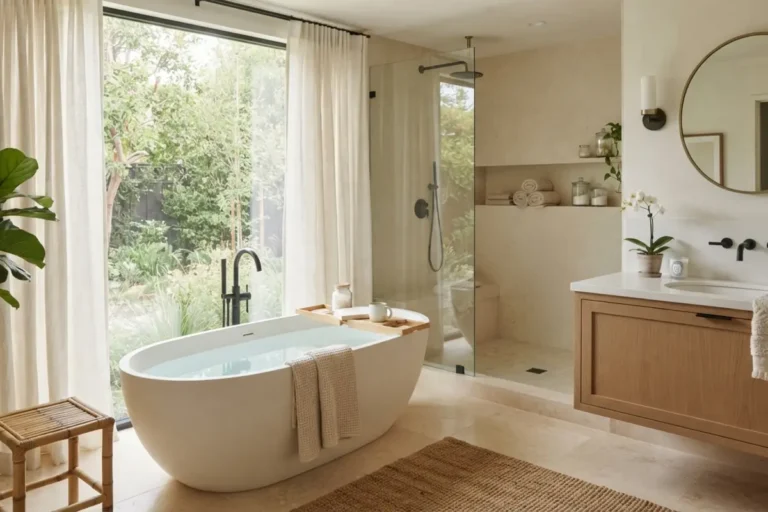
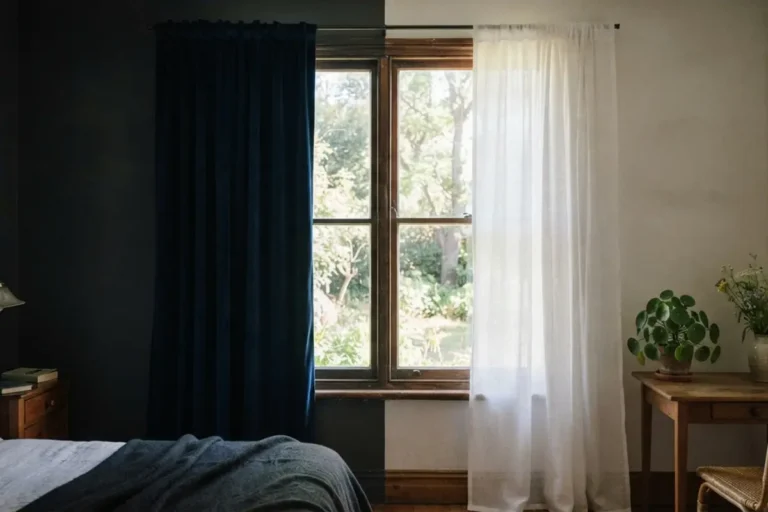
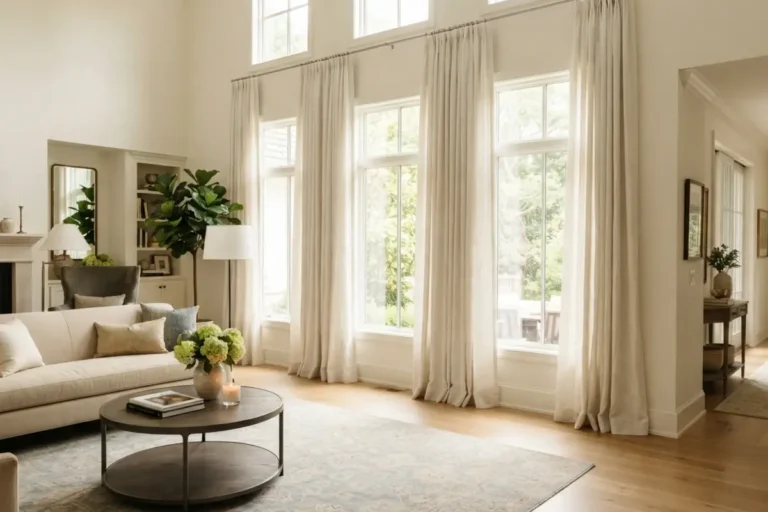
Lightweight, semi-transparent curtains let natural light spill across the dining table throughout the day, which matters more here than almost anywhere else in the home — good lighting can make or break how a meal actually feels. Sheers also soften the transition from day to evening, letting the room feel bright for lunch and gently glowing once the sun starts to set. Layering a sheer under a heavier drape gives you the best of both without sacrificing either.
Best for: Dining rooms that double as a bright daytime space as well as an evening entertaining area.
3. Bold Statement Curtains for a Dramatic Dining Room
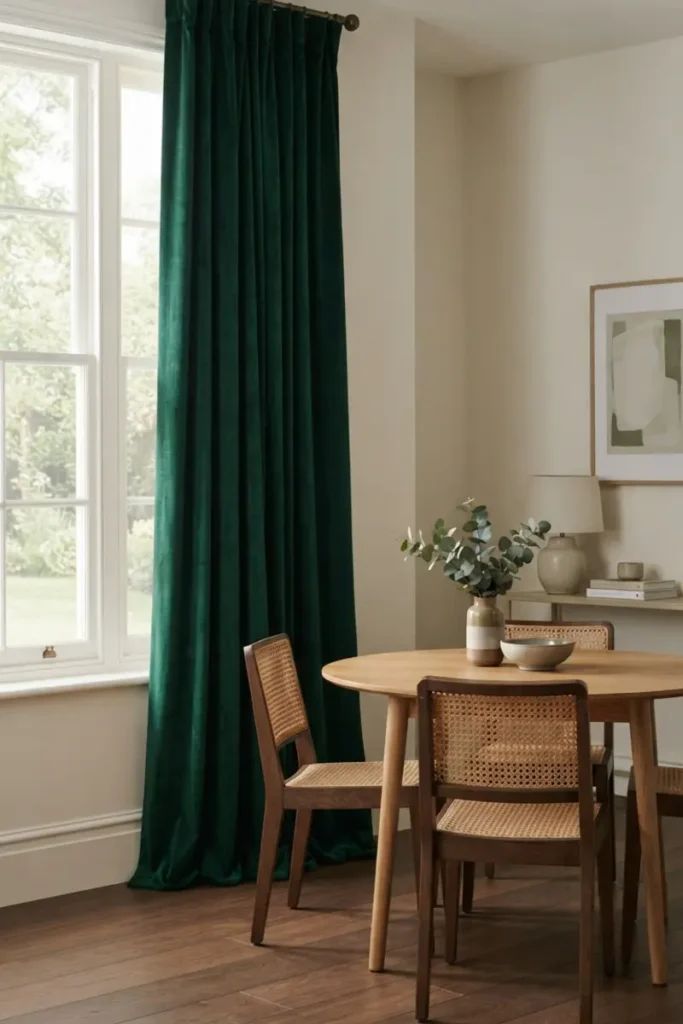
A rich, saturated color or a large-scale print on dining room curtains can do more decorating work than almost any other single choice in the room, especially if the walls, table, and chairs are all fairly neutral. Because dining rooms often have less furniture and fewer competing visual elements than a living room, a bold curtain has more room to actually be seen and appreciated rather than getting lost among other decor.
Best for: Dining rooms with simple, neutral furniture that could use one strong focal point.
4. Café Curtains for a Casual Breakfast Nook
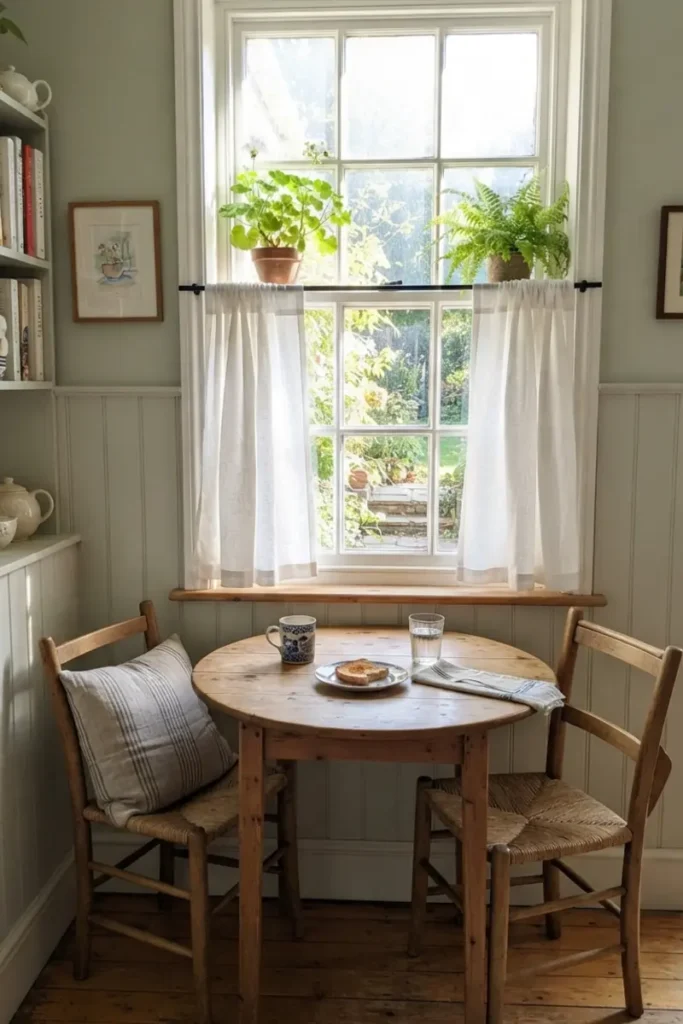
Short curtains covering only the lower half of the window work well in a more casual dining space, letting sunlight pour in from above while still giving some privacy at table height — right where you actually need it while seated. This style tends to suit smaller, everyday dining spaces better than large formal dining rooms, since it keeps the look relaxed rather than dressed-up.
Best for: Breakfast nooks or casual, everyday dining spaces rather than formal dining rooms.
5. Layered Curtains for Flexibility Between Day and Night
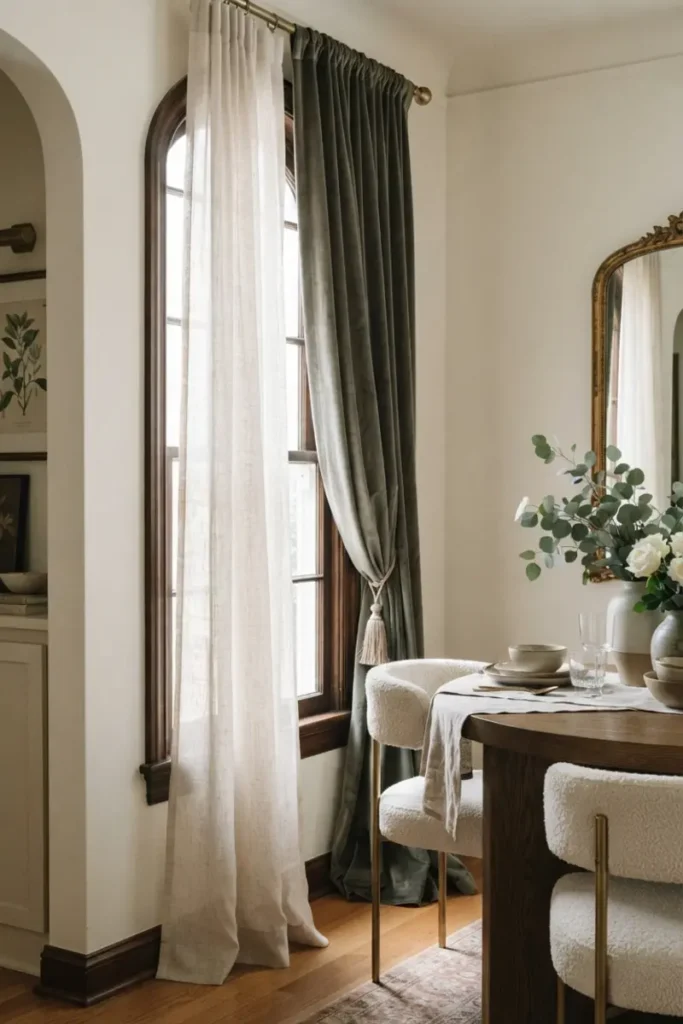
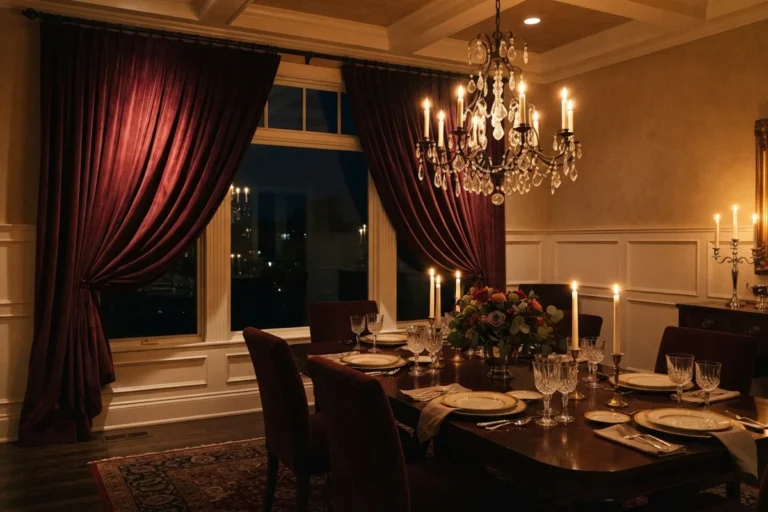
Pairing a sheer panel with a heavier drape on the same rod lets you adjust the room’s mood depending on the occasion — sheers alone for a bright, casual lunch, both layers closed for a moodier, candlelit dinner. This flexibility is especially useful in a dining room, where the same space might need to feel completely different for a quick weekday meal versus a dinner party a few hours later.
Best for: Dining rooms that need to shift easily between everyday use and more formal entertaining.
6. Neutral Linen for a Timeless, Adaptable Look
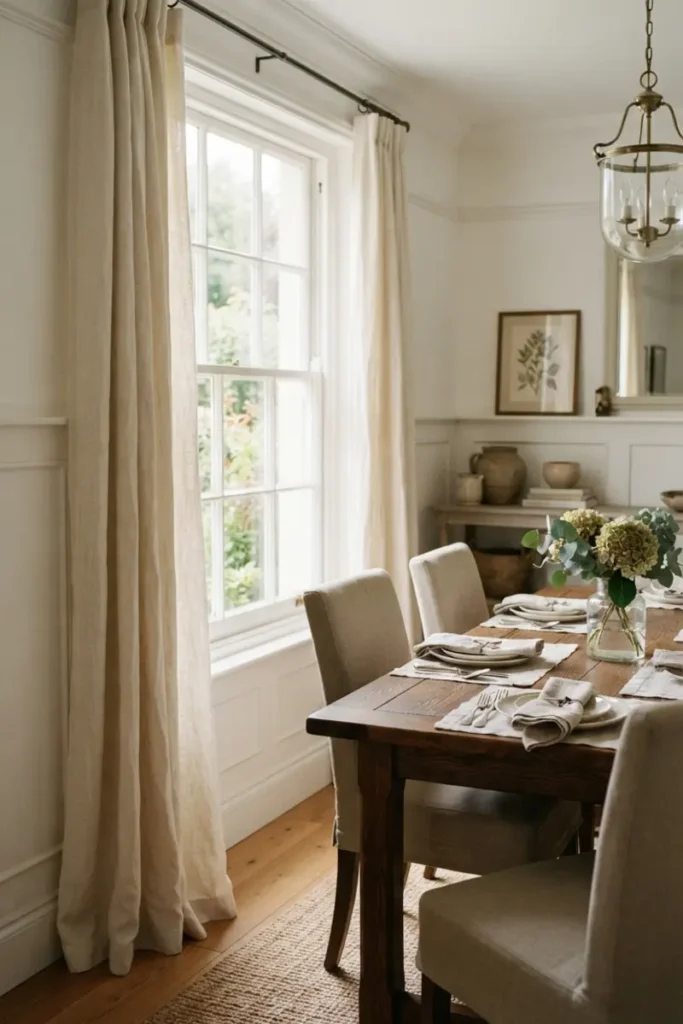
Soft, neutral linen curtains in cream, taupe, or soft grey are one of the safest long-term choices for a dining room, since they won’t clash if you update your table, chairs, or wall color down the line. Linen also has a slightly relaxed, textural quality that keeps a dining room from feeling too stiff or overly formal, even in a fairly traditional space.
Best for: Dining rooms where you want a curtain that will still look right after future redecorating.
7. Velvet Curtains for Warmth and Richness
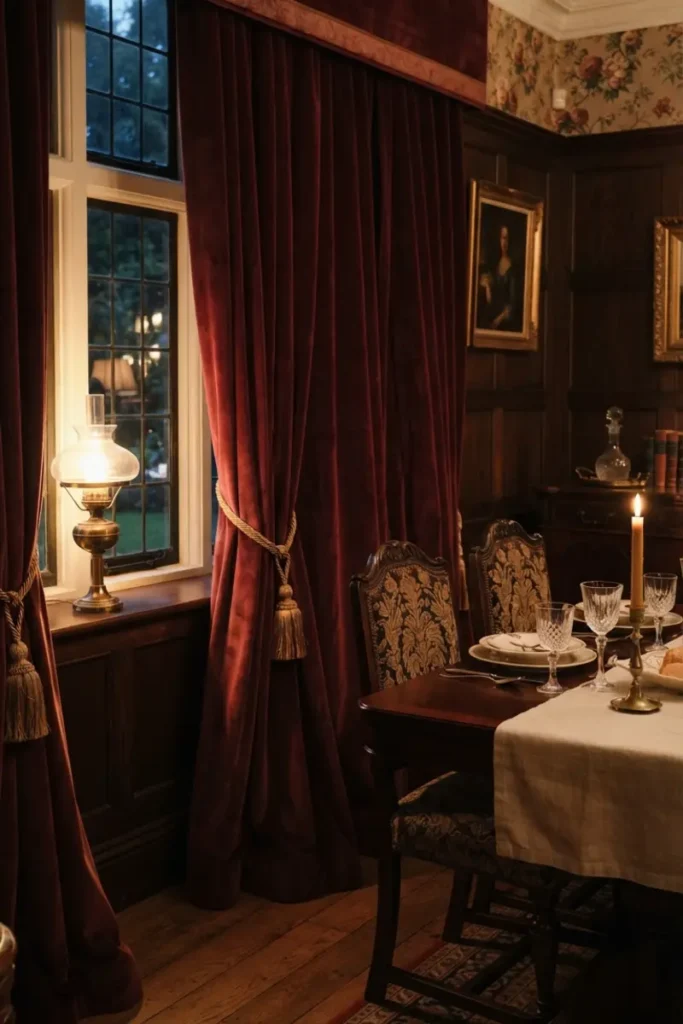
Heavy, plush velvet curtains bring a sense of warmth and quiet luxury to a dining room, especially in the evening when lamp or candlelight catches the fabric’s texture. Velvet also has natural sound-dampening qualities, which can make a dining room — often a space with hard flooring and a large table — feel a little softer and less echoey during dinner conversation.
Best for: Formal dining rooms, especially those used often for evening entertaining.
8. Patterned Curtains That Echo the Table Setting
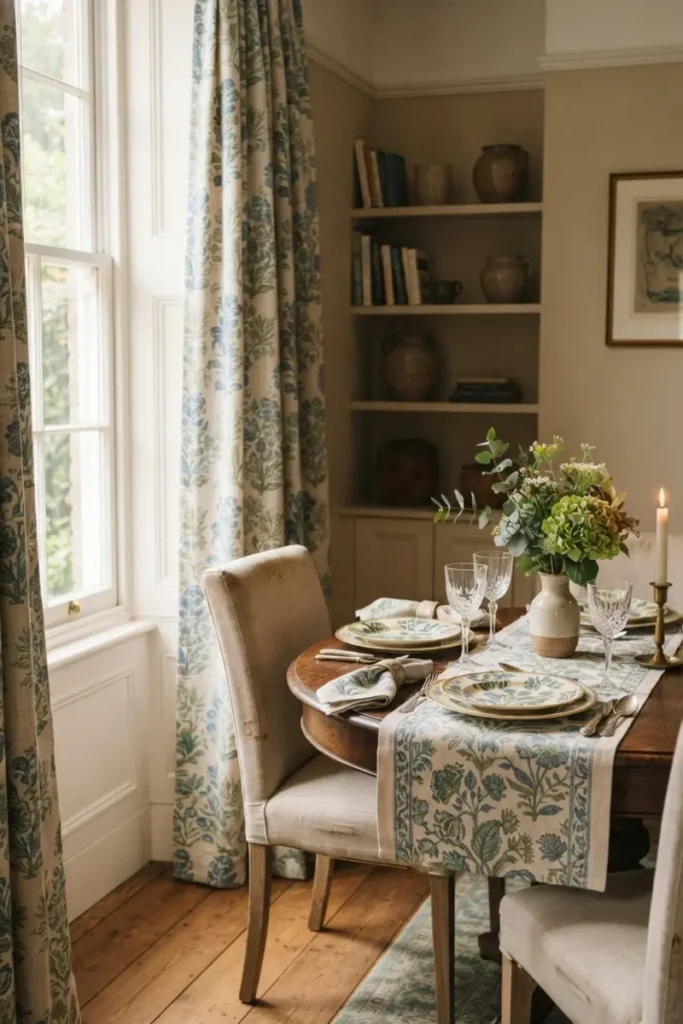
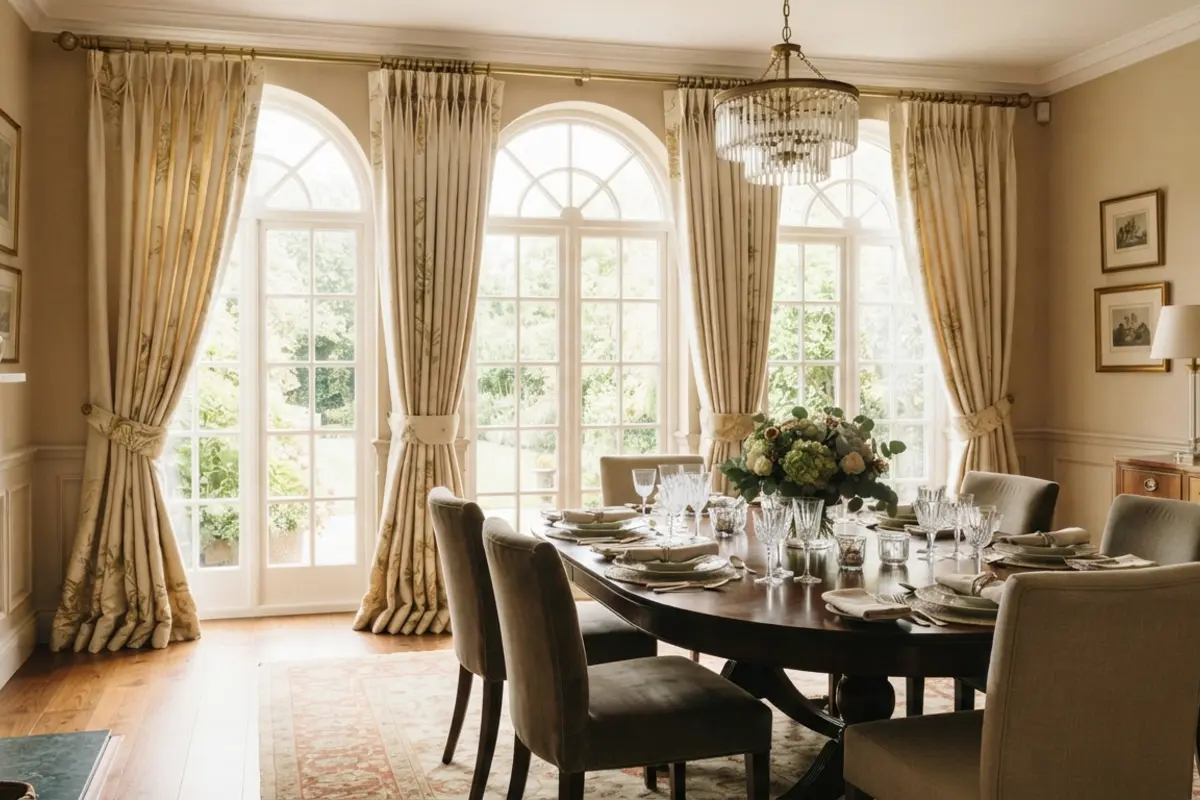
A curtain pattern that picks up a color or motif from your dinnerware, table linens, or rug helps tie the whole dining room together without requiring a full redesign. This is one of the easier ways to make a dining room feel intentionally styled rather than assembled piece by piece, since the curtain and table setting visually reference each other.
Best for: Dining rooms where you want a cohesive, coordinated look without matching everything exactly.
9. Wide Panels for Large or Multiple Windows
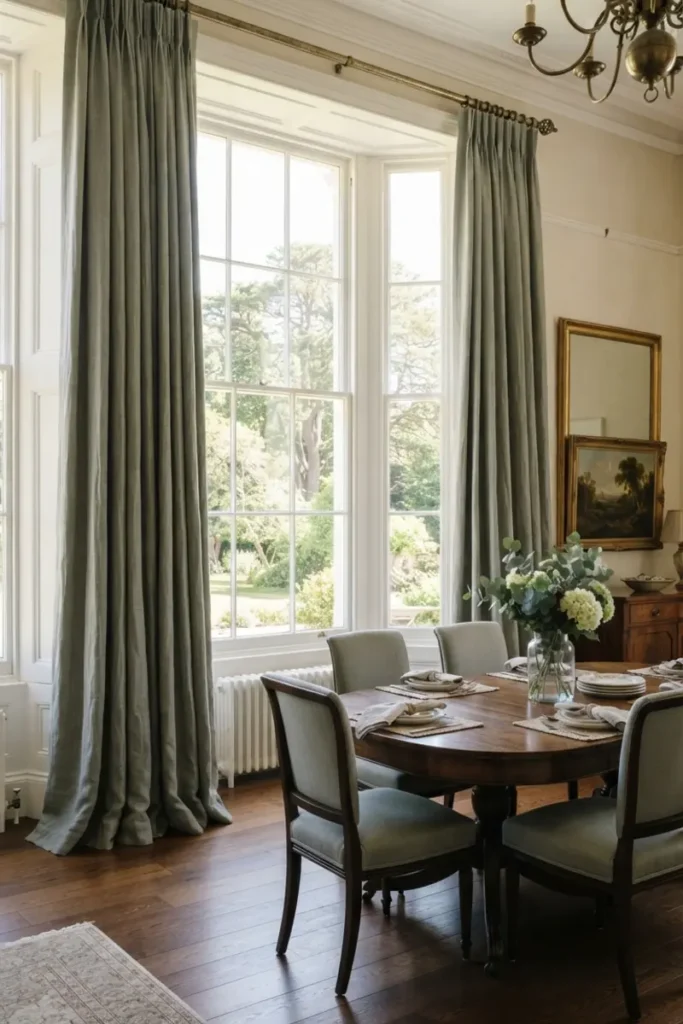
Dining rooms often have wider windows or multiple windows in a row — especially in older or more formal homes — and extra-wide curtain panels are built to handle that scale without looking skimpy or stretched thin. Getting the proportions right here matters more than in most rooms, since a dining room’s windows are often a major visual feature of the space during a meal. A complete guide to hanging curtains notes that curtain rods should extend 4 to 10 inches beyond the window frame on each side, which becomes even more important to get right when a room has multiple windows that need to feel proportionally connected.
Best for: Dining rooms with large picture windows, bay windows, or multiple windows side by side.
10. Blackout-Lined Curtains for Evening Entertaining
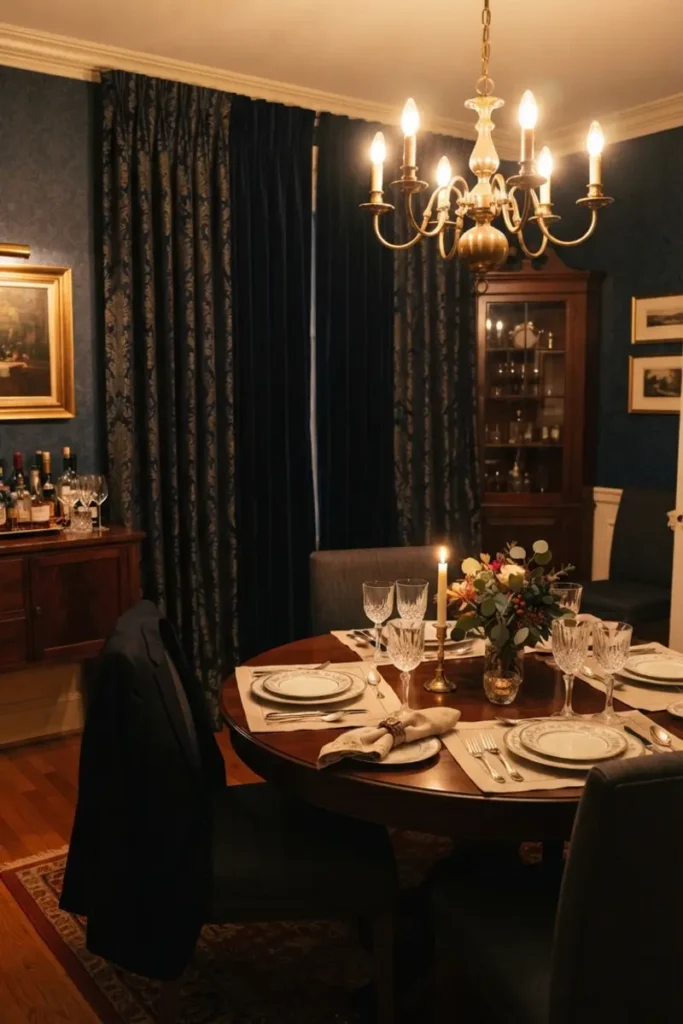
A blackout or thermal lining behind a decorative curtain gives you full control over glare and outside light, which matters most in dining rooms that face west or get strong afternoon sun right at dinnertime. The lining stays completely hidden behind the decorative fabric, so you get the practical benefit of light control without changing how the curtain actually looks.
Best for: Dining rooms that get harsh afternoon or evening sun during meals.
How to Choose Dining Room Curtains for Your Space
Start with how the room is actually used — a dining room that hosts formal dinners can support more drama and length than one used mainly for everyday meals. From there, think about light: since so much of a dining room’s mood depends on how it’s lit at different times of day, curtains that can adapt between bright and dim are often more useful than a single fixed look. Finally, let the table setting and existing furniture guide color and pattern, since the curtains and the table are usually the two things people notice most in this room.
FAQ
Should dining room curtains match the kitchen if they’re in the same open space?
They don’t need to match exactly, but they should feel like they belong to the same overall palette or style. A shared color family or fabric weight usually works better than an identical print in both spaces.
How long should dining room curtains be?
Floor-length or slightly pooling curtains tend to look most elegant in a dining room, since this is a room where a more formal, finished look is usually the goal.
Do dining room curtains need to be blackout?
Not necessarily. Blackout matters most if the room gets strong glare during meals or is used for movie nights or presentations; otherwise, a lighter fabric that filters rather than blocks light usually works just as well.
Final Thoughts on Dining Room Curtain Ideas
Still exploring other rooms? Our guide to curtain styles for every room breaks down even more options — from café curtains to blackout drapery — to help you find the right fit for the rest of your home.