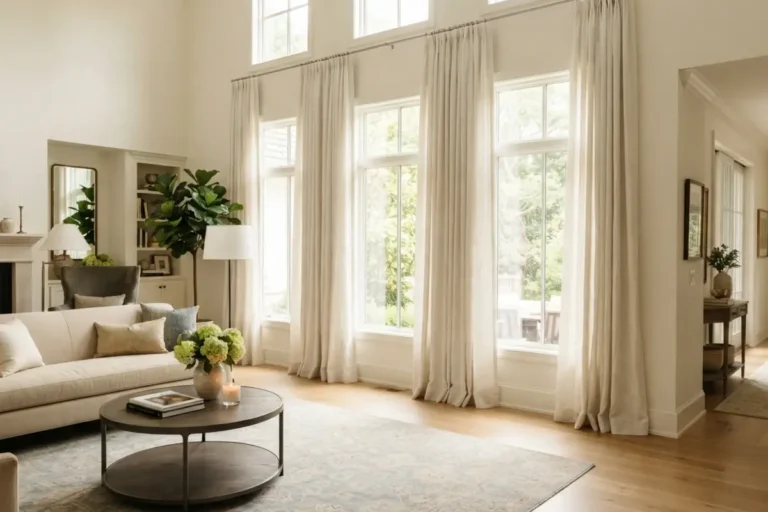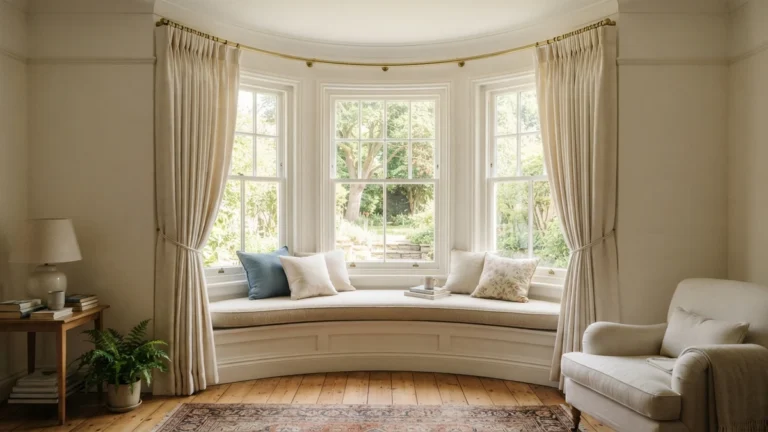
Formal vs Casual Dining Curtain Styles: Which Fits Your Space?
Formal vs casual dining curtain styles come down to a handful of consistent choices — fabric, heading, and length — that instantly signal whether a room is dressed up for entertaining or built for everyday family meals. Getting this match right makes the whole room feel intentional rather than mismatched.
This guide breaks down exactly what separates formal from casual dining curtains, so you can choose the direction that actually fits how your dining room gets used.
What Makes a Dining Curtain Read as Formal
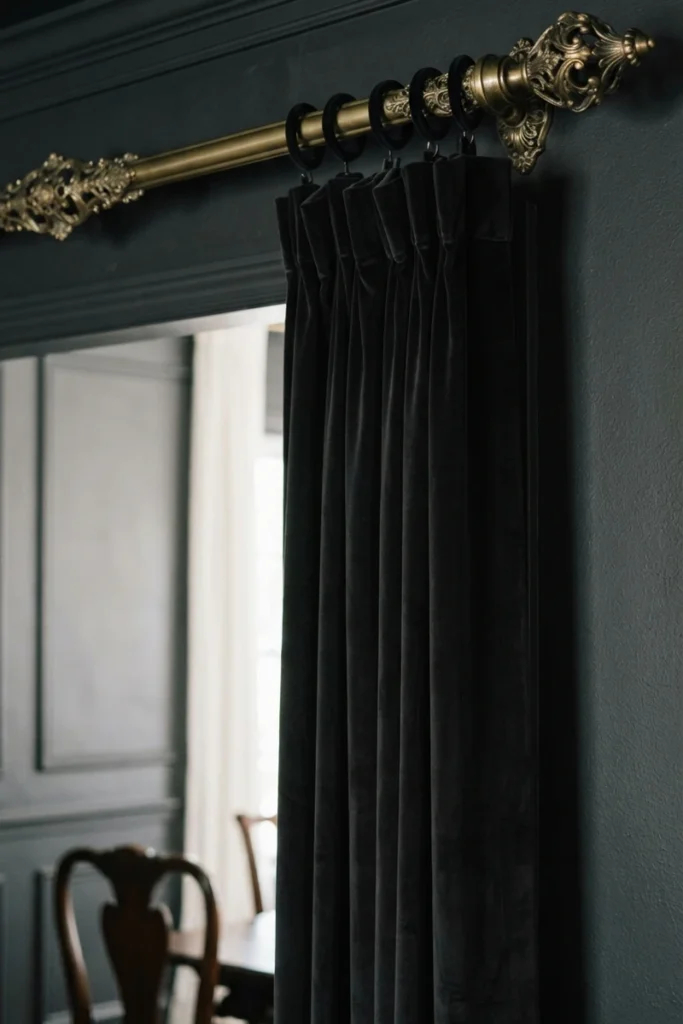
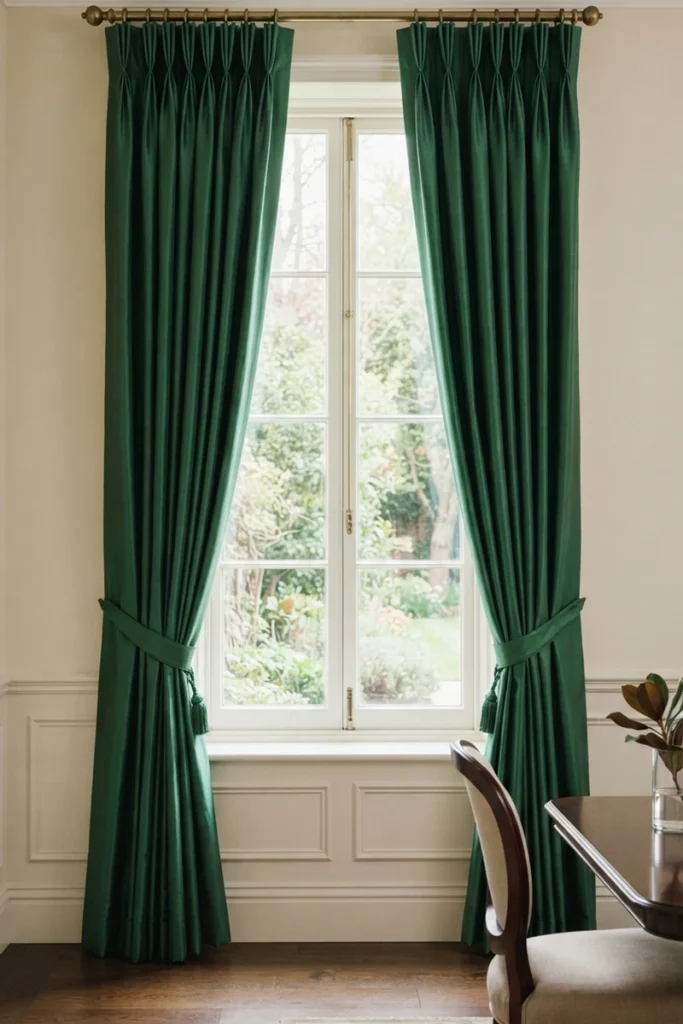
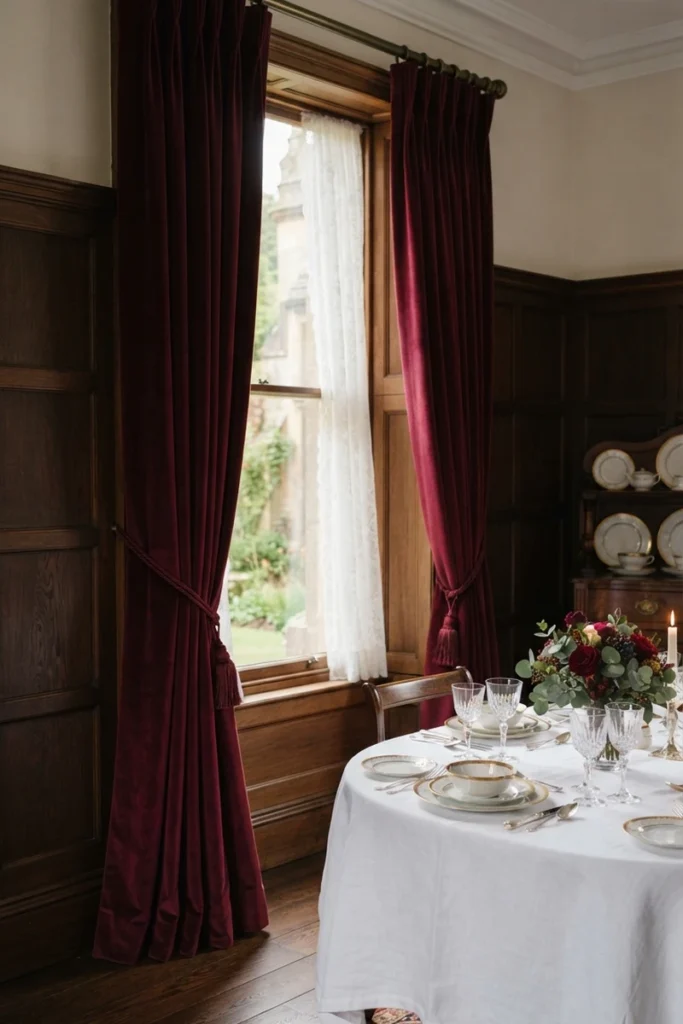
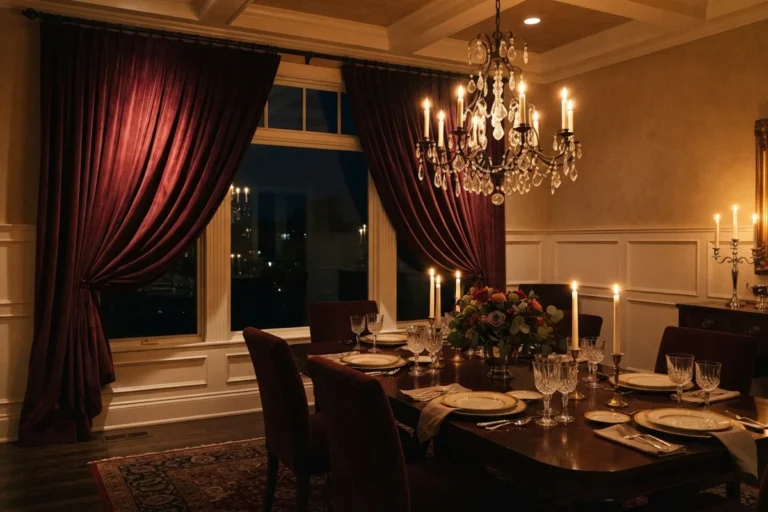
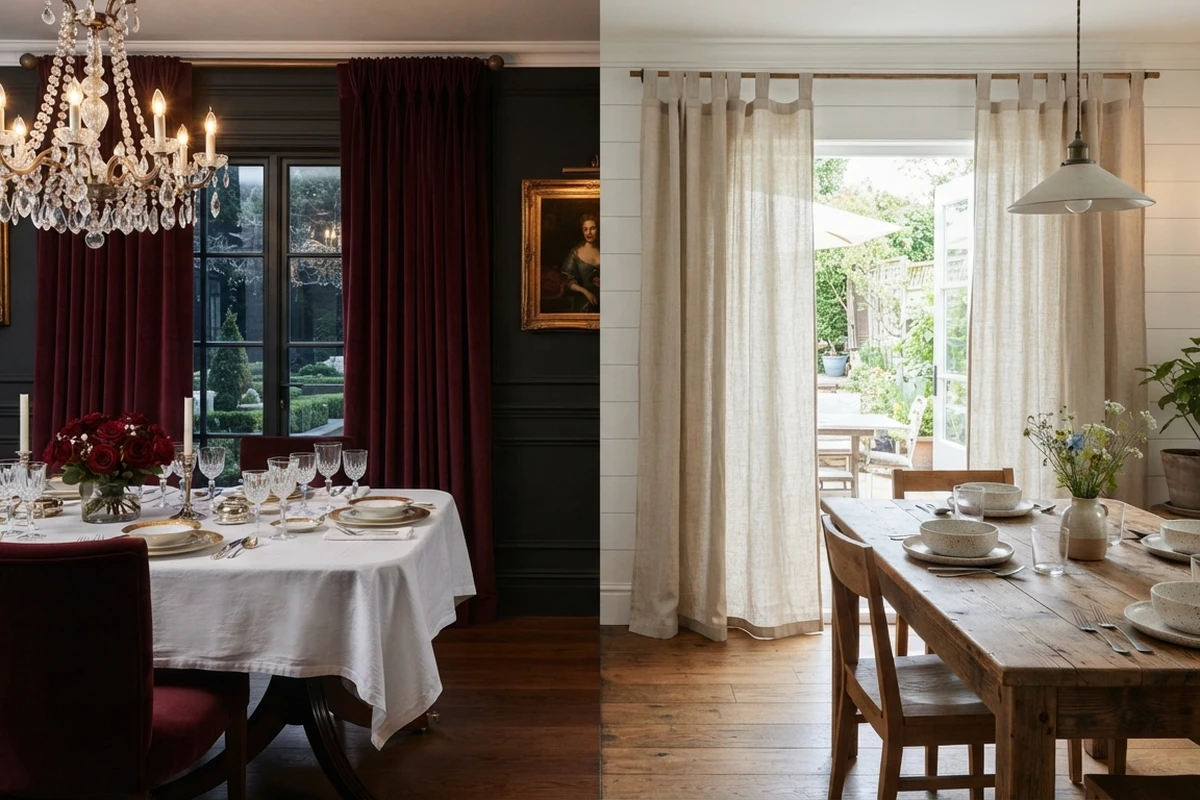
Formal dining curtains rely on structure and rich materials to create a polished, tailored look that suits entertaining and special-occasion dinners.
What signals formal in a dining curtain:
- Pinch pleat or goblet pleat headings with crisp, architectural folds
- Velvet or silk fabrics with a rich, heavy drape
- Floor-length or slightly puddled hems
- Rods mounted high and wide, close to the ceiling
- Coordinating valances or ornate hardware finishes
These elements work together, so mixing a casual fabric with formal hardware often looks unfinished rather than eclectic.
What Makes a Dining Curtain Read as Casual
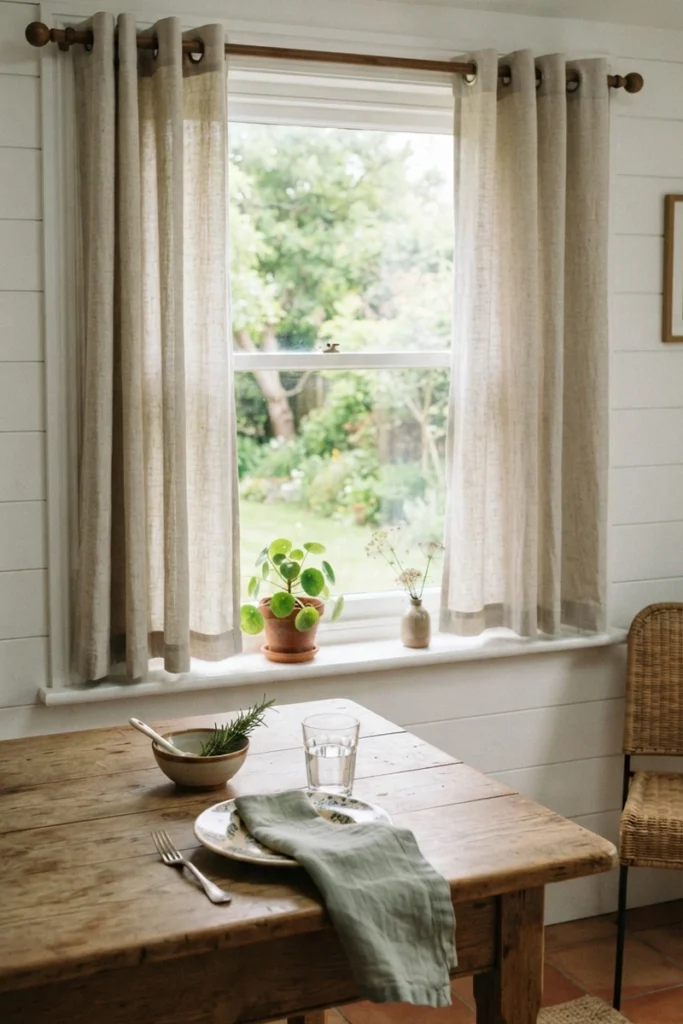
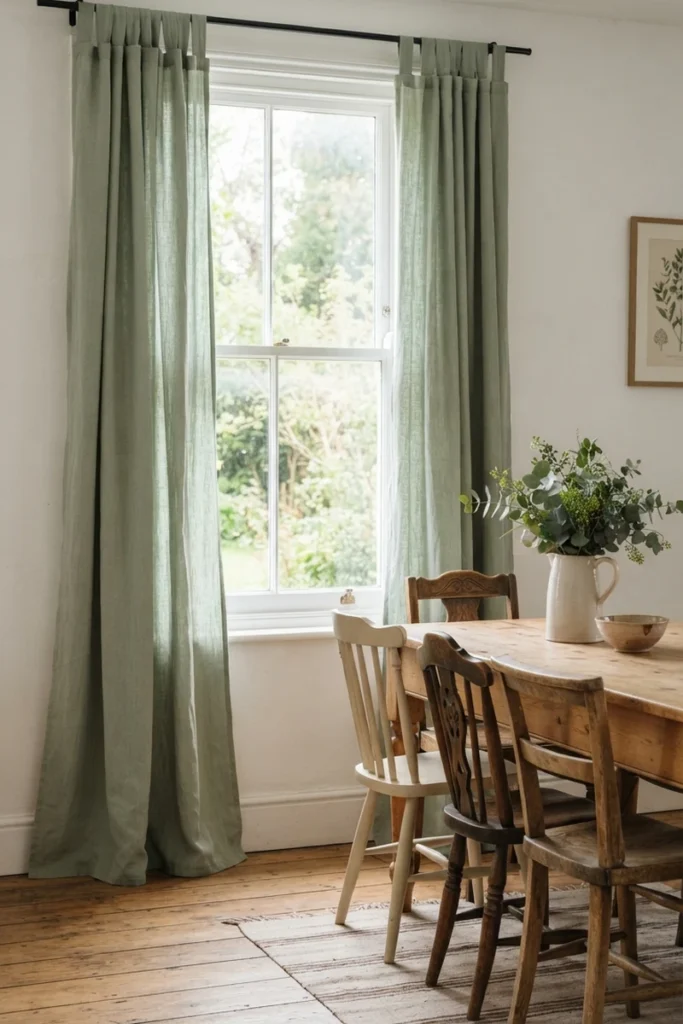
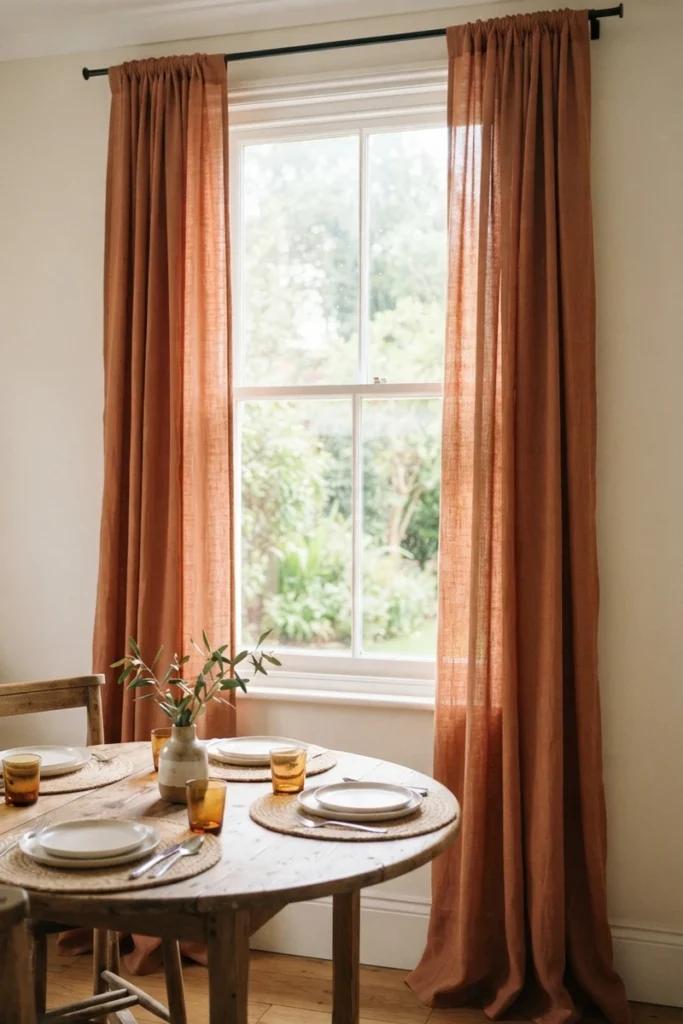
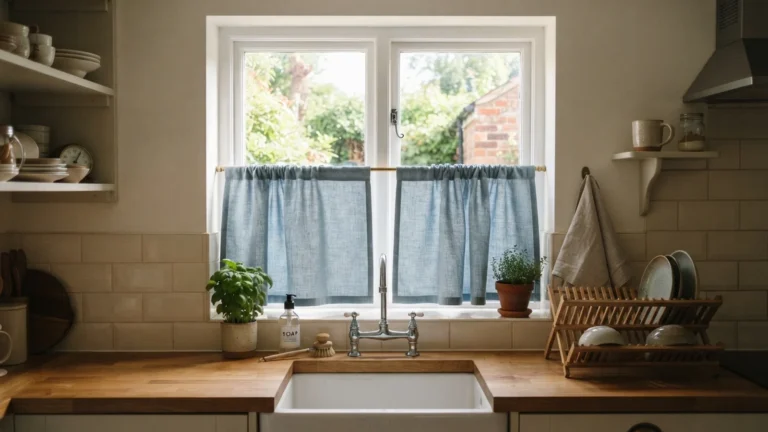
Casual dining curtains lean on lighter fabrics and simpler hardware to keep a room feeling relaxed and approachable for everyday use.
What signals casual in a dining curtain:
- Grommet, tab-top, or rod-pocket headings
- Linen, cotton, or linen-cotton blend fabrics
- Café length or just-above-floor hems
- Simple, understated rod finishes
- Minimal or no additional layering
Casual doesn’t mean unfinished — it just prioritizes ease and everyday practicality over formal structure.
Fabric Is the Fastest Way to Tell Them Apart
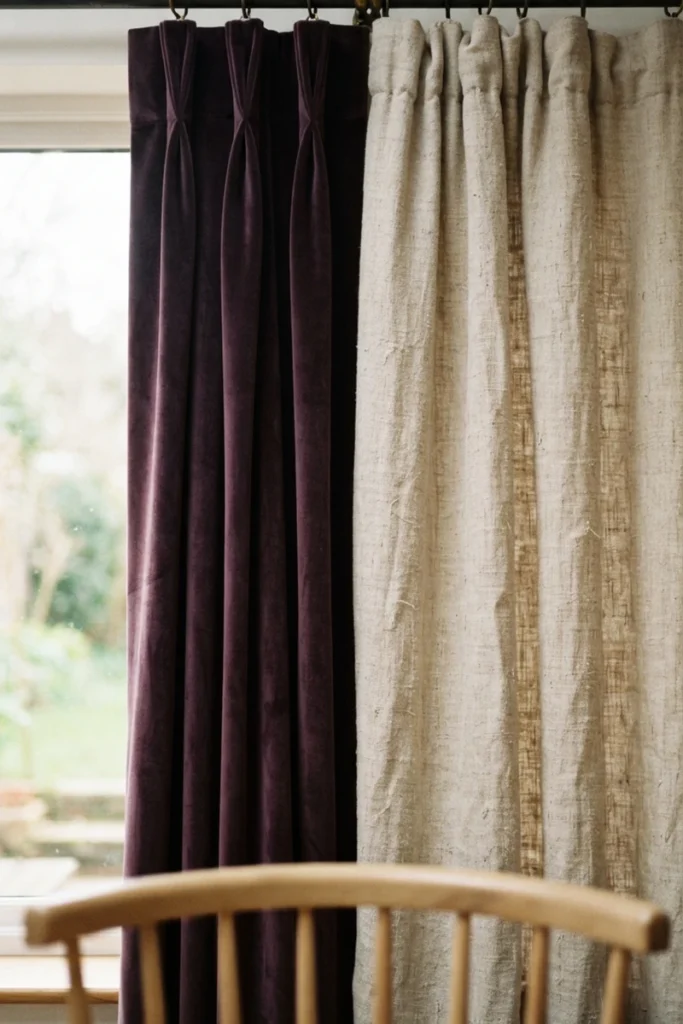
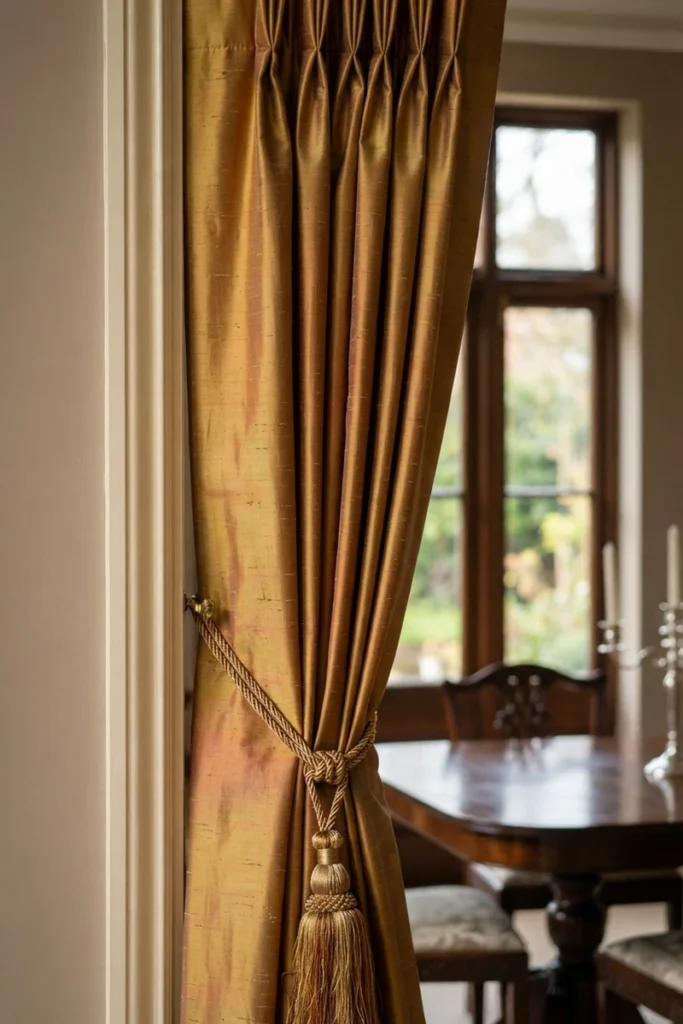
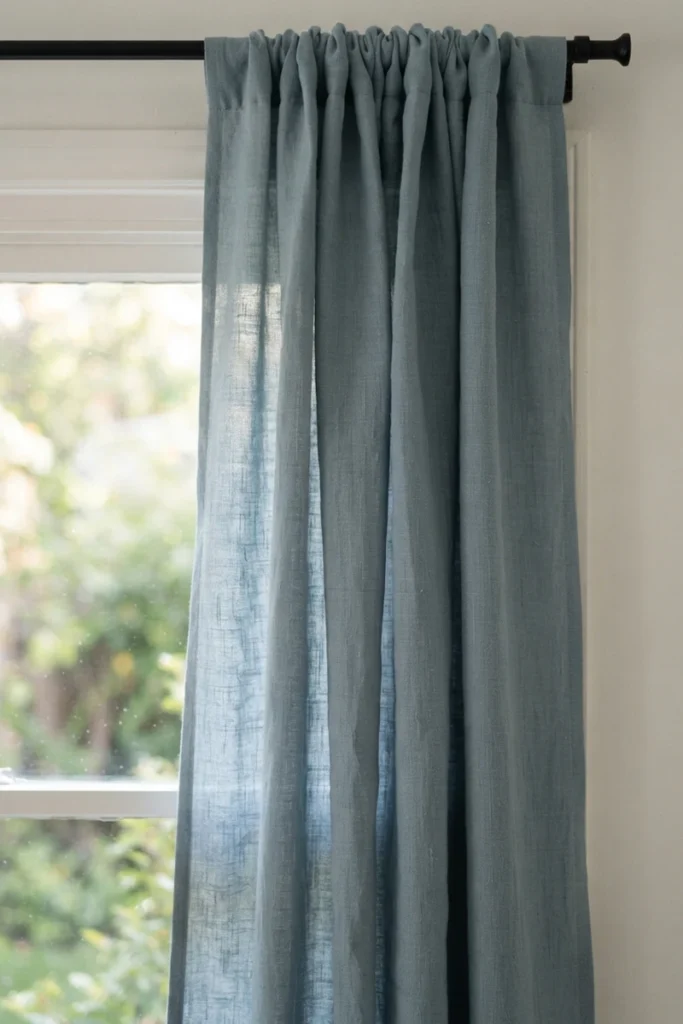
Fabric choice alone does more to signal formal versus casual than almost any other single decision in a dining room.
How fabric weight and texture set the tone:
- Velvet and silk read as formal, rich, and dressed-up
- Linen and cotton read as relaxed, breathable, and casual
- Heavier fabrics naturally pair with structured pleats
- Lighter fabrics naturally pair with simpler headings
- Mixing a heavy fabric with a casual heading often looks unintentional
If you’re unsure which direction to go with formal vs casual dining curtain styles, starting with fabric weight tends to make every other decision easier.
Length and Hardware Reinforce the Look
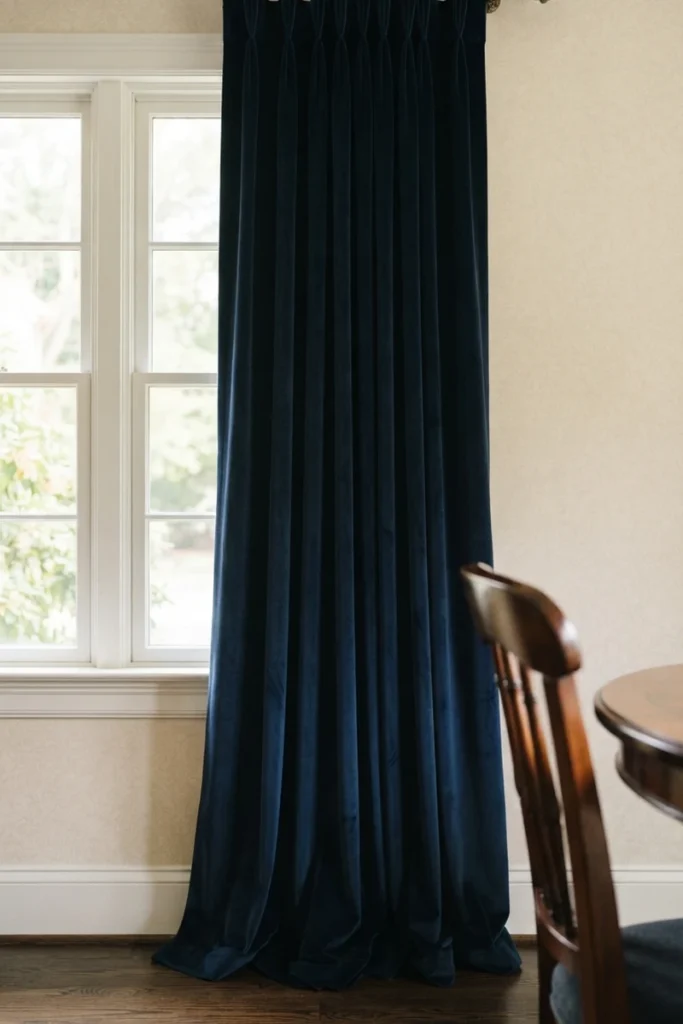
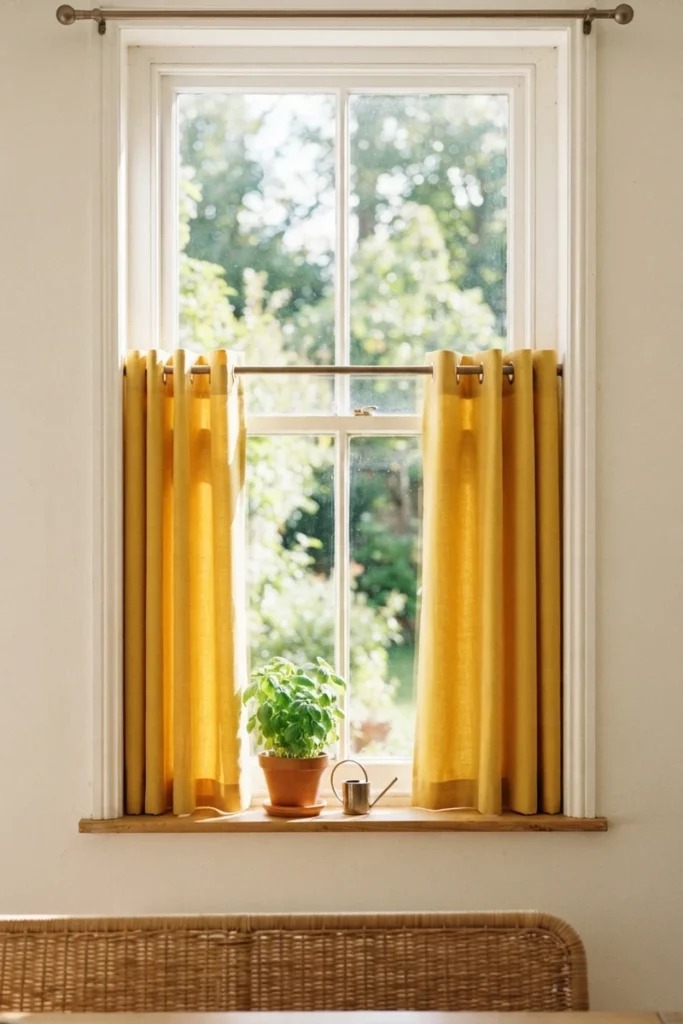
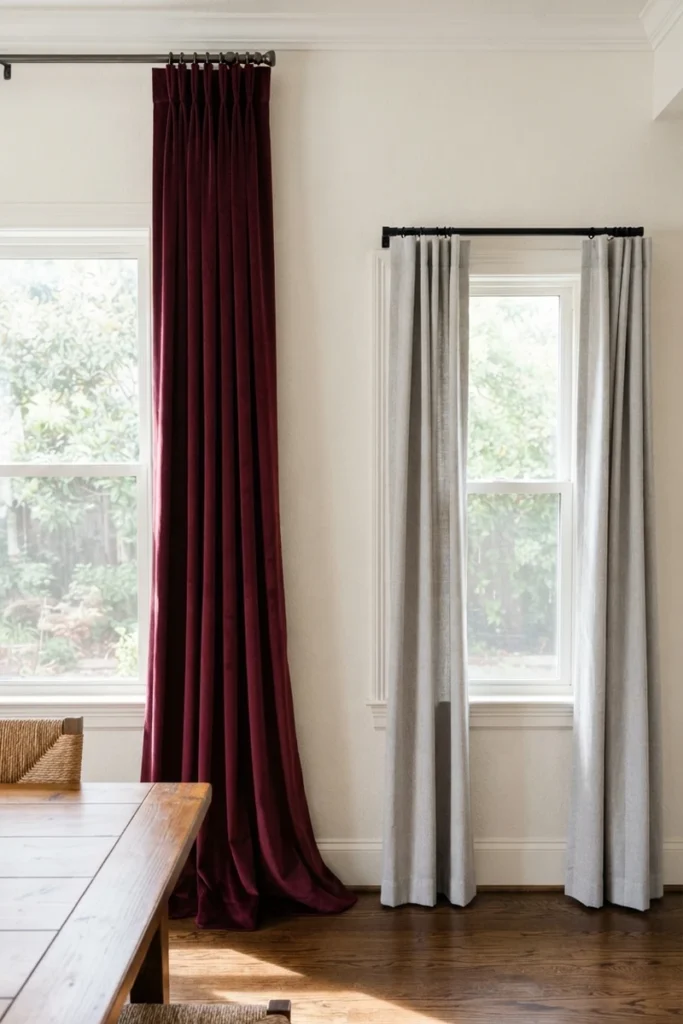
Beyond fabric, how long the curtain hangs and what hardware it uses either reinforces or undercuts the formal or casual direction you’ve chosen.
How length and hardware signal formality:
- Floor-length or puddled hems lean formal
- Café or just-above-floor hems lean casual
- High, wide-mounted rods create a more formal, expansive feel
- Simple, low-profile rods suit a casual look
- Ornate finials and coordinating valances add formality
Getting length and hardware aligned with your fabric choice avoids a room that feels visually confused.
Formal vs Casual Dining Curtain Styles: How to Decide
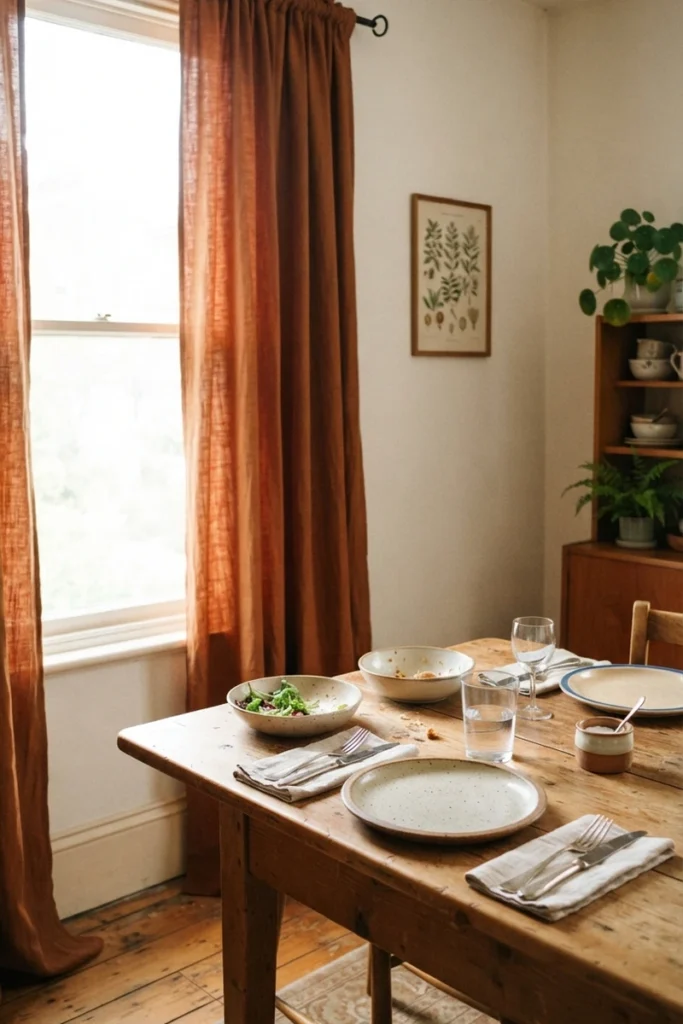
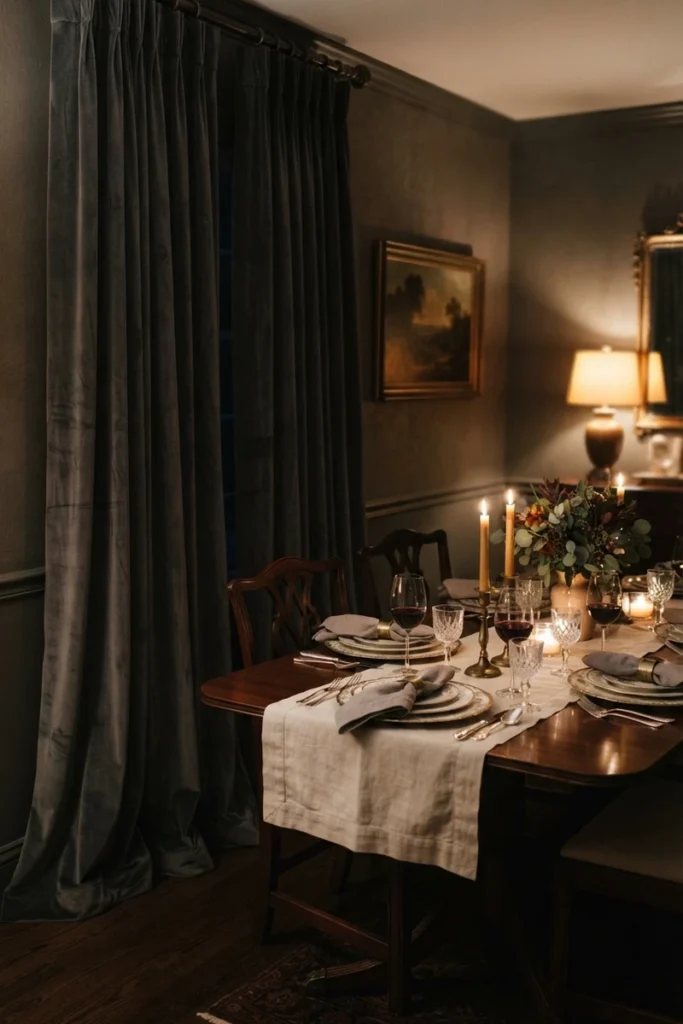
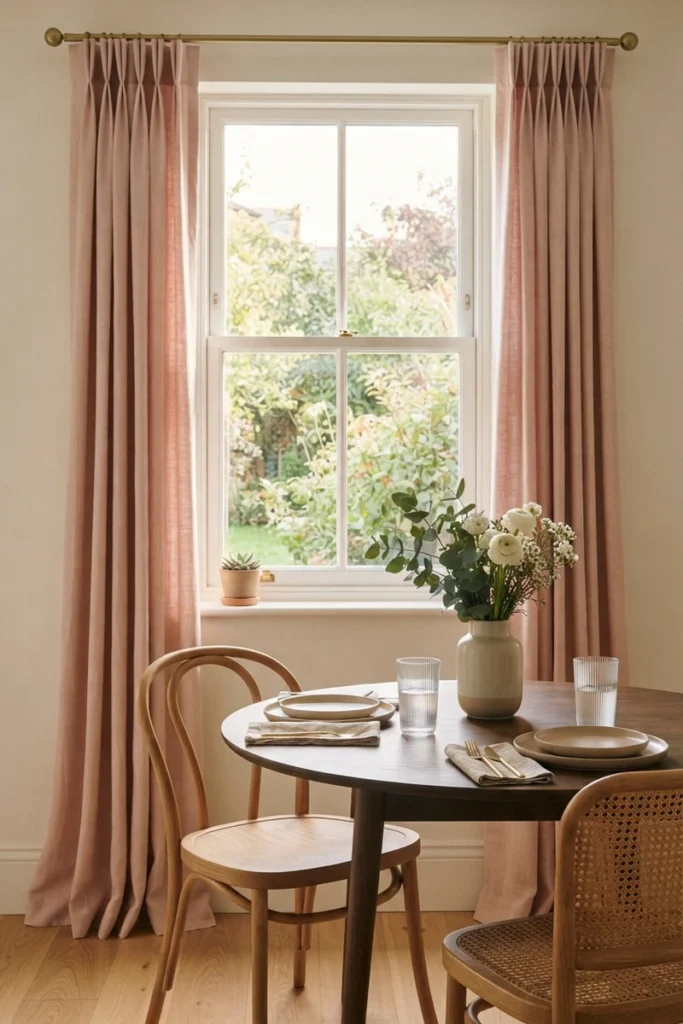
The right choice usually comes down to how the room actually gets used, more than personal style preference alone.
Questions that help clarify the decision:
- Is this room used mainly for entertaining, or daily family meals?
- Does the rest of the home lean formal or casual overall?
- How much upkeep are you willing to do (velvet needs more care than cotton)?
- Is the room used for kids’ homework or casual daytime activities too?
- Do you want the option to dress the room up for special occasions?
A dining room used daily for family meals rarely needs the same formality as one reserved for holiday entertaining.
Common Mistakes to Avoid
- Pairing heavy velvet fabric with casual grommet hardware
- Choosing café-length curtains in a clearly formal, entertaining-focused room
- Mixing ornate valances with simple cotton panels
- Ignoring how the dining room’s formality compares to adjoining living spaces
- Choosing fabric based on trend alone rather than the room’s actual daily use
Getting formal vs casual dining curtain styles to match consistently across fabric, length, and hardware avoids a room that feels like two different styles competing.
FAQ
Can a dining room mix formal and casual curtain elements?
It’s possible but risky — when weighing formal vs casual dining curtain styles, a more successful approach is usually choosing one direction and staying consistent, since mixed signals (like heavy velvet with simple grommets) tend to look unintentional rather than eclectic.
Is velvet always too formal for an everyday dining room?
Not necessarily, though velvet’s rich look and higher maintenance needs make it better suited to dining rooms used more for entertaining than daily family meals.
What’s the easiest way to make casual dining curtains feel slightly more elevated?
Adding a pinch-pleat heading to a mid-weight fabric like a linen-cotton blend brings in some formal structure without committing to a fully formal fabric or length.
External Resources
For more dining room styling inspiration:
Final Thoughts on Formal vs Casual Dining Curtains
Once you’ve settled on a direction, color plays just as big a role in the final look. Our dining room curtain colors guide breaks down which shades reinforce formal or casual styling.
💡 Found this helpful? Save this guide on Pinterest so you can find it again when you’re ready to shop!