Bedroom Blackout Curtains: 6 Proven Tips for Better Sleep
Bedroom blackout curtains are one of the easiest upgrades you can make for better sleep, whether you’re blocking out early sunrise, streetlights, or a neighbor’s porch light. This guide breaks down the fabrics, layering tricks, and sizing details that actually make a curtain block light, not just dim it.
Best Fabrics for Bedroom Blackout Curtains
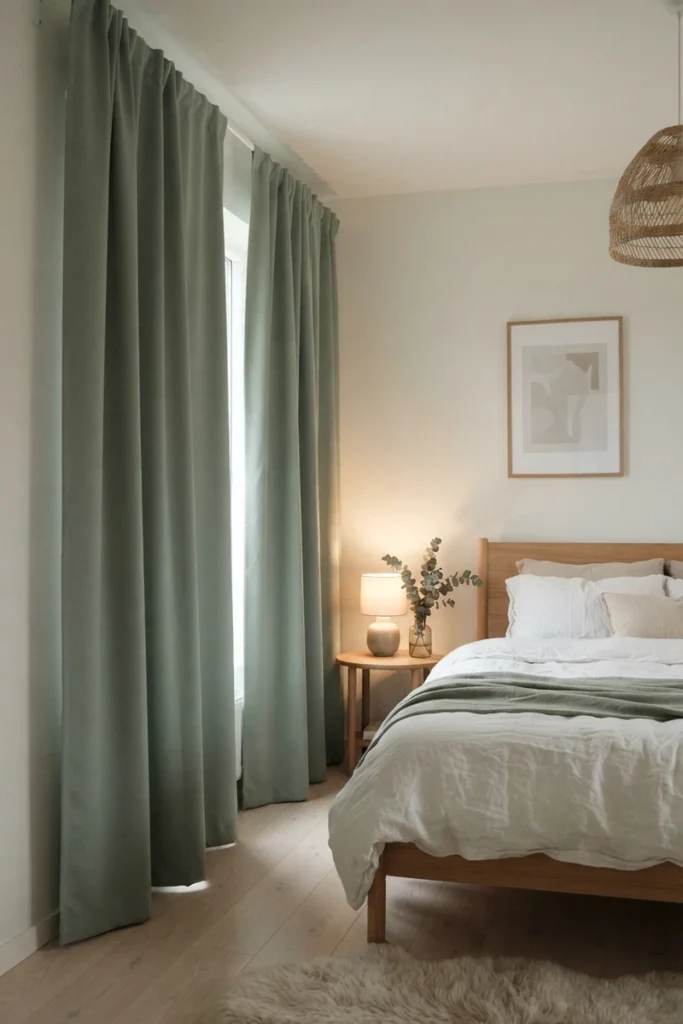
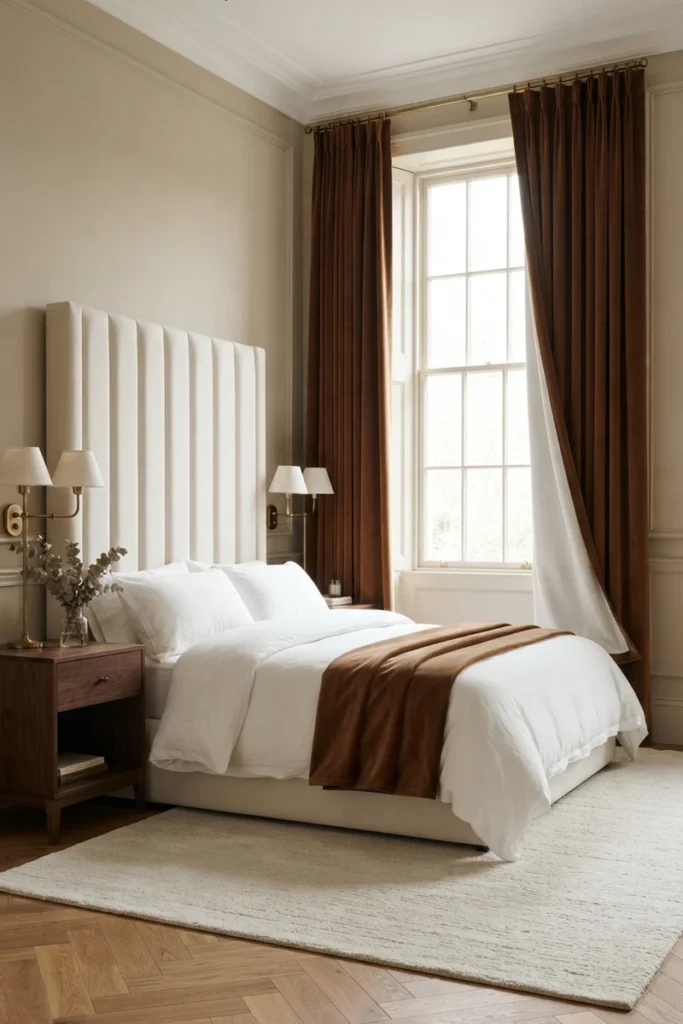
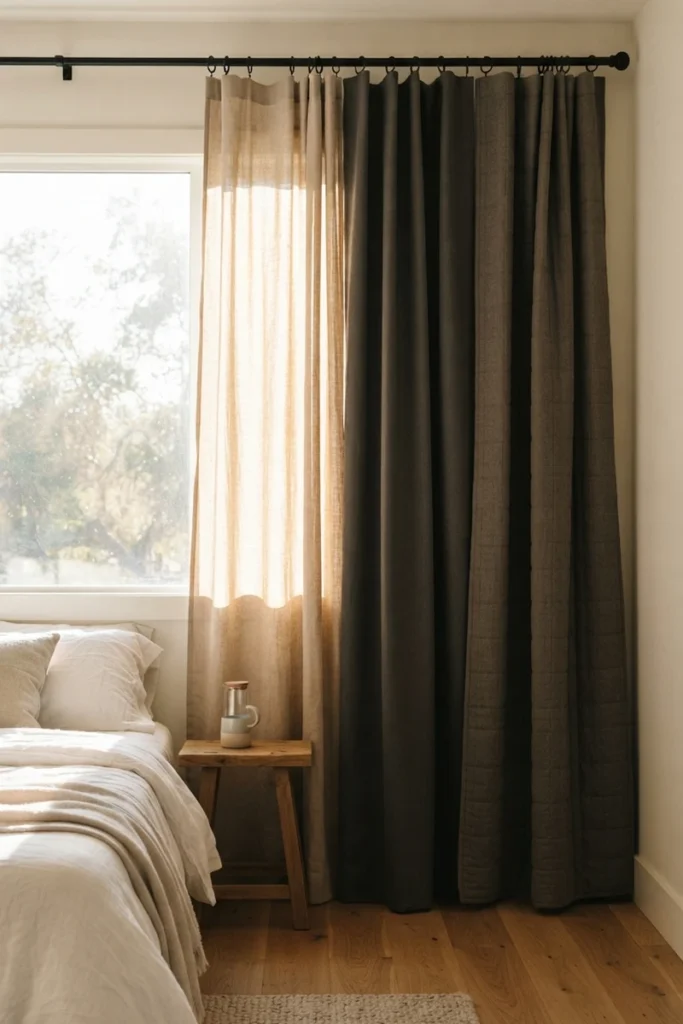
Not all “blackout” curtains block light equally — the fabric and lining make the real difference.
- Triple-weave blackout fabric blocks nearly all light without needing a separate liner
- Thermal-lined curtains add insulation along with light control
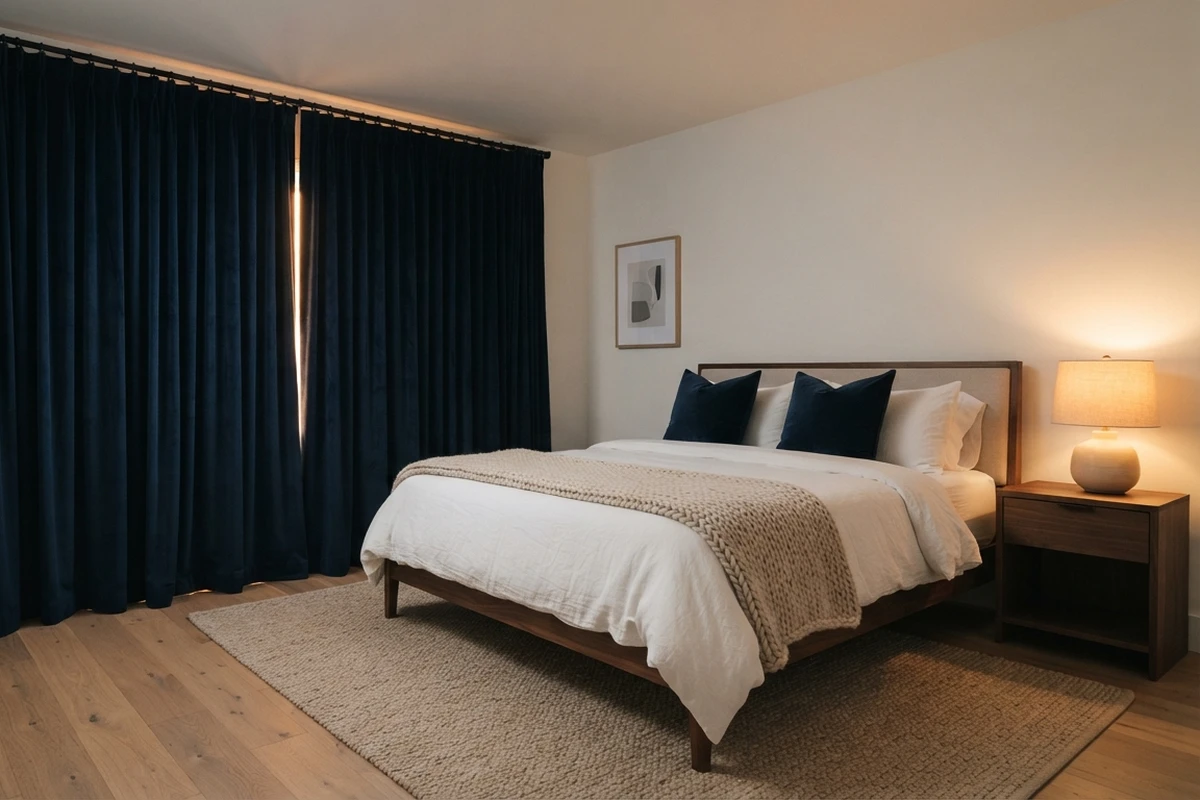
- Velvet with blackout lining brings a heavier, more formal look
- Layered double-panel setups let you keep a decorative fabric up front
- Microfiber blackout blends offer a lighter-weight, budget-friendly option
Triple-weave and thermal-lined options are the safest starting point if blocking light is the top priority.
Sizing and Hanging for Maximum Darkness
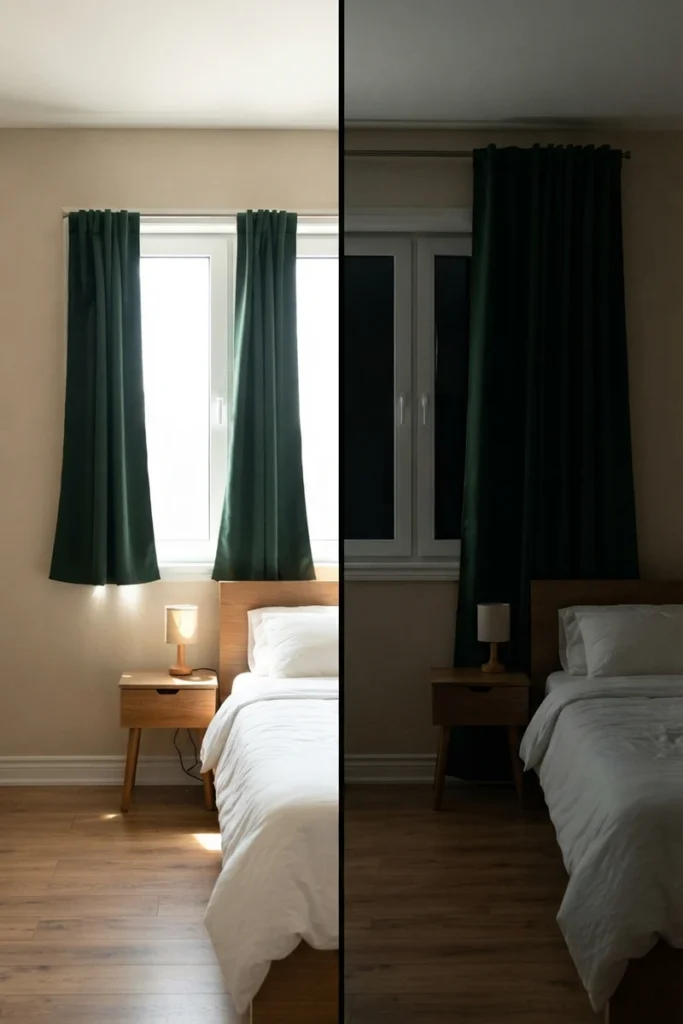
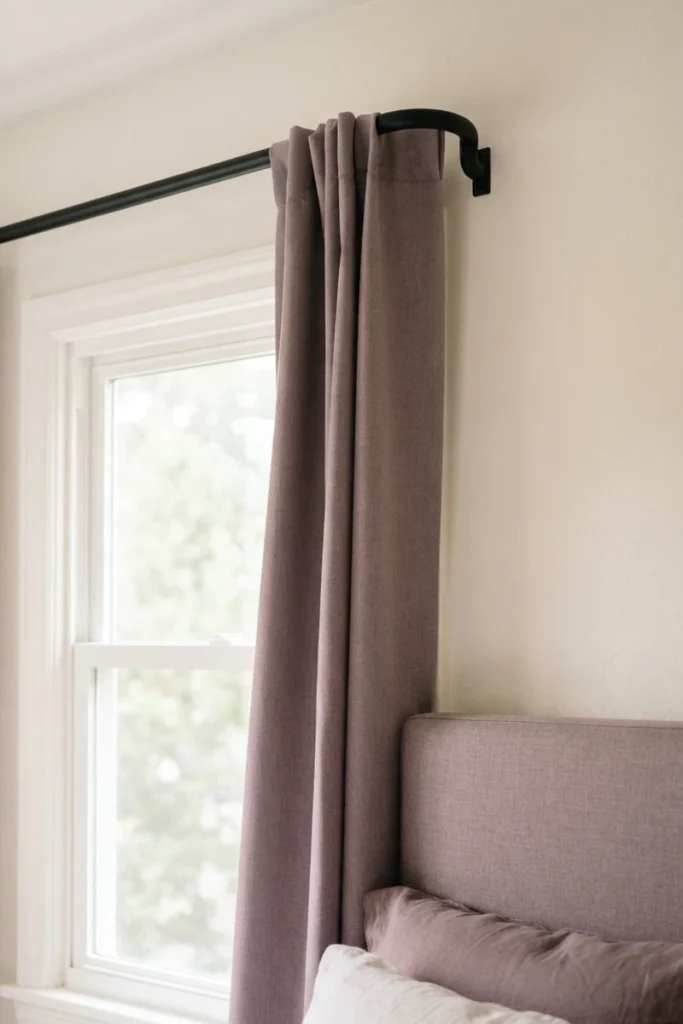
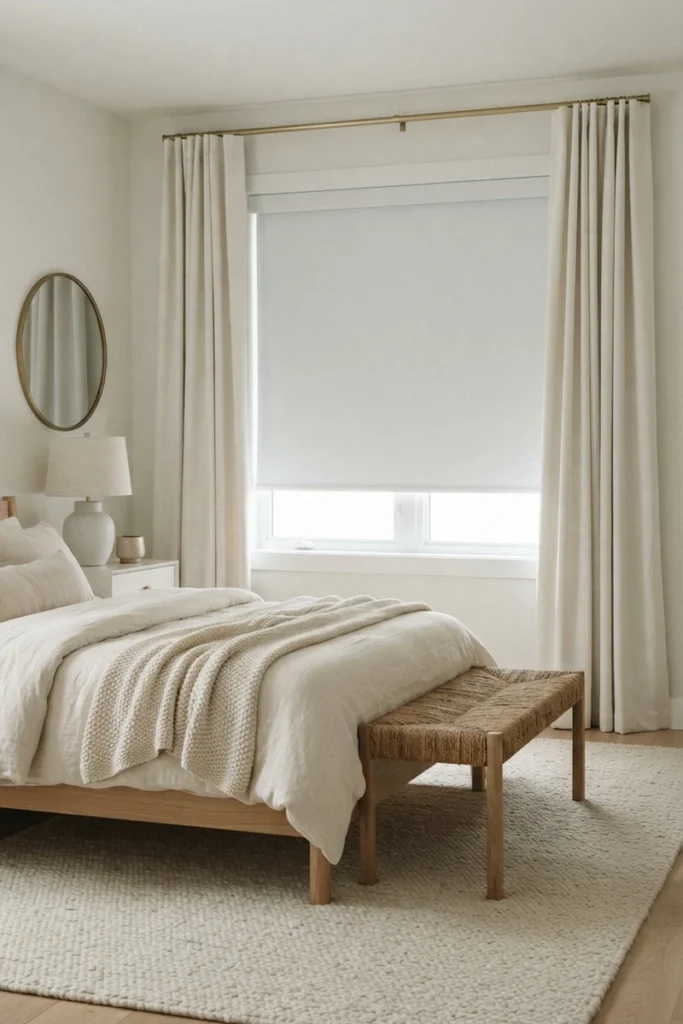
Even the best blackout fabric fails if the curtain isn’t sized and hung correctly.
- Choose curtains 4-6 inches wider than the window frame on each side
- Mount the rod higher and wider than the window itself
- Add a wraparound rod or magnetic side strips for near-total darkness
- Pair with a blackout roller shade for extra coverage in bright rooms
- Choose floor-length or puddle hems so no light sneaks in underneath
Getting the fit right often matters more than the fabric label itself.
Layering Blackout Curtains with Sheers
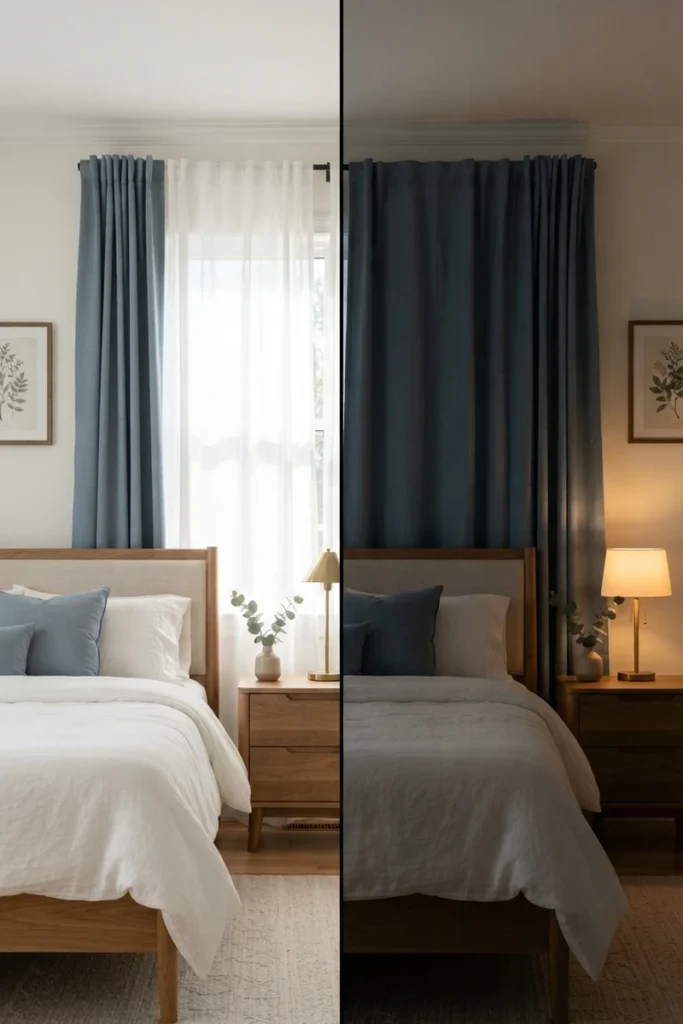
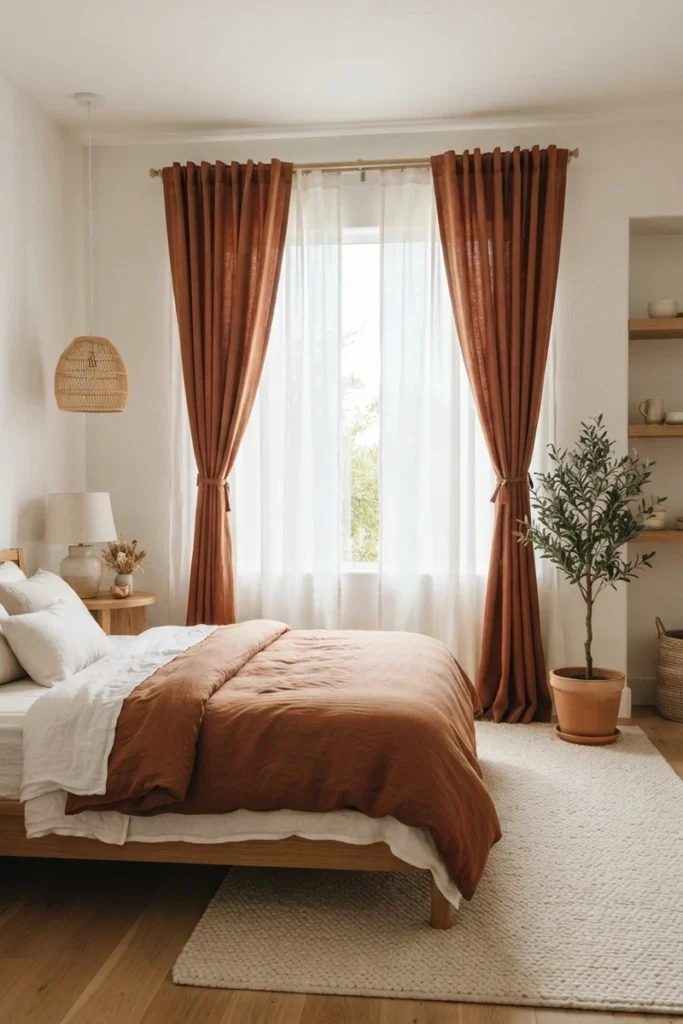
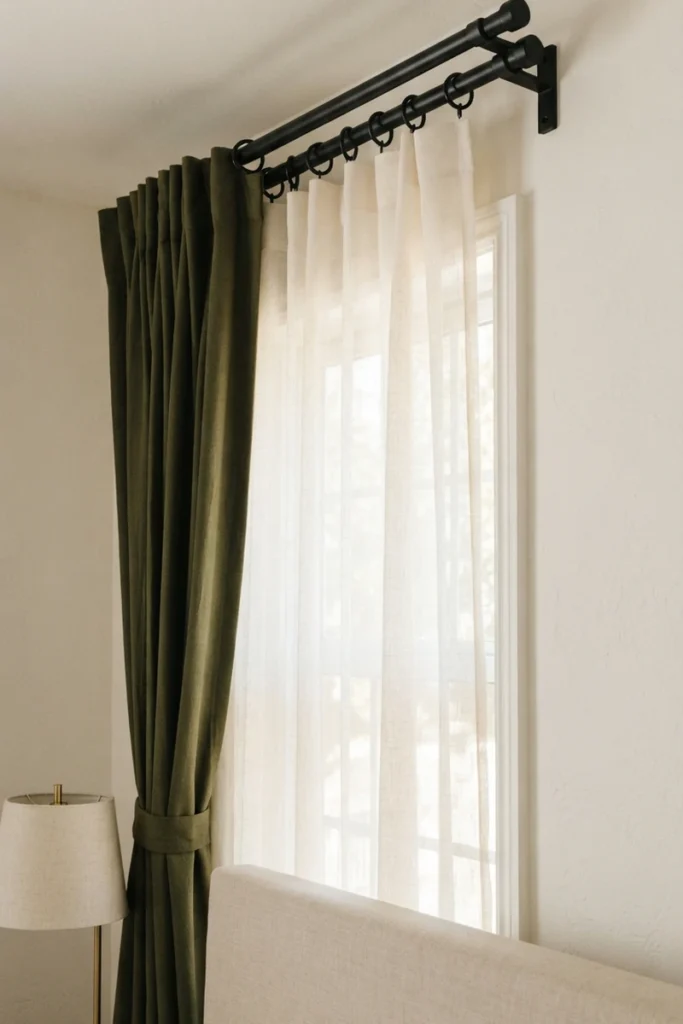
You don’t have to give up daytime light just because you want full darkness at night.
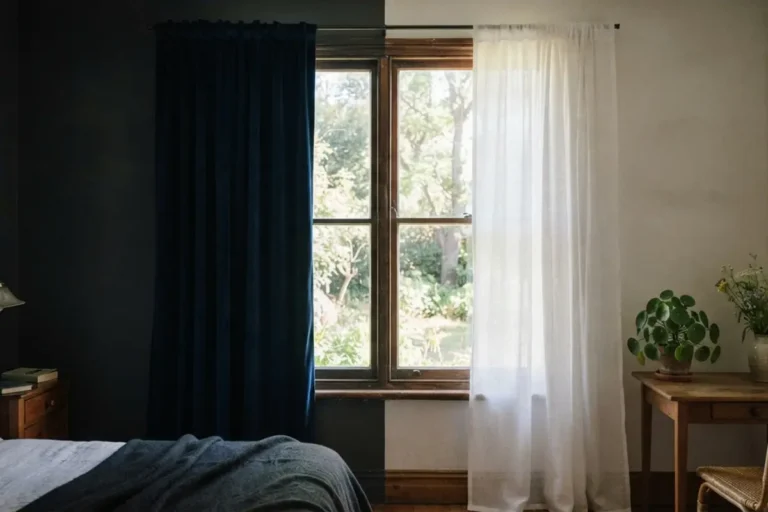
- Install a double curtain rod so a sheer and blackout panel hang independently
- Close only the sheer during the day for soft, filtered light
- Draw the blackout panel at night for complete darkness
- Choose coordinating colors so the layered look feels intentional
- Keep both layers gliding freely so switching between them takes seconds
This setup gives a bedroom the flexibility to shift between bright and fully dark without swapping curtains.
Colors That Support Better Light-Blocking
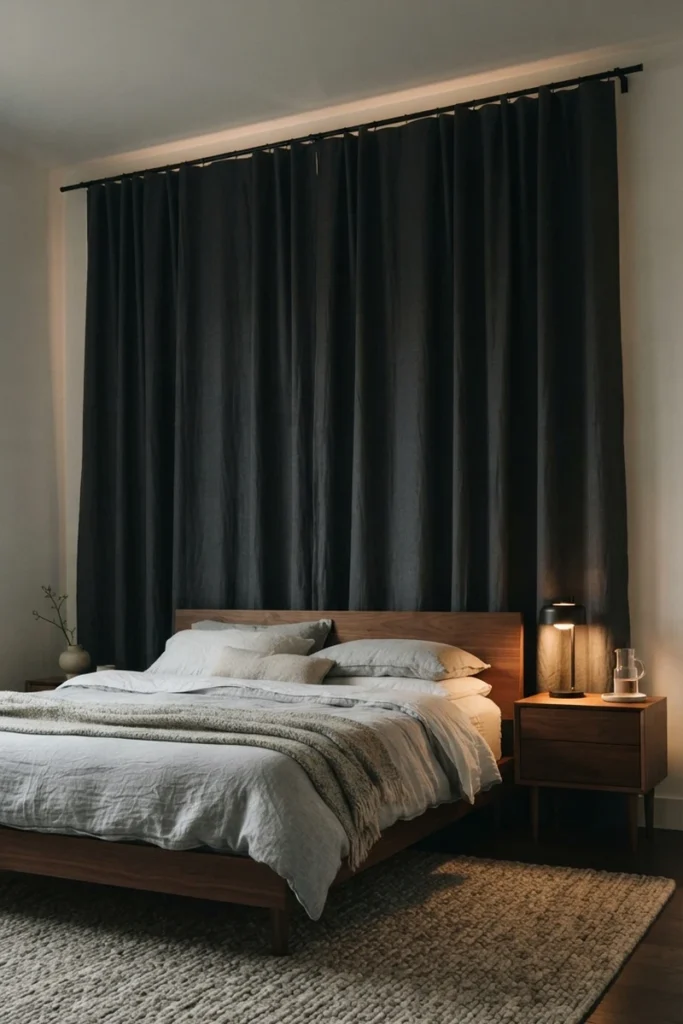
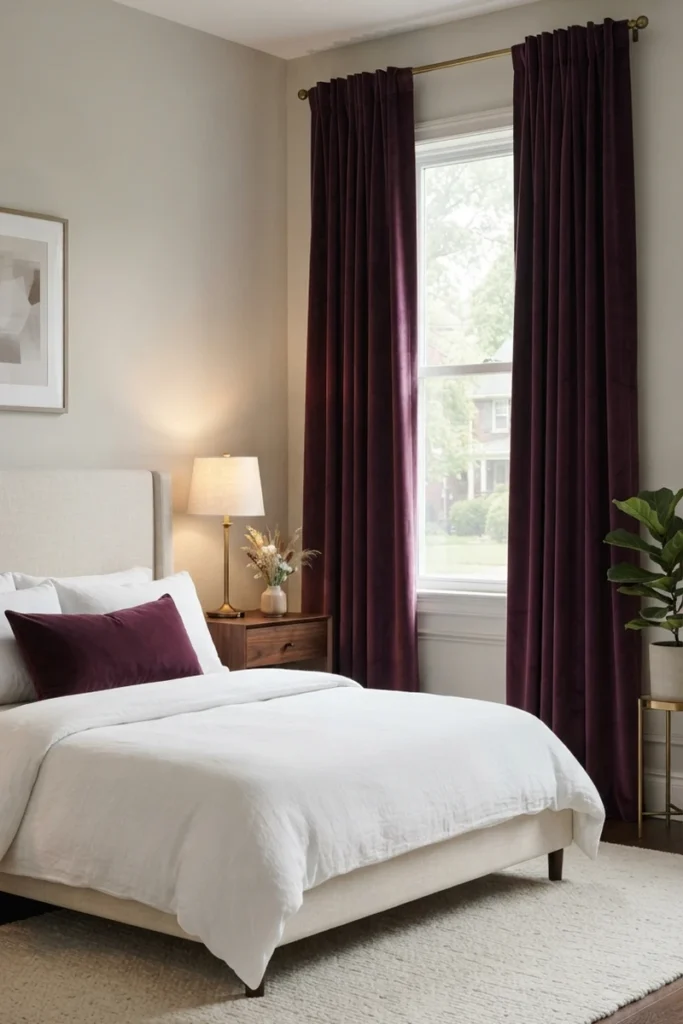
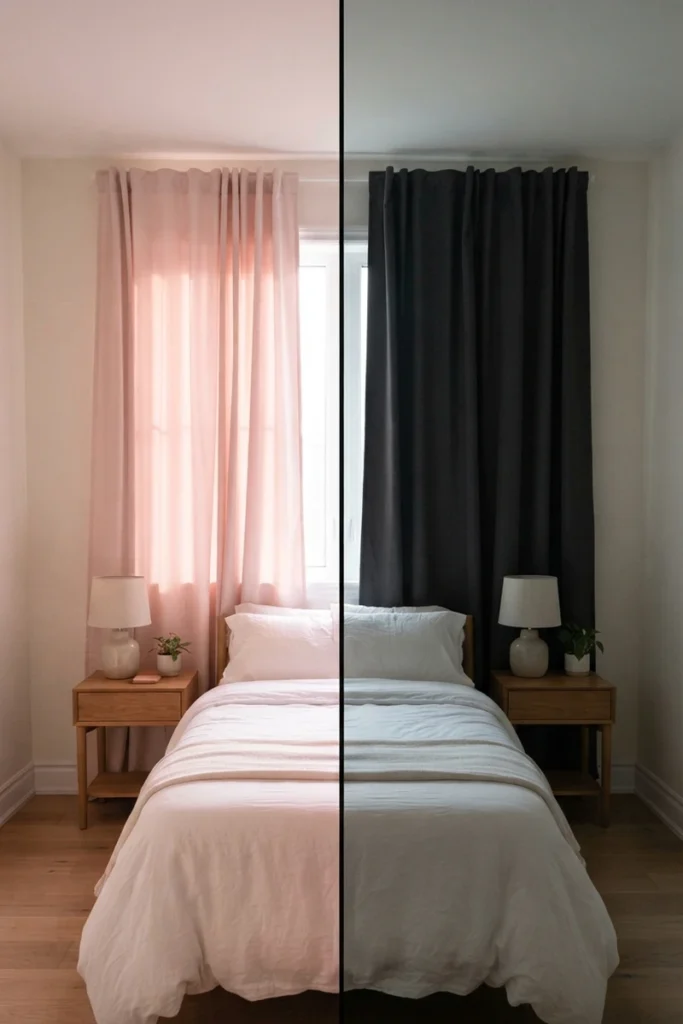
Color plays a small but real role in how dark a blackout curtain actually feels.
- Navy, charcoal, and black absorb rather than reflect residual light
- Deep jewel tones work well if you want color with strong light control
- Pale colors let more glow through even with blackout lining
- Darker colors also hide dust and sun fading better over time
- Two-tone rooms can pair a dark blackout layer with a lighter sheer
Darker shades are the more reliable choice when total darkness is the goal.
Styling Blackout Curtains for Different Bedroom Looks
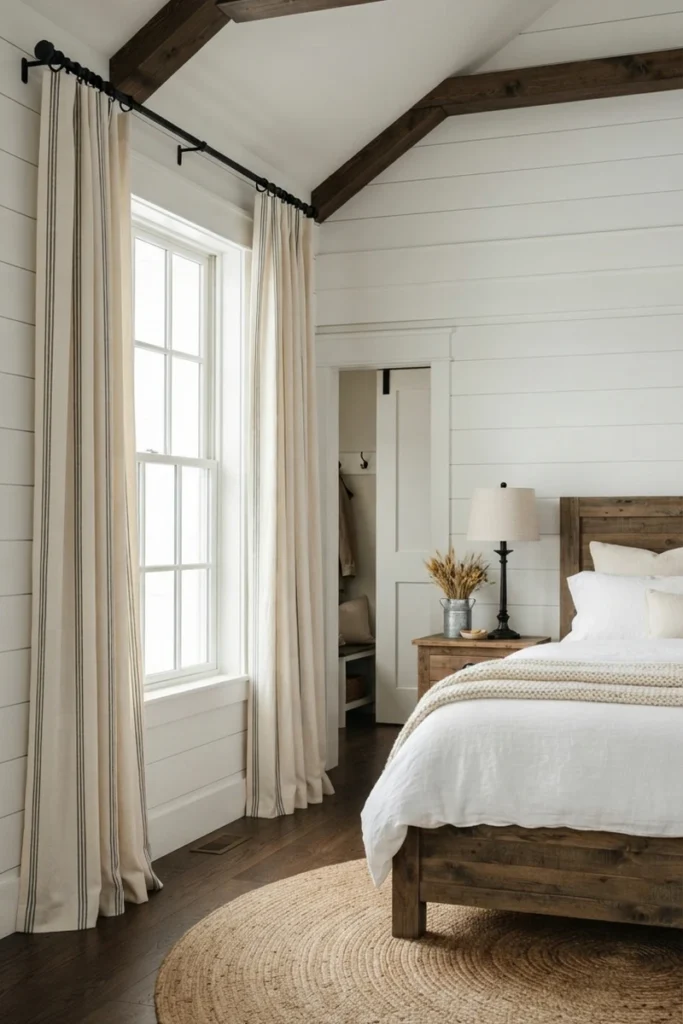
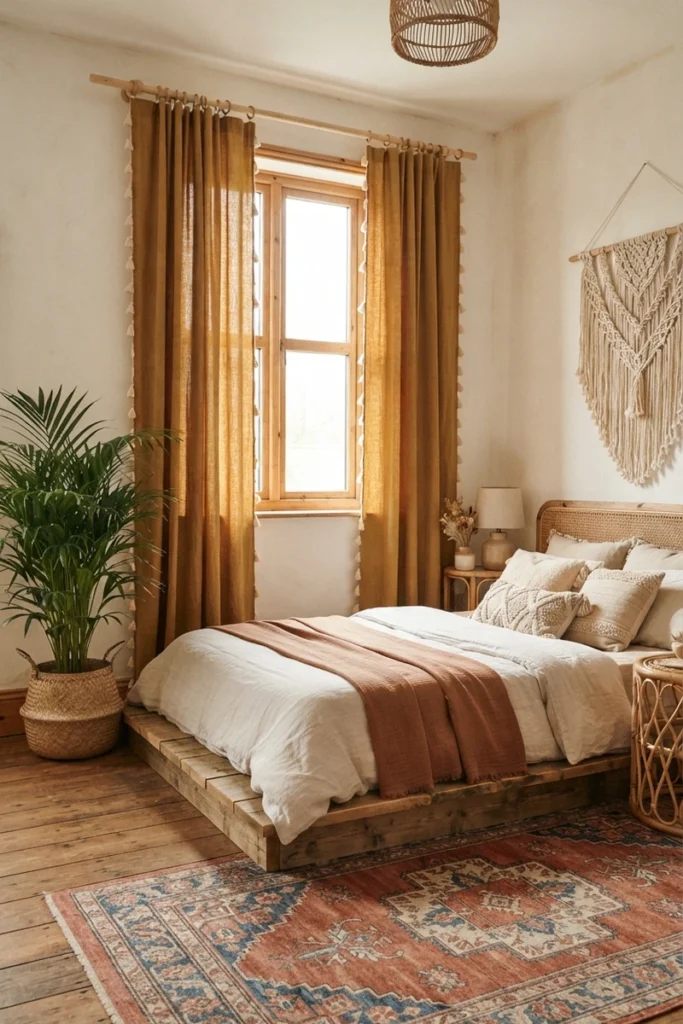

Blackout curtains no longer have to look heavy or plain — they now come in textures and finishes that suit almost any bedroom style.
- Modern bedrooms suit clean ripple-fold or pinch-pleat panels in solid tones
- Farmhouse bedrooms pair well with linen-look blackout fabric and wooden or iron rods
- Boho bedrooms can use earthy blackout panels layered with tassel or macramé accents
- Coastal bedrooms work with soft blues and whites on light, natural wood hardware
- Classic bedrooms look polished with velvet blackout drapes and brass finishes
Choosing a blackout curtain that matches your style means you never have to trade good looks for good sleep.
Blackout Curtains for Kids’ Rooms and Nurseries
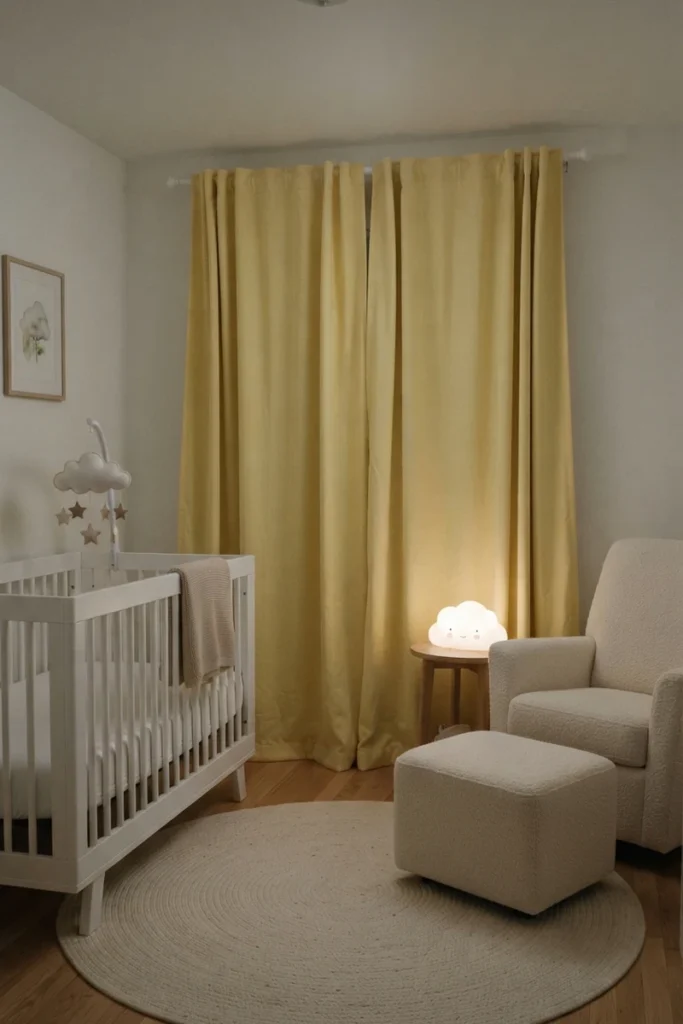
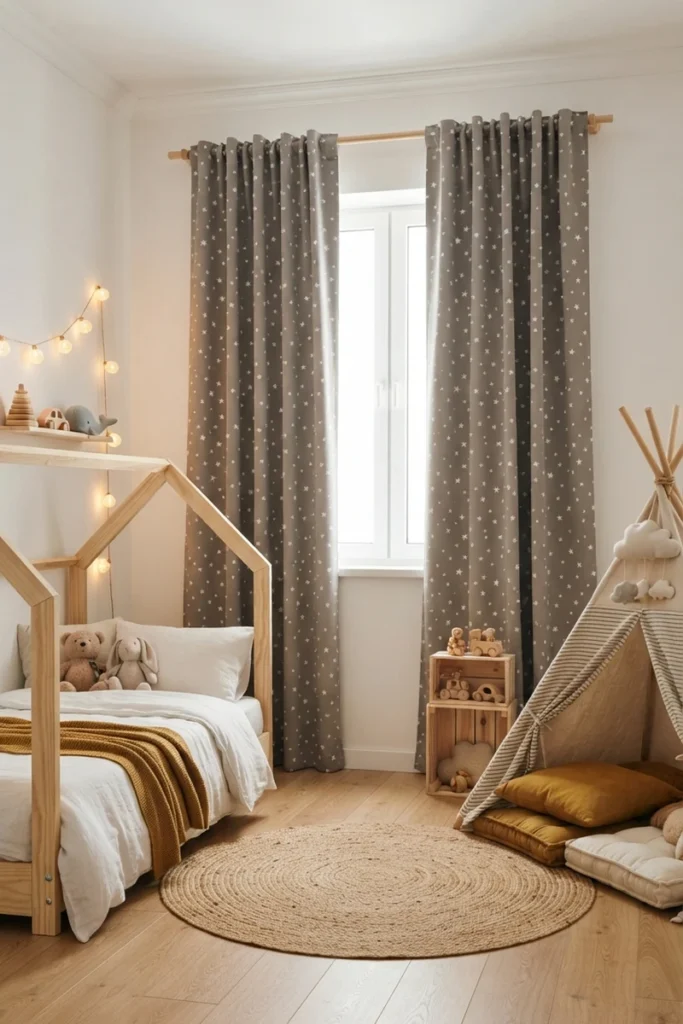
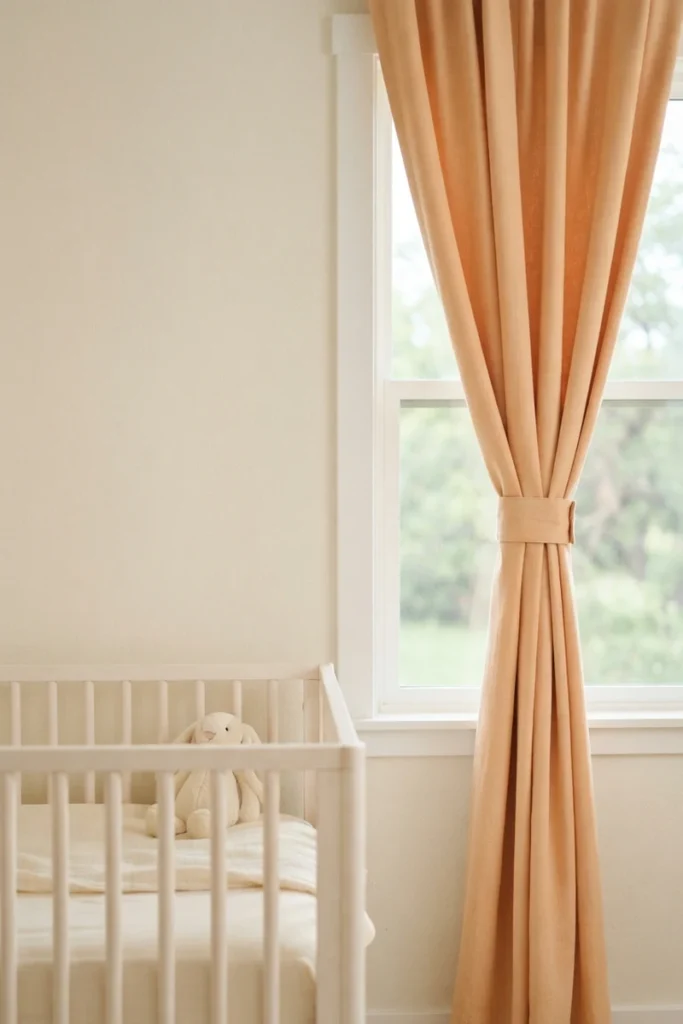
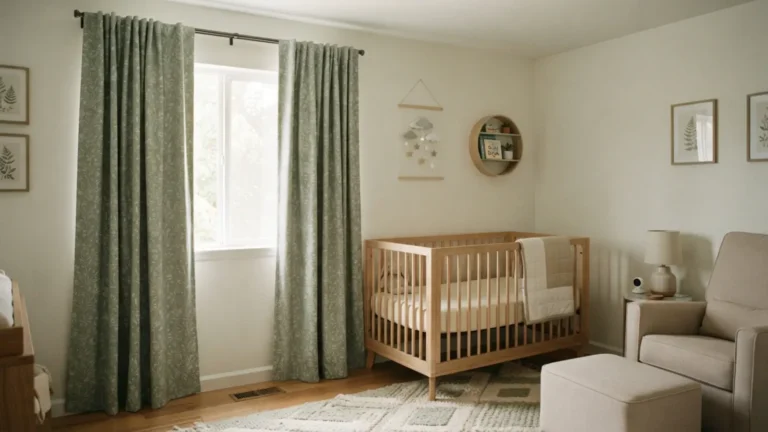
Kids’ rooms and nurseries often benefit the most from blackout curtains, since naps and early bedtimes happen while it’s still light outside.
- Keep daytime naps darker and more consistent
- Help with earlier bedtimes during long summer evenings
- Choose cordless designs or keep any cords well out of reach for safety
- Pick washable fabrics that stand up to sticky hands and frequent cleaning
- Soft colors or playful patterns can still offer full blackout lining
Many parents find that a dark, calm room makes both naps and bedtime noticeably easier.
Common Mistakes to Avoid
- Buying curtains the same width as the window, leaving light gaps on both sides
- Assuming any curtain labeled “blackout” performs the same
- Hanging the rod too close to the window frame
- Choosing a length that stops short of the floor or sill
- Picking light colors when total darkness is the actual priority
True darkness comes from choosing bedroom blackout curtains with the right fabric, the right fit, and the right color working together.
FAQ
Do blackout curtains really block 100% of light?
Not quite — even the best bedroom blackout curtains block around 99% of direct light through the fabric itself. Some light can still enter around the edges unless the curtain is mounted wider and higher than the window.
Can I add blackout lining to curtains I already own?
Yes — separate blackout lining panels or clip-on liners can attach to the back of existing curtains, which is cheaper than replacing them.
Are blackout curtains good for reducing noise too?
They help somewhat, since the dense fabric absorbs some sound, but they aren’t a substitute for dedicated soundproofing.
External Resources
For more on hanging curtains properly, Apartment Therapy’s guide to hanging curtains is a solid reference.
Final Thoughts on Bedroom Blackout Curtains
Once the light control is sorted, it helps to understand when a lighter layer makes more sense. Our blackout vs sheer curtains guide breaks down how the two compare.
💡 Found this helpful? Save this guide on Pinterest so you can find it again when you’re ready to shop!