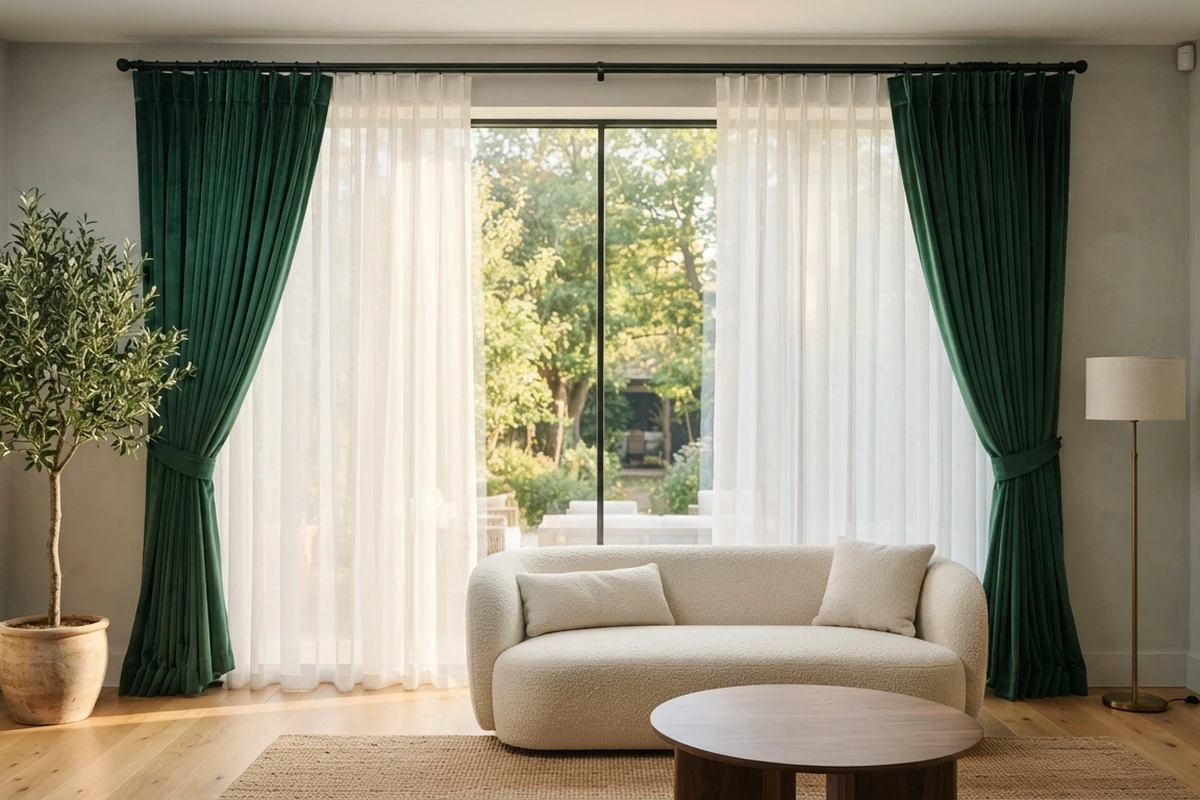
Layered Curtains for Living Rooms: Sheers + Drapes Done Right
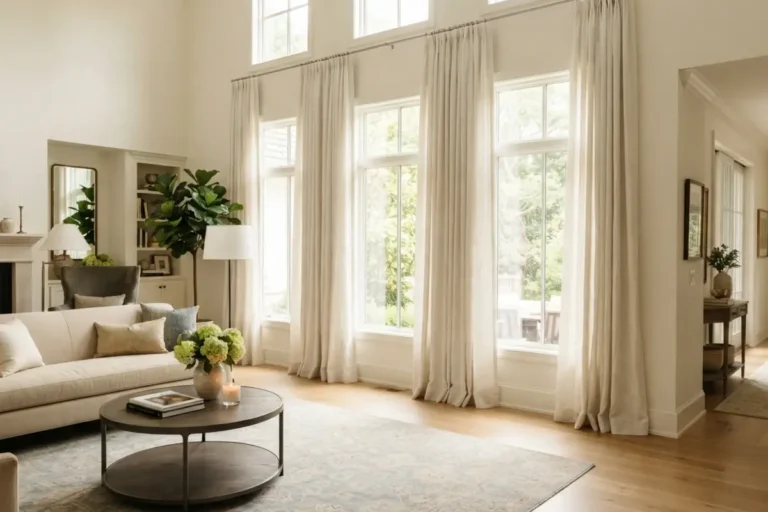
A living room’s lighting needs change more throughout the day than almost any other room in the house — bright and open for afternoon reading, dim and private for movie nights. Layered curtains for living rooms are the most reliable way to handle both without compromising on either.
This guide walks through how to build a layered window setup that actually works day to day, not just in photos.
The Case for Layered Curtains in Living Rooms
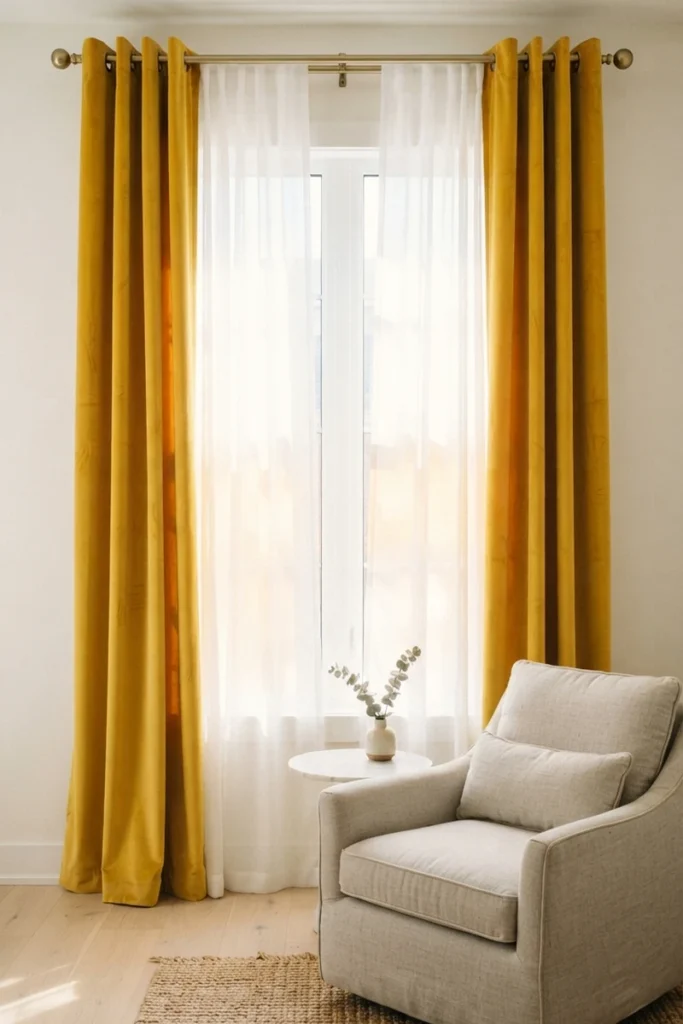
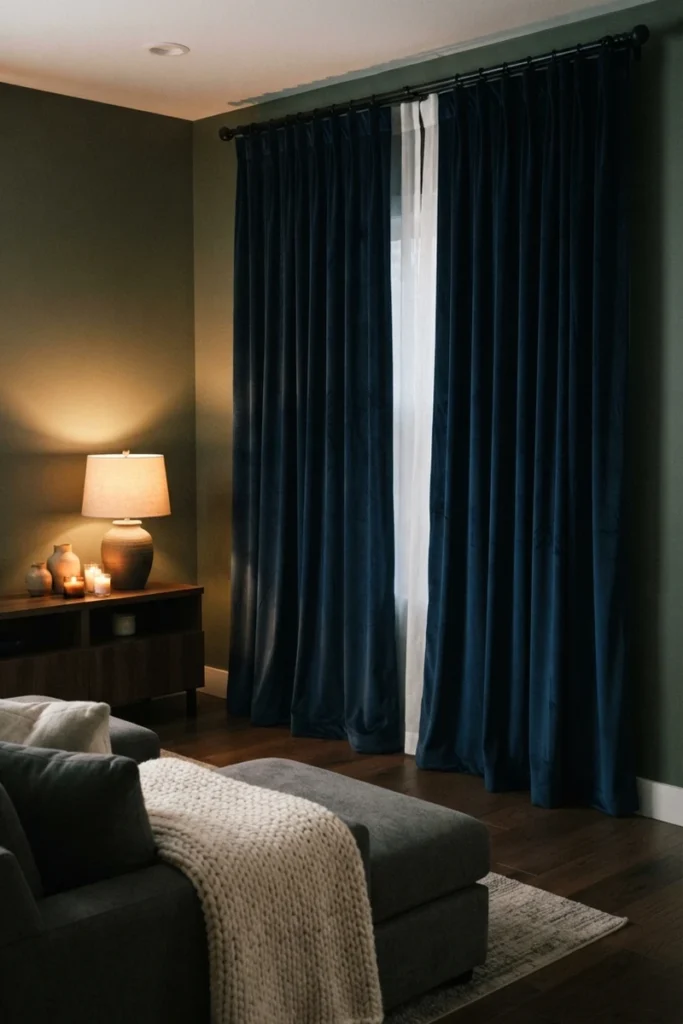
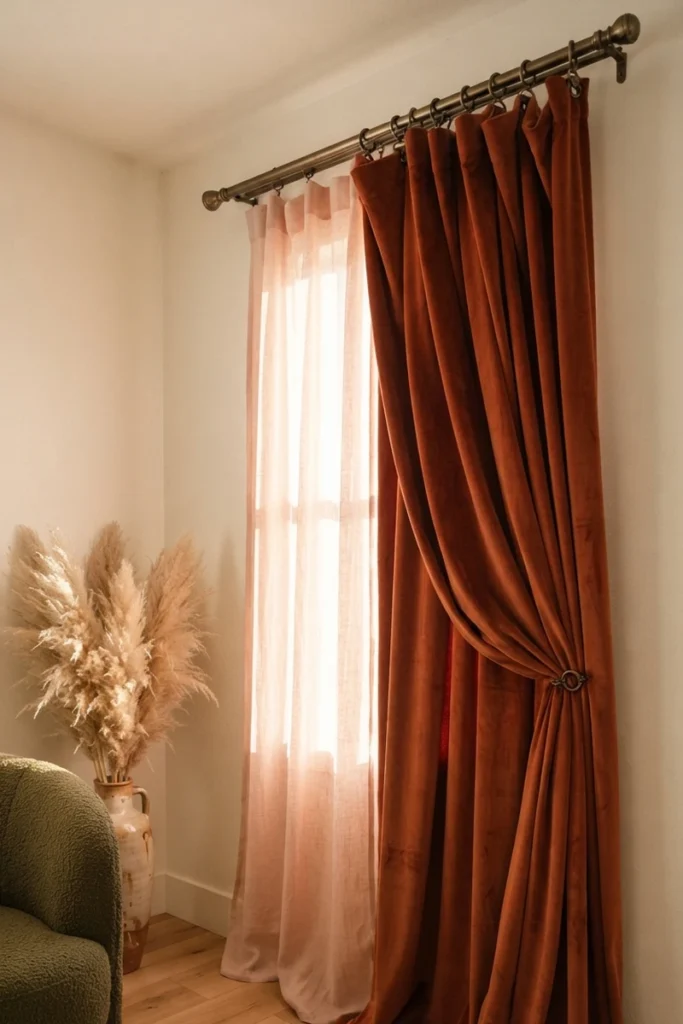
A single curtain layer forces a choice — either bright daylight or full privacy, but rarely both at once. Layering removes that trade-off entirely.
What a layered setup gives you that a single curtain can’t:
- Soft daylight filtering through sheers during the day
- Full darkness and privacy when the heavier layer closes
- A room that visually adapts from morning to evening
- Extra texture and depth compared to one flat fabric layer
- The flexibility to host, relax, or watch a movie without changing anything physically
Most people who try layering once never go back to a single curtain in their living room.
The Inner Layer: Sheers That Do the Daytime Work
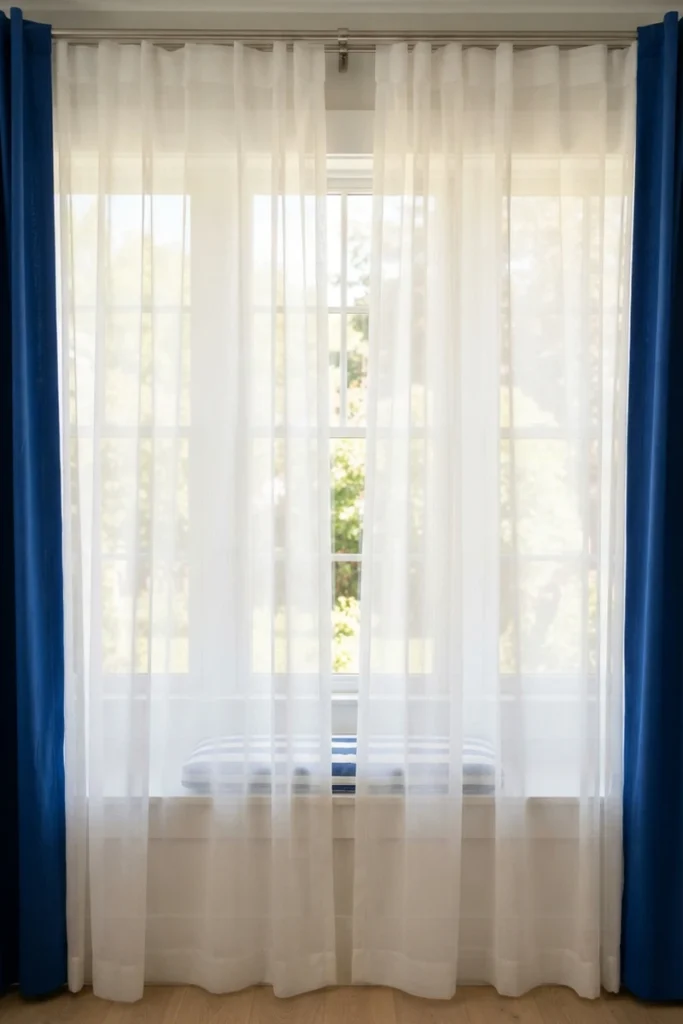
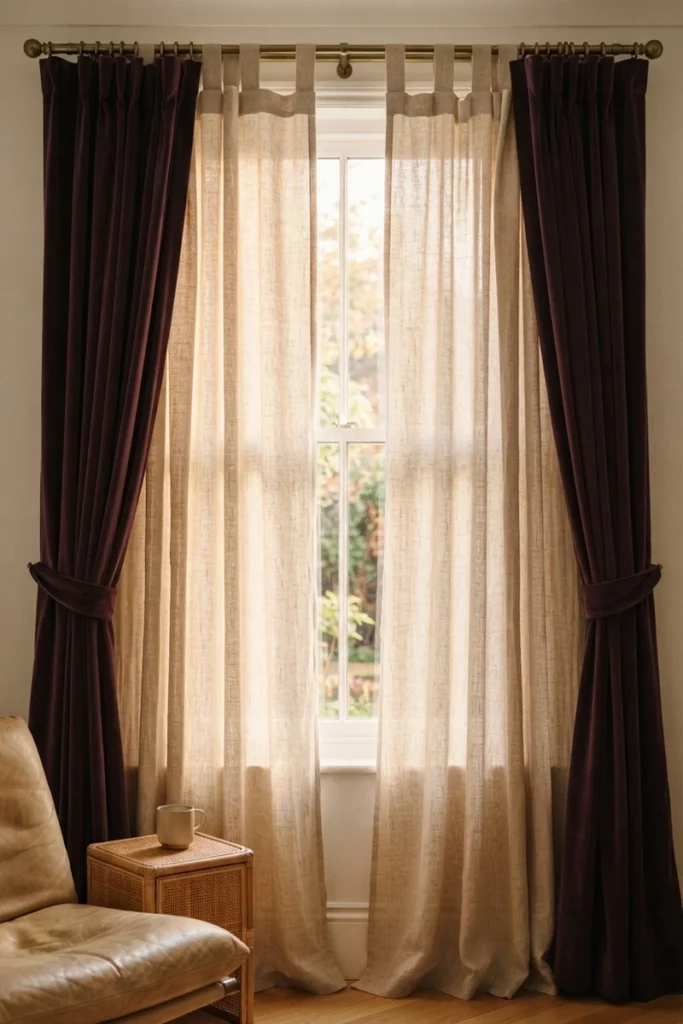
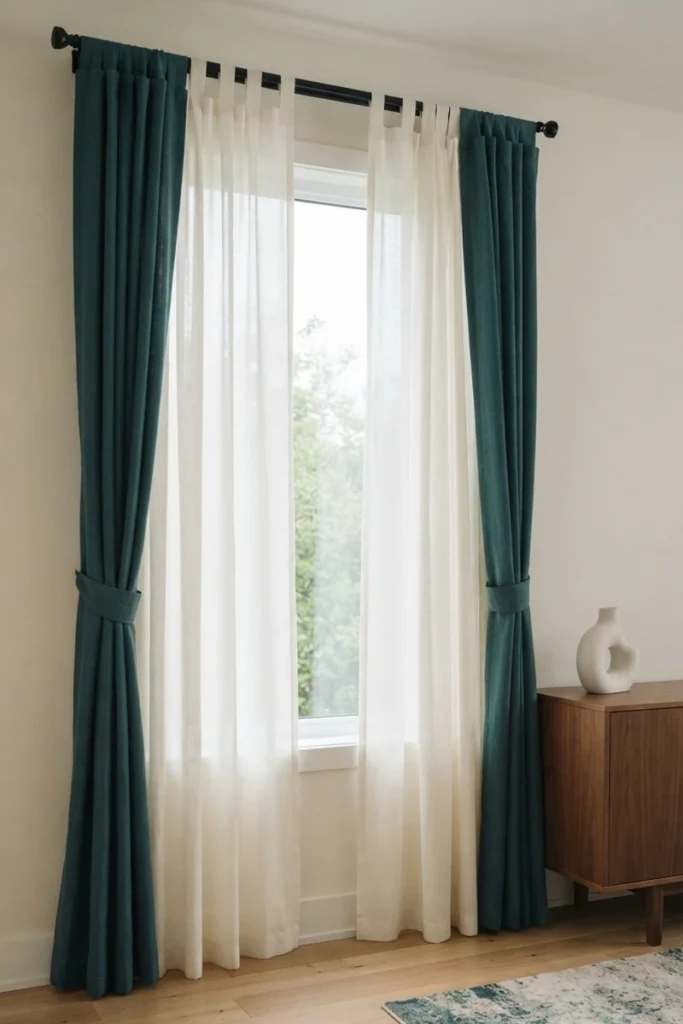
Everything about the sheer layer should support one job — letting light in gently while giving the window a finished look during the day.
Fabric and style choices for the sheer layer:
- Voile or gauze fabric for the brightest, airiest effect
- Linen sheers if you want a bit more texture and warmth
- Cotton sheers for a simple, matte, easy-care option
- Stick to white or soft neutral tones here
- A basic rod-pocket or back-tab header keeps this layer simple
Think of the sheer as the layer that’s almost always visible — it should never fight for attention.
The Outer Layer: Where the Personality Lives
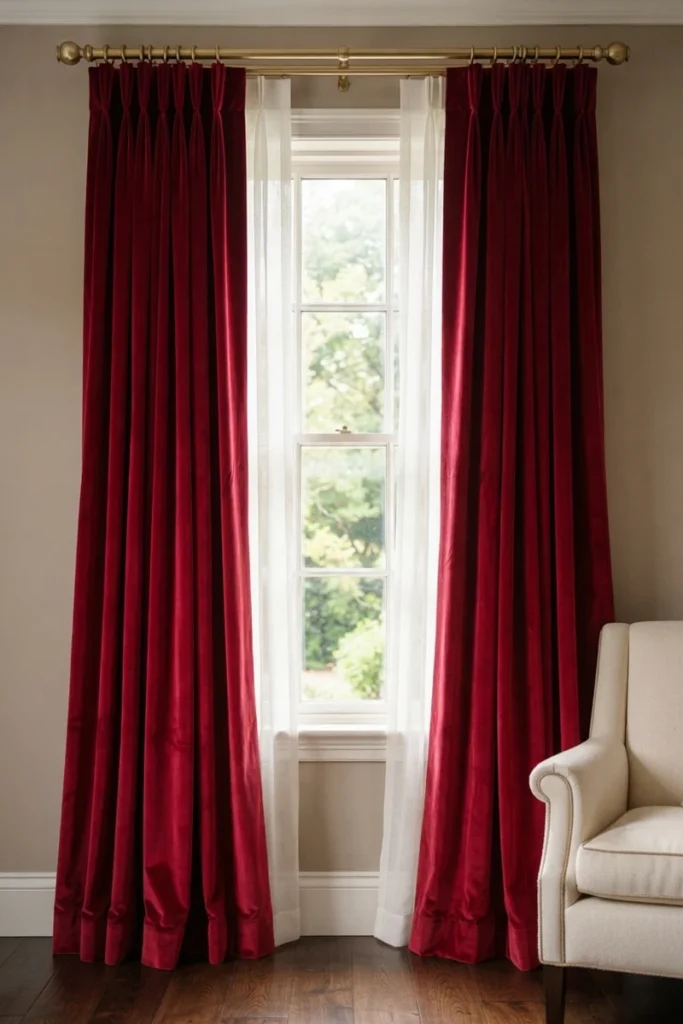
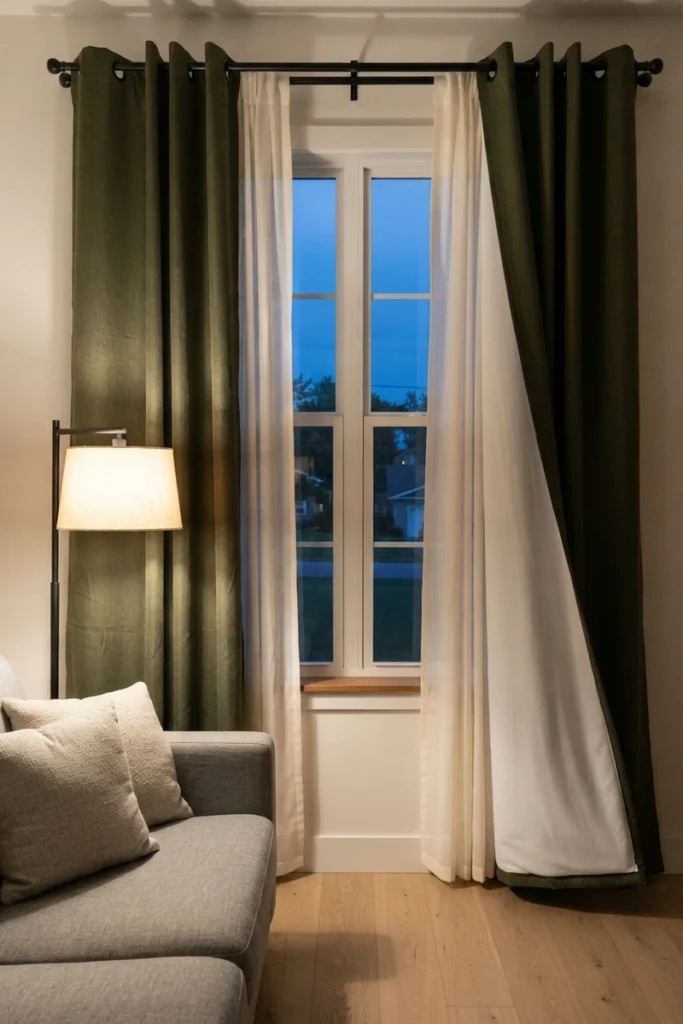
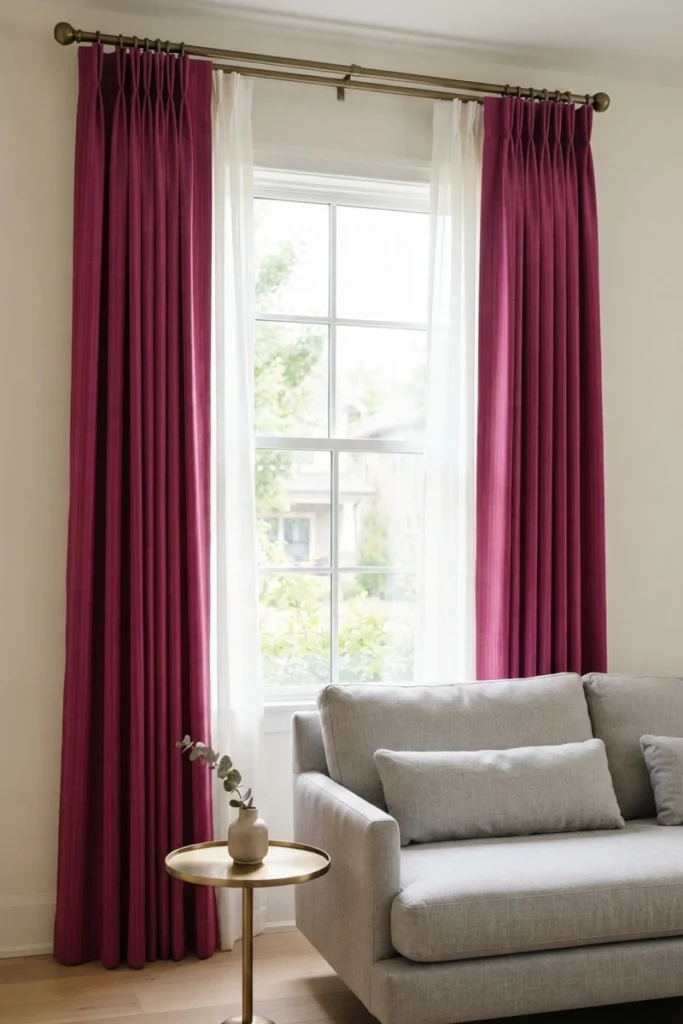
The heavier outer curtain is where you get to make a real style statement, since it’s the layer people notice first and the one that sets the room’s evening mood.
What makes a strong outer layer:
- Velvet for a warm, cozy, evening-appropriate feel
- A bold or jewel-toned solid color for contrast
- A blackout or room-darkening lining if movie nights matter
- Subtle pattern only — avoid competing with the sheer underneath
- A color that either pops against the sheer or ties into the room’s palette
Because this layer stays open more than it’s closed, it can afford to be the bolder of the two.
Making Two Different Headers Work Together
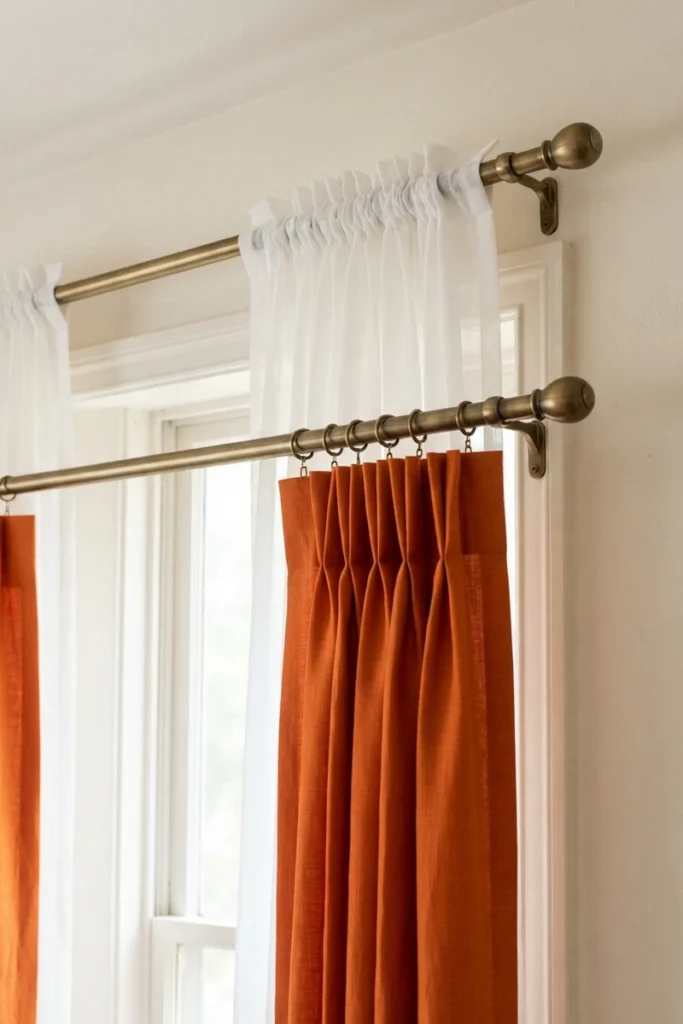
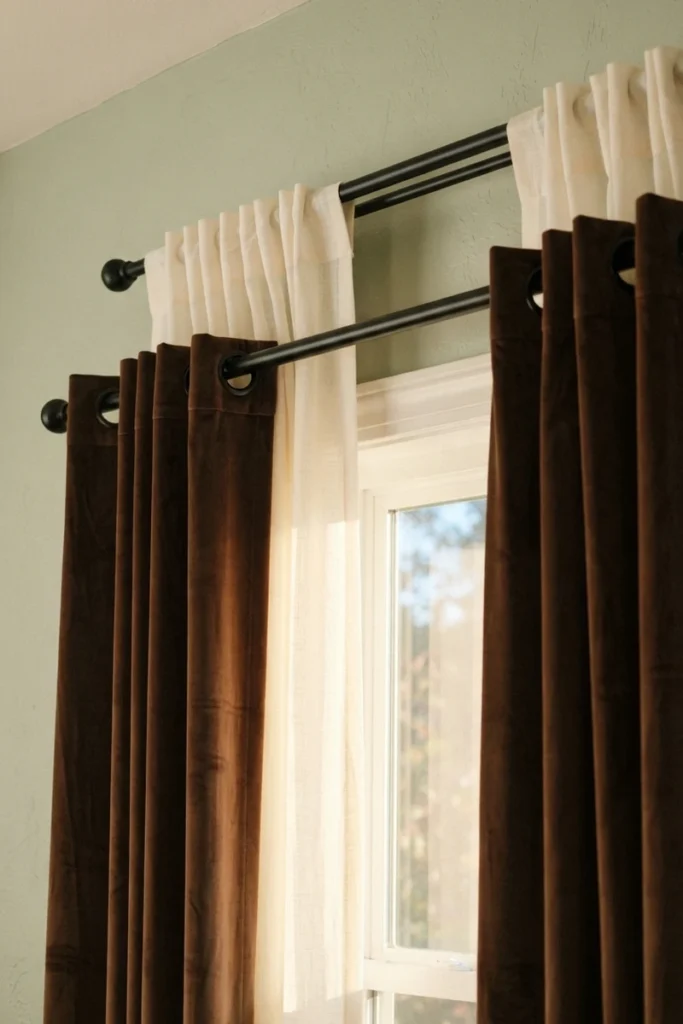
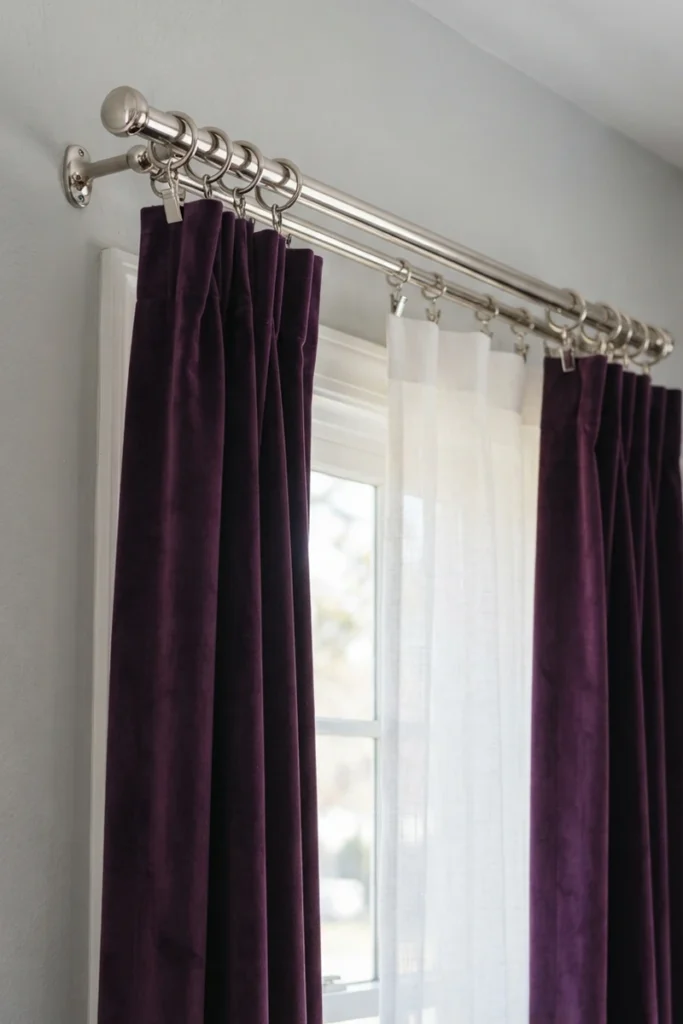
Since each layer hangs on its own rod, the headers don’t have to match — but they do need to feel like they belong in the same room.
Header combinations that read well together:
- Rod-pocket sheer paired with a pinch-pleat drape
- Back-tab sheer paired with grommet drape hardware
- A flat-panel sheer under a structured euro-pleat drape
- Identical header styles on both layers, for a more uniform finish
- Ring-clip headers on both layers for the smoothest simultaneous glide
There’s no wrong combination here as long as the two styles don’t visually clash when both are open.
Getting the Hardware Right
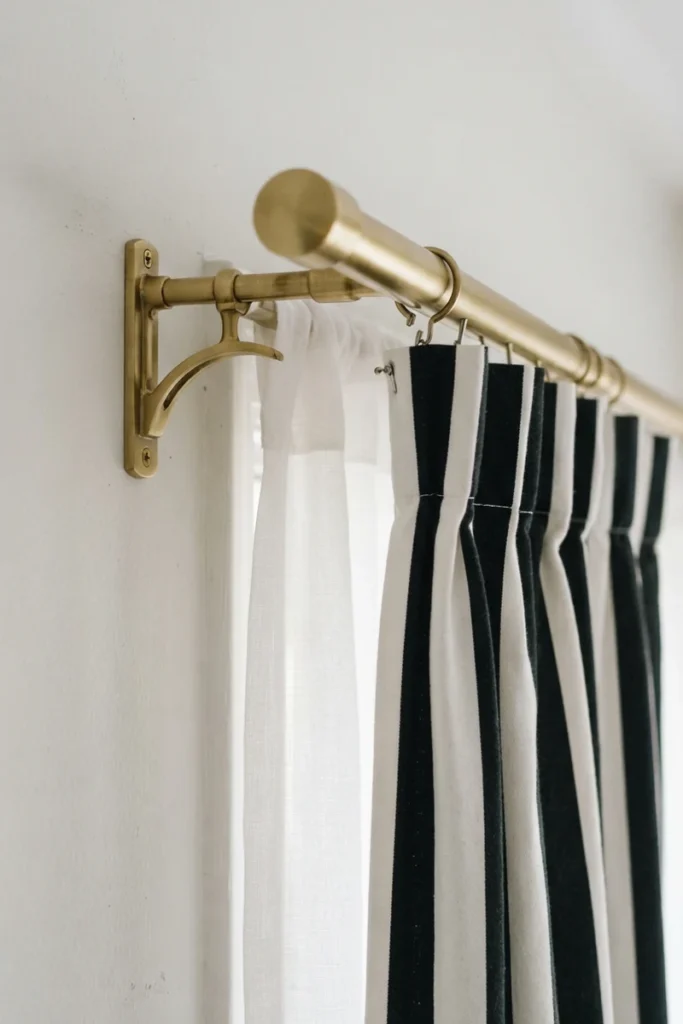
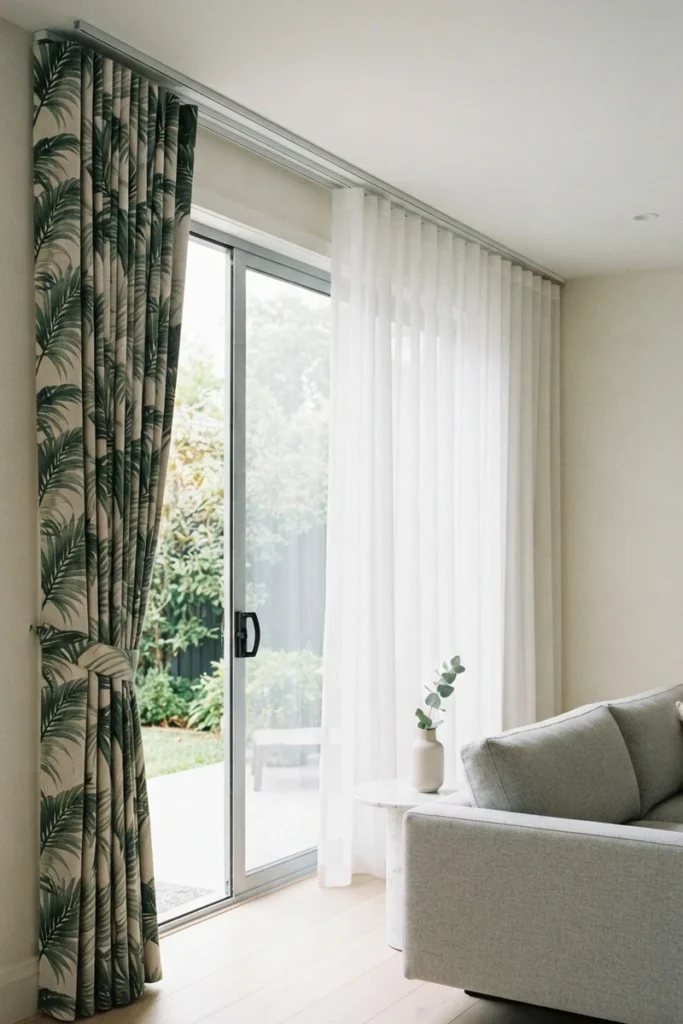
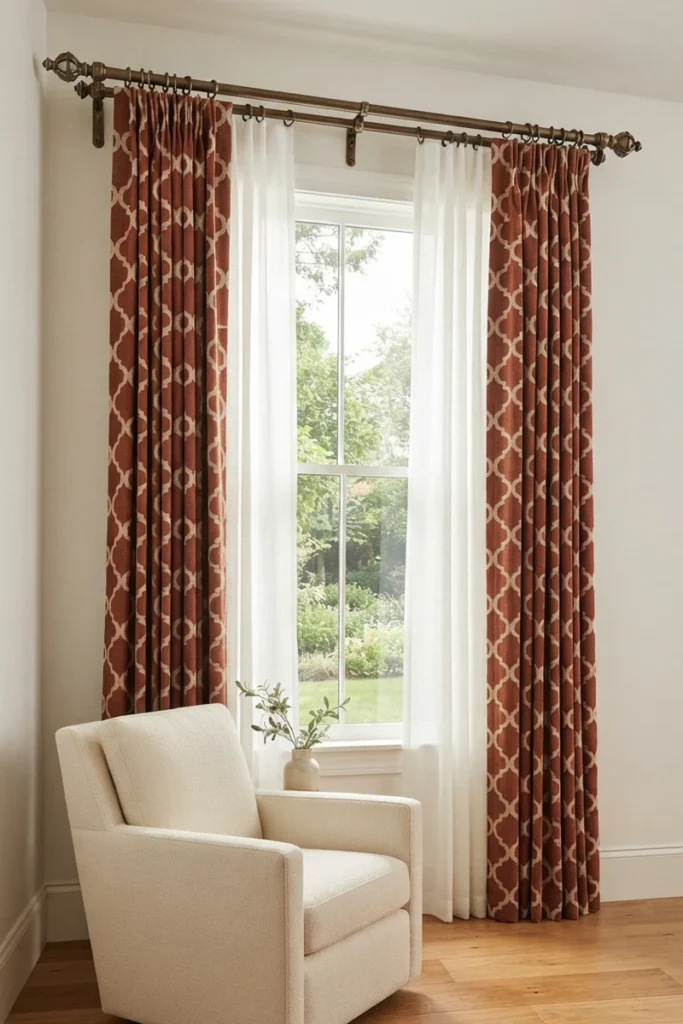
A double curtain rod is what makes the whole layered setup function — without it, the two fabrics have nowhere to hang independently.
What to keep in mind with double-rod hardware:
- Double rods sit slightly further off the wall than a single rod
- The back rod carries the sheer; the front rod carries the heavier drape
- Both sides of the window need enough clearance for smooth operation
- Wide windows or sliding doors often do better with a traversing track
- Coordinating the two rod finishes makes the whole setup look planned, not improvised
Getting this hardware decision right early makes every fabric choice after it much simpler.
Common Mistakes to Avoid
- Using two heavy fabrics instead of pairing light with heavy
- Attempting to layer both curtains on a single rod
- Choosing header styles that don’t visually pair well
- Putting a bold pattern on both layers at once
- Not accounting for the wall space a double rod actually needs
Getting layered curtains for living rooms right nearly always comes down to contrast — light against heavy, simple against bold — rather than repeating the same qualities twice.
FAQ
Can I layer curtains without buying a double rod?
It’s not recommended — a single rod makes it very difficult to open and close each layer independently, which defeats much of the point of layering in the first place.
Should the sheer and drape be the same color family?
Not necessarily — contrasting tones tend to make the layering effect more visually obvious, while matching tones create a softer, more blended look. Both are valid depending on your style.
Is layering still worth it in a small living room?
Yes, though choosing a lighter-weight outer layer helps avoid making a smaller room feel heavier — the day-to-night flexibility is just as valuable in a compact space.
External Resources
For more living room curtain inspiration:
Final Thoughts on Layered Living Room Curtains
Once your layering setup is in place, color is the next big decision for both layers. Our curtain color guide breaks down neutral, bold, and coordinating strategies for any room.
💡 Found this helpful? Save this guide on Pinterest so you can find it again when you’re ready to shop!