Living Room Curtain Ideas: How to Choose Curtains That Actually Fit How You Live
Good living room curtain ideas start with function, not fabric. Your curtains do more work than almost anything else in the room — they control how much light comes in, how private the space feels once the sun goes down, and — more than most people realize — how tall or wide the room actually looks. A great sofa can’t fix curtains that are too short, too flimsy, or hung too close to the window frame. So before you pick a color or fabric, it helps to think about what the curtains actually need to do for your living room, and then choose the look that fits.
Before You Start: 2 Decisions That Matter More Than Color
1. How much light control do you actually need?
Before diving into living room curtain ideas, it helps to know how much light control you actually need — a living room facing a busy street or a west-facing window that floods with afternoon sun needs a different fabric weight than a shaded room that could use more brightness.
2. Do you want the curtains to blend in or stand out?
Neutral curtains let your furniture and art do the talking. A bold or textured curtain becomes a design feature in its own right — almost like a piece of furniture. Neither is wrong, but mixing the two approaches (a loud sofa and loud curtains) usually fights for attention.
1. Floor-to-Ceiling Drama
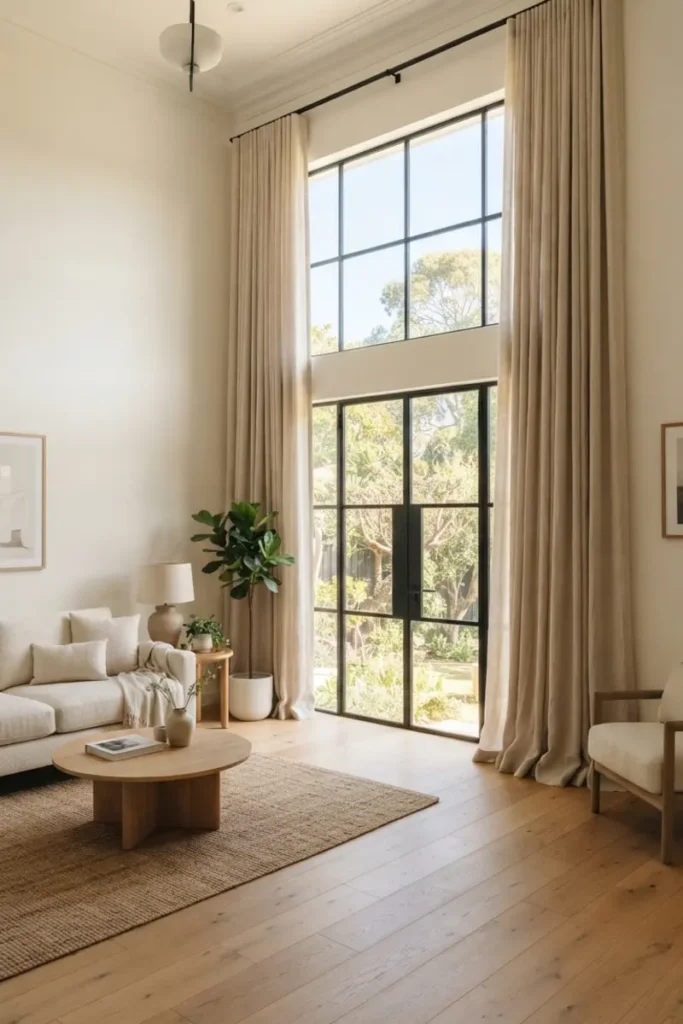
Instead of hanging curtains just above the window frame, mount the rod close to the ceiling and let the panels run all the way to the floor — even if your window itself is smaller. This trick makes the ceiling feel taller and the whole room feel bigger, and it’s one of the most effective (and cheapest) upgrades in interior design. Because the eye follows the line of fabric rather than stopping at the window frame, even a modest window can end up feeling like a full architectural feature.
Best for: Living rooms with lower ceilings or smaller windows that could use extra height and drama.
2. The Layered Look
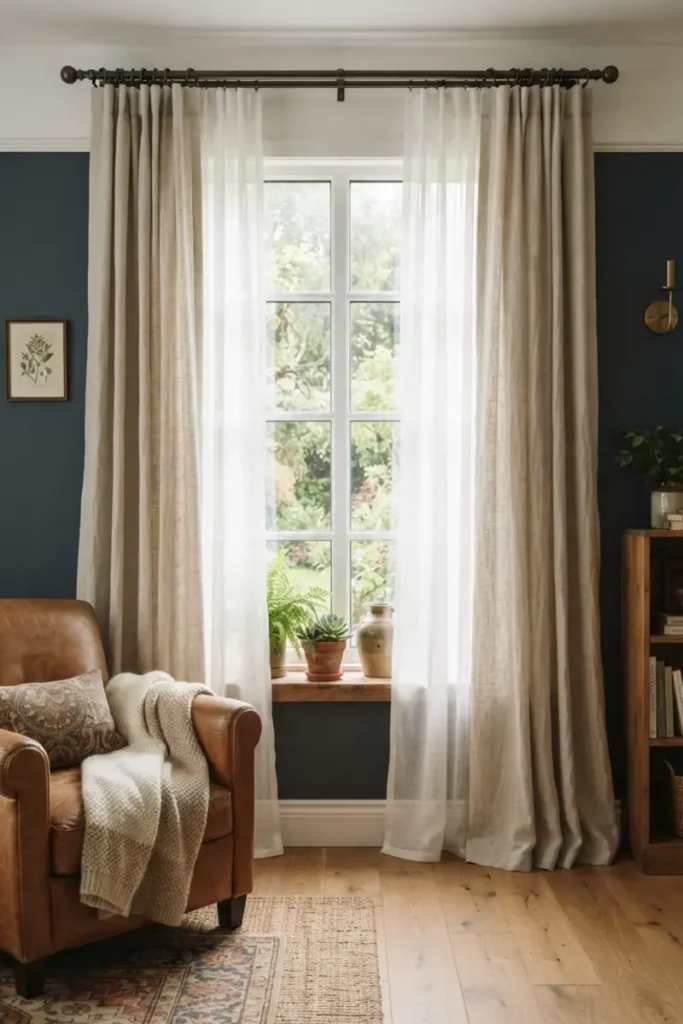
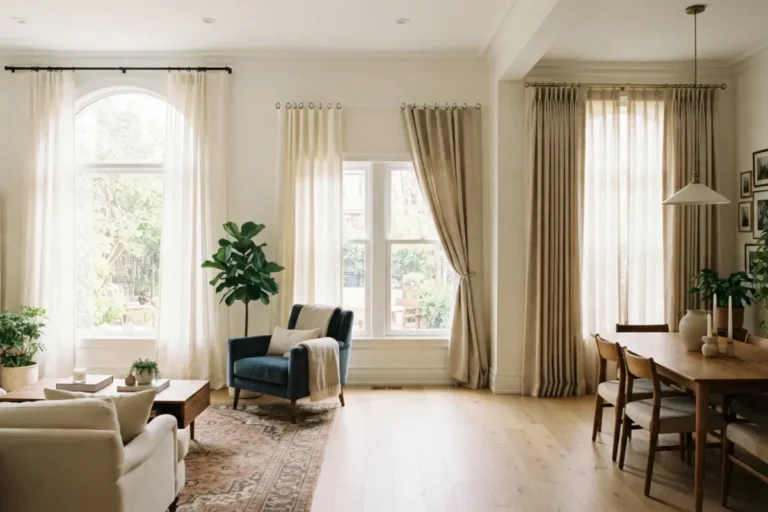
A sheer panel underneath and a heavier drape on top, hung on a double rod. During the day you get soft, filtered light; at night you close the heavier layer for privacy and warmth. It costs more than one panel, but it’s the most flexible option for a living room that’s used at all hours, since it adapts to both bright afternoons and cozy evenings without needing two separate curtain changes.
Best for: Living rooms used throughout the day that need to flex between bright and private.
3. Neutral Linen for a Timeless Base
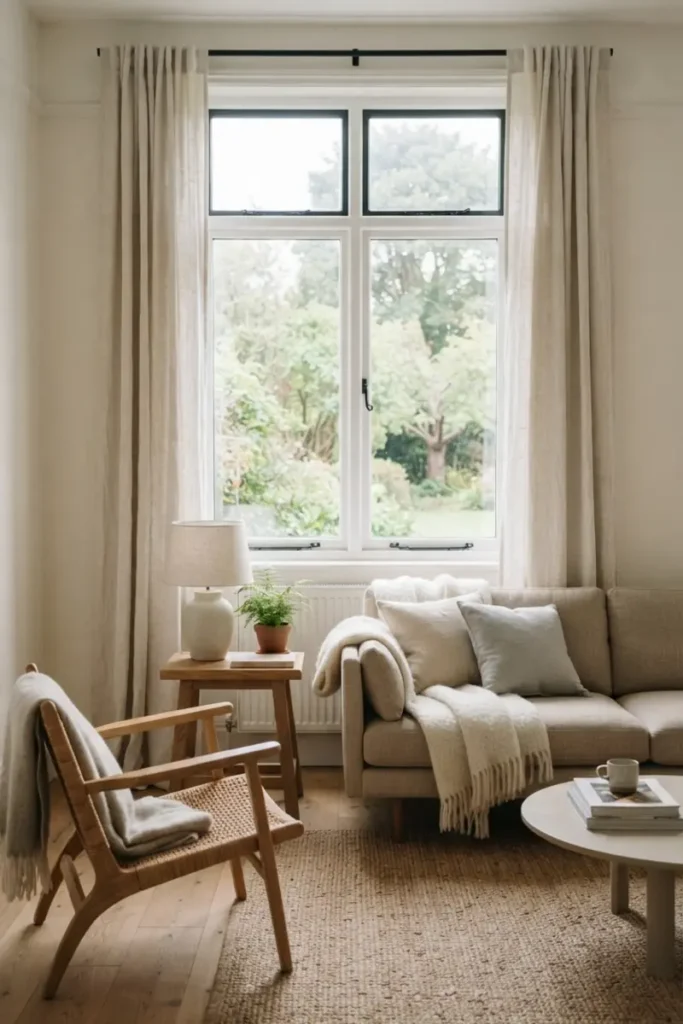
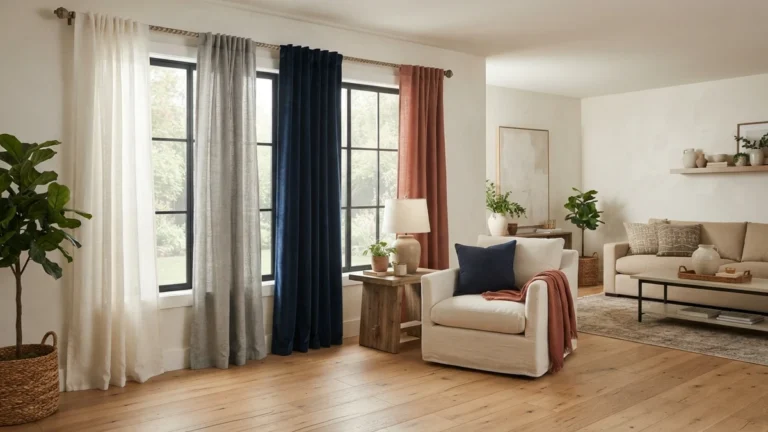
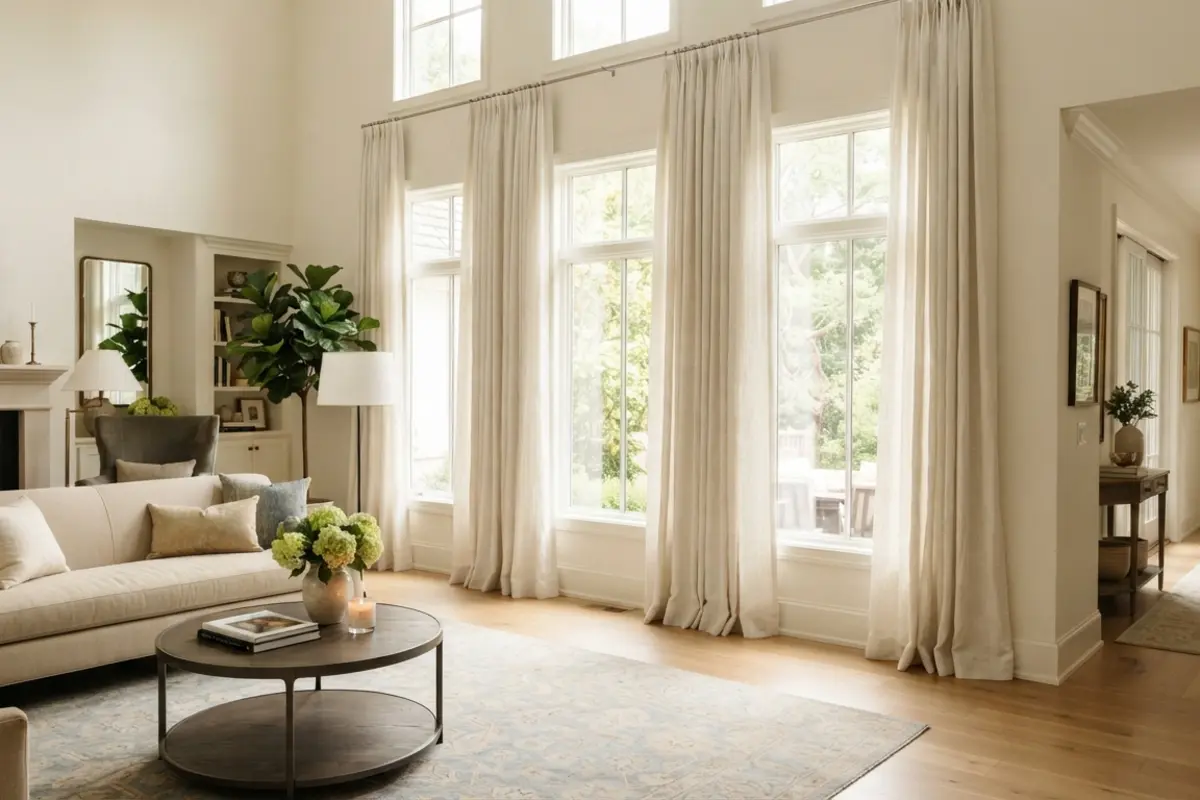
Off-white, oatmeal, or soft grey linen curtains work with almost any furniture style and don’t date the way trend colors do. If you tend to change your decor often, this is the safest long-term choice — it’s the “blank canvas” option. Linen’s slightly relaxed texture also keeps a neutral curtain from feeling flat or sterile, adding just enough visual interest to hold its own.
Best for: Living rooms that get redecorated often or where furniture and art already do the visual heavy lifting.
4. Bold Color as a Design Statement
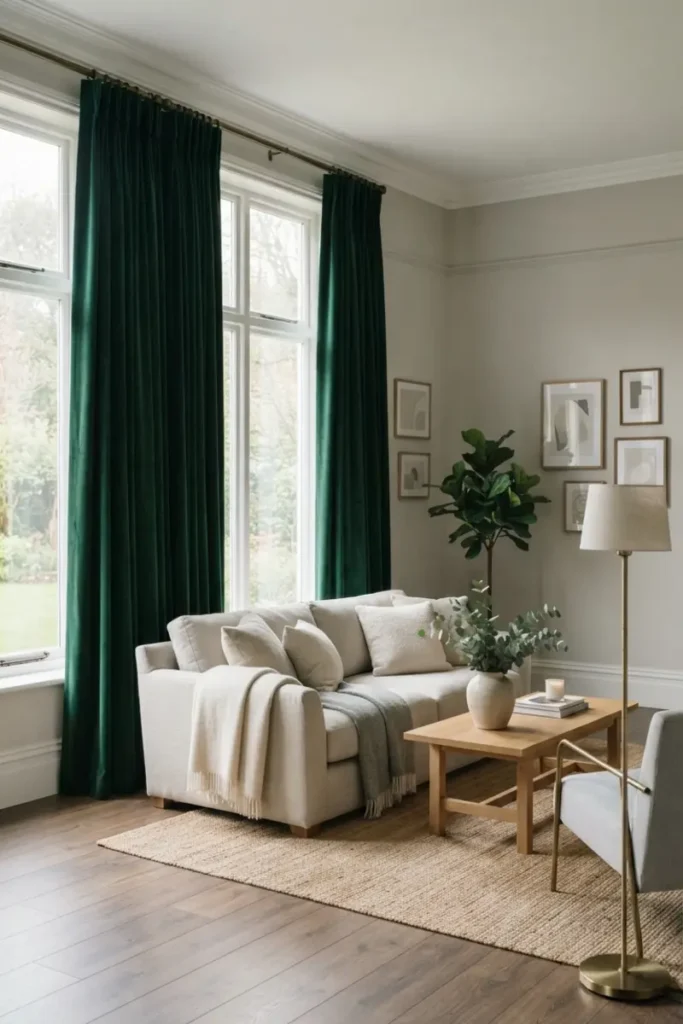
If your walls and furniture are mostly neutral, a single bold curtain color — deep green, rust, navy — can do the job an accent wall usually does, without the commitment of paint. It works best when nothing else in the room is competing for that same attention. Because curtains are easier to change than a wall, this is also a lower-risk way to test a bold color before committing to it more permanently elsewhere in the room.
Best for: Neutral living rooms that could use one confident pop of color.
5. Textured Weaves for Cozy Warmth
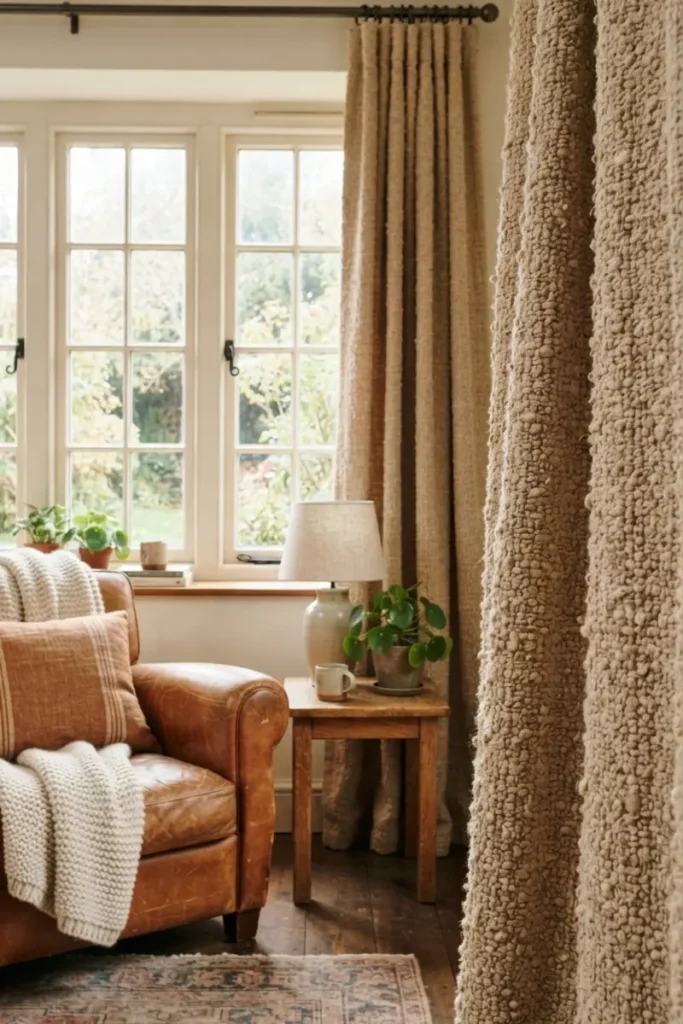
Boucle, slub linen, or a nubby cotton weave add texture without adding pattern. This is a good middle ground if plain fabric feels flat but a print feels like too much — texture reads as intentional and layered, especially in rooms with a lot of hard surfaces (wood floors, leather furniture). The tactile quality also softens a room’s acoustics slightly, making the space feel a little quieter and more enclosed.
Best for: Living rooms with mostly hard surfaces that could use warmth without a bold pattern.
6. Wide Grommet Panels for a Modern Loft Feel
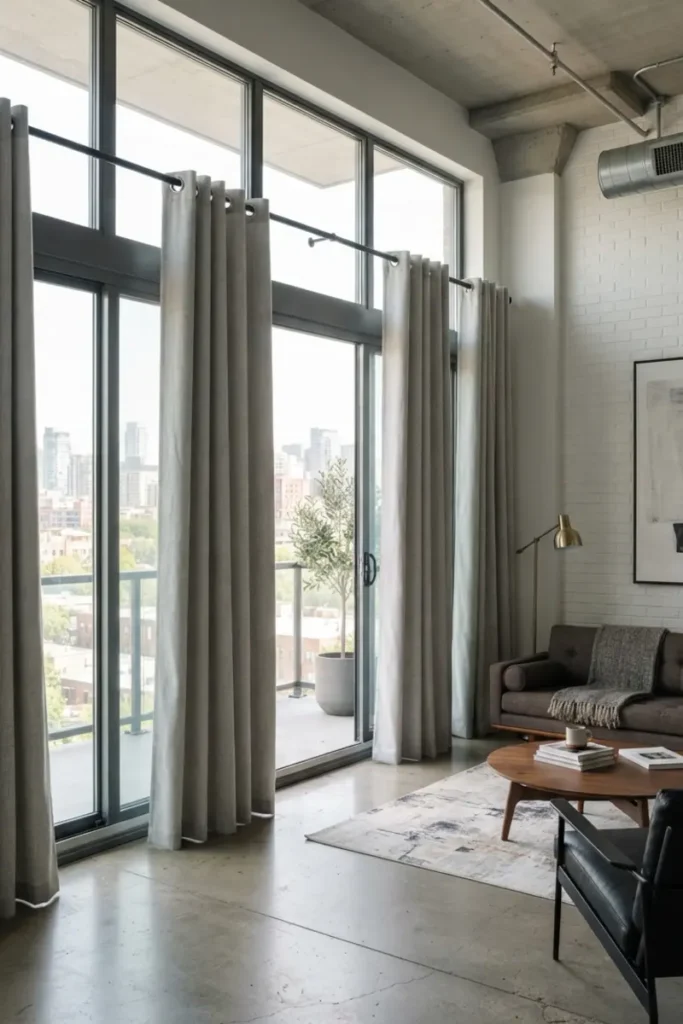
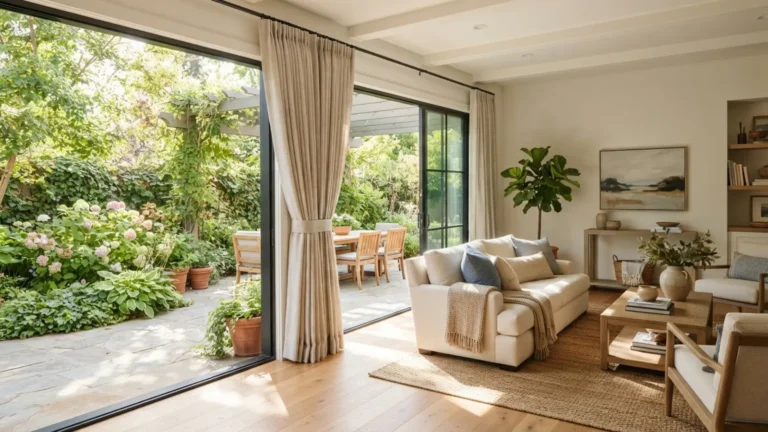
Grommet curtains slide open in wide, even folds and suit rooms with large windows or sliding doors. Paired with a simple black or brass rod, they give a clean, architectural look that works especially well in open-plan or loft-style living rooms. The metal grommets also reduce friction against the rod, so the panels glide smoothly even with frequent daily use.
Best for: Modern or loft-style living rooms with large windows or sliding glass doors.
7. Puddle-Length Velvet for Formal Elegance
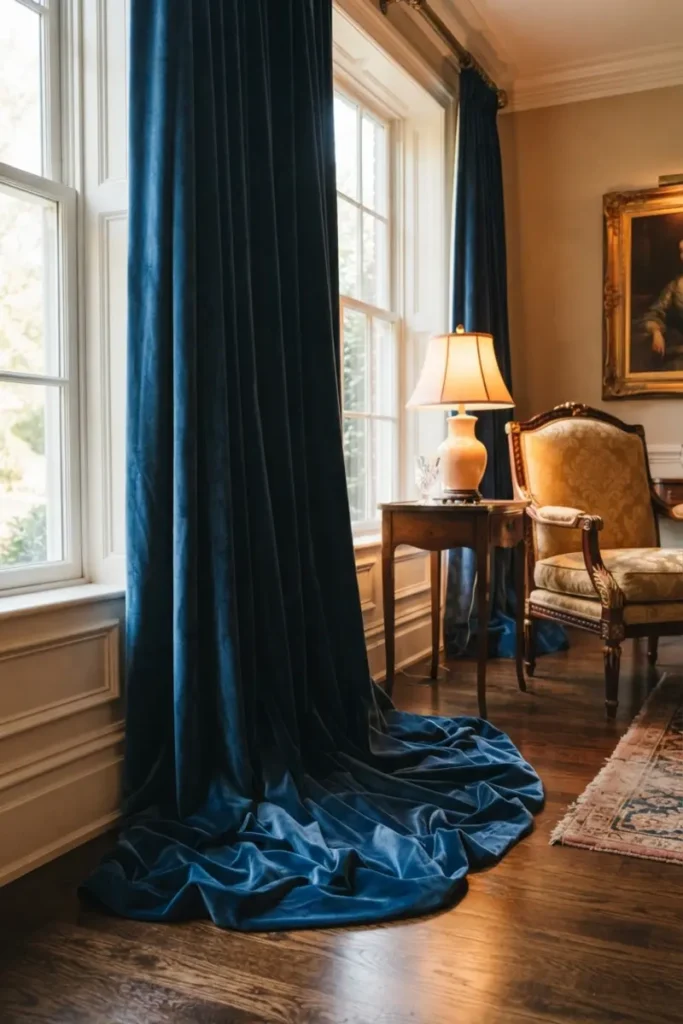
Letting heavy velvet curtains pool slightly on the floor is a formal, almost old-world look. It’s not for every home, but in a living room with high ceilings and traditional furniture, it adds a sense of occasion that shorter, cleaner curtains can’t. The extra fabric pooling at the base also gives the room a plush, finished feel, though it does require more upkeep to keep the pooled fabric looking neat rather than crumpled.
Best for: Formal living rooms with high ceilings and traditional furniture.
8. Floor-Skimming Linen for Clean Contemporary Lines
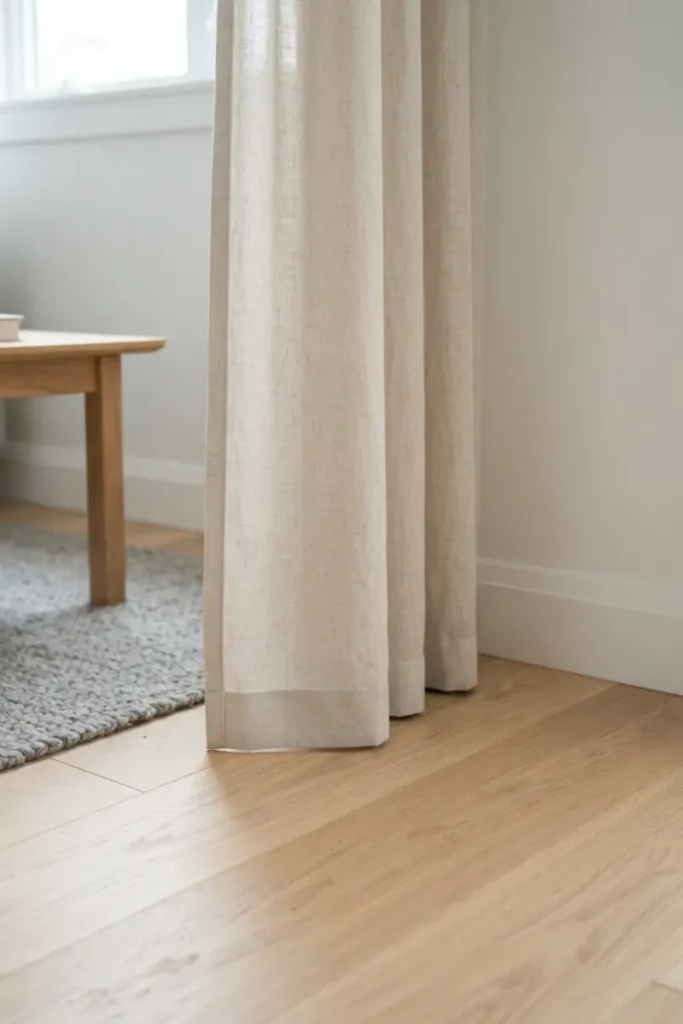
The opposite of puddling: curtains that end just above the floor, in a light fabric, for a crisp modern line. This is the safer, lower-maintenance option if you have pets, kids, or just don’t want fabric collecting dust on the ground. It still gives the polished, finished look of a full-length curtain without the extra care puddled fabric demands.
Best for: Busy households with pets or kids who want a clean look without high maintenance.
9. Pattern in Small, Controlled Doses
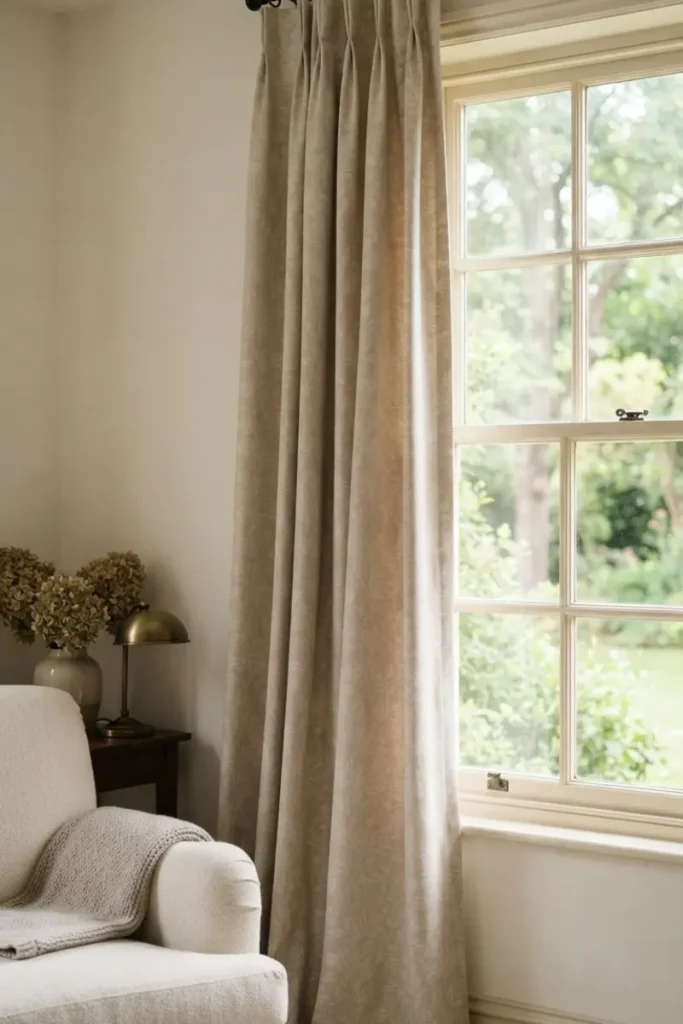
A bold floral or geometric print can overwhelm a whole wall of curtains. A tone-on-tone print — where the pattern and background are close in color — gives you texture and interest without it reading as “busy.” This is the print option for people who think they don’t like patterned curtains, since the subtlety keeps it from ever feeling loud or overwhelming in the room.
Best for: Living rooms that want a hint of pattern without a bold, attention-grabbing print.
10. Curtains as a Room Divider
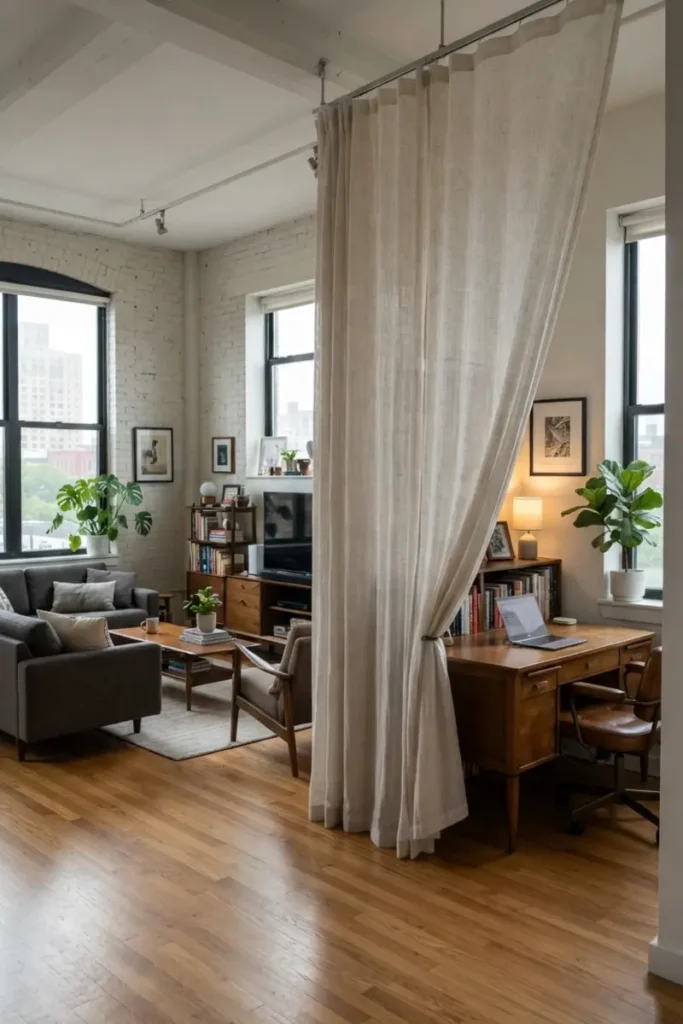
In open-plan living spaces, a floor-to-ceiling curtain hung from a track can section off part of the room — a reading nook, a home office corner, or a dining area — without the cost or permanence of a wall. It’s a favorite trick in small apartments where every room does double duty. Unlike a built wall, a curtain divider can be pulled back entirely in seconds, keeping the option to open the space back up whenever you want.
Best for: Open-plan living spaces or small apartments where one room needs to serve multiple functions.
11. Motorized Curtains for Everyday Convenience

Smart or motorized curtain tracks let you open and close curtains from your phone or on a schedule — useful for hard-to-reach large windows, or simply for not getting up every evening. The technology has gotten cheaper and easier to retrofit onto existing curtains in the last few years. Many systems can also sync with a broader smart-home setup, opening curtains automatically at sunrise or closing them at a set time each evening.
Best for: Living rooms with large or hard-to-reach windows, or homes already using smart-home technology.
12. Ready-Made Panels That Still Look Custom
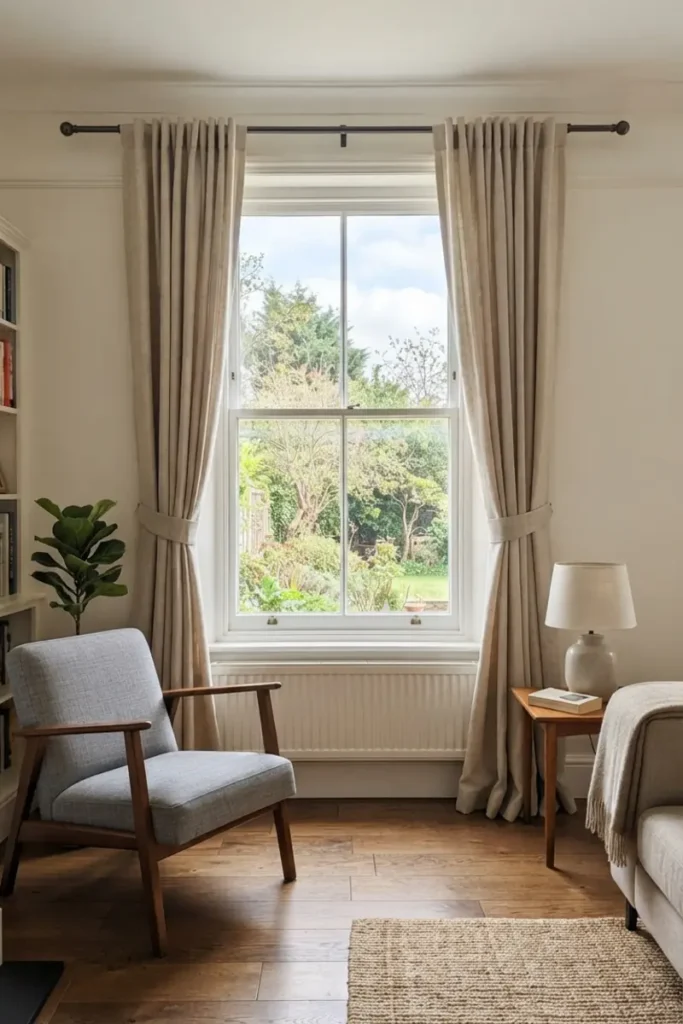
Custom curtains aren’t always in the budget. The trick to making ready-made panels look intentional: buy them slightly longer than you need (for a proper floor-skimming length, not a stopped-short one), and hang the rod wider than the window frame so the panels don’t block light when open. Two small adjustments, and off-the-shelf curtains stop looking like off-the-shelf curtains — the extra length and width do most of the visual work that a custom order would otherwise charge a premium for. For more general buying guidance, see Bob Vila’s guide to hanging curtains.
Best for: Budget-conscious living rooms where custom curtains aren’t in the plan.
FAQ
How long should living room curtains be?
Among all living room curtain ideas, floor-skimming (just above or barely touching the floor) is the safest, most flexible length for most rooms.
What color curtains go with a neutral living room?
Neutral curtains (white, oatmeal, soft grey) keep things cohesive, but a neutral room is also the easiest place to introduce one bold curtain color as a focal point — the rest of the room already supports it.
Should curtains match the walls or contrast with them?
Both work. Matching the wall color creates a calm, seamless look and makes the room feel larger. Contrasting curtains create a focal point but need the rest of the room’s colors to stay simple so it doesn’t feel busy.
How wide should the curtain rod be compared to the window?
Extend it 4–8 inches past each side of the window frame. This lets the curtains fully clear the glass when open, so you’re not blocking natural light even when the curtains are “open.”
Can I mix curtain styles in an open-plan living and dining space?
Yes, as long as they share a common thread — same fabric family, same color palette, or same hardware finish — so the space still reads as one connected room rather than two mismatched ones.
Final Thoughts on Living Room Curtain Ideas
The right living room curtains aren’t just about matching your sofa — they’re about deciding how the room should feel at 9am and at 9pm, and picking a style that can do both. If you’re still deciding between styles before committing to a look for your space, our guide to 10 Curtain Styles for Every Room breaks down the basics — tab-top, pinch pleat, sheer, and more — to help you narrow it down before you shop.